The Key to Immortality: Unlocking the true meaning behind what is the Egyptian symbol for life (The Ankh)
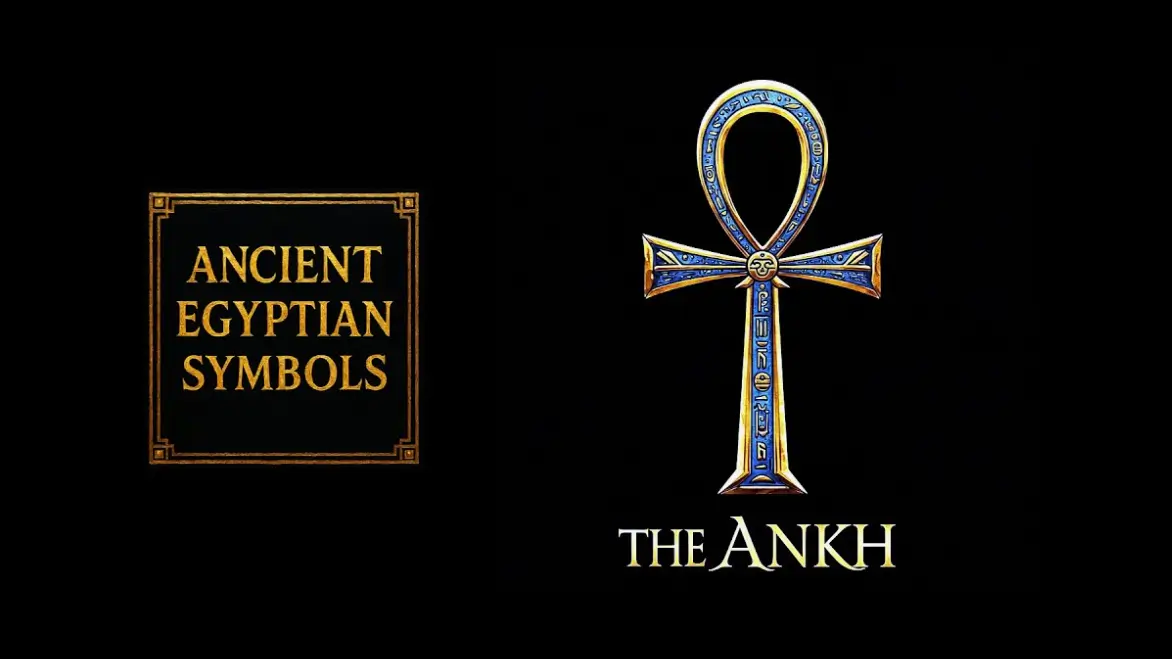
The question “what is the Egyptian symbol for life” leads us to one of the most powerful and recognizable icons in ancient history: a simple yet profound sign that has survived thousands of years. Known as the ankh, this symbol appears on temple walls, royal tombs, amulets, and the hands of gods, radiating mystery and meaning. To the ancient Egyptians, it represented far more than physical life — it was the key to eternity.
Imagine stepping inside a dimly lit temple. Rays of sunlight spill across carved stone, revealing depictions of gods holding an object shaped like a looped cross, extending it toward pharaohs as if offering them breath itself. For the Egyptians, this symbol was not just a sign; it was the promise of rebirth, divine protection, and everlasting existence.
But what exactly is this symbol, why was it so important, and what does the ankh continue to represent today?
What is the egyptian symbol for life?
The Egyptian symbol for life is the ankh, one of the most iconic and enduring symbols of ancient Egypt. Recognizable by its distinctive shape — a loop at the top connected to a T-shaped cross — the ankh represented life, vitality, and eternal existence. For the ancient Egyptians, it symbolized not only physical life on Earth but also the promise of life after death.
What the Ankh Represents
The ankh carries several layers of meaning, including:
-
Life in the present world
-
The afterlife and immortality
-
Divine protection and blessing
-
Union and balance, often interpreted as the connection between masculine and feminine energies
Because of its profound symbolism, the ankh became a universal emblem of the gods’ power to give and sustain life.
Why the Ankh Was So Important
The ankh appears everywhere in Egyptian art and inscriptions because it served as a spiritual bridge between humanity and divinity. Gods and goddesses are often depicted:
-
Holding the ankh by its loop.
-
Touching a pharaoh’s lips with it as a sign of the “breath of life.”
-
Carrying multiple ankhs to represent their ability to grant eternal existence.
For the Egyptians, to receive the ankh was to receive protection, strength, and the promise of rebirth.
How the Ankh Was Used
Throughout history, Egyptians used the ankh in:
-
Amulets and jewelry for protection.
-
Funerary art as a symbol of resurrection.
-
Temple carvings and paintings depicting divine rituals.
-
Royal regalia to show the king’s connection to the gods.
Its presence across both sacred and everyday objects shows how deeply embedded the ankh was in Egyptian culture.
The Ankh in Modern Times
Today, the ankh remains a global symbol of:
-
Life and vitality
-
Spiritual wisdom
-
Strength and protection
-
African heritage and identity
-
Cultural continuity
It appears in artwork, jewelry, tattoos, and modern fashion — proof that its meaning continues to resonate thousands of years after it first appeared.
A Symbol That Lives Forever
The Egyptian symbol for life is more than a design; it is a philosophy. The ankh embodies the ancient belief that life extends beyond the physical world, and that through harmony, divinity, and rebirth, existence continues into eternity.
Significance in Ancient Egyptian Mythology and Beliefs
In ancient Egyptian mythology, the ankh held profound spiritual significance. It was far more than a symbol of life — it represented the mystical force that connected the mortal world to the divine, shaping how the Egyptians understood creation, death, rebirth, and eternal existence. To them, life was not a single moment but a continuous cycle, and the ankh was the key that linked every stage of that journey.
The Ankh as the “Breath of Life”
One of the most powerful beliefs associated with the ankh is its role as the breath of life. Gods are frequently depicted holding the ankh near the nose or lips of pharaohs, symbolizing the divine breath that sustains life. This gesture represented:
-
The god’s power to give spiritual and physical vitality
-
The pharaoh’s right to rule as a chosen being
-
The constant renewal of life through divine energy
The ankh therefore became a direct channel between humanity and the gods.
A Bridge Between Life, Death, and Rebirth
Egyptians viewed existence as a cycle: birth → death → rebirth. The ankh symbolized the seamless transition between these states. Its loop was often interpreted as the eternal soul, while the cross-shaped base represented the material world.
Together, the two halves expressed harmony between:
-
The earthly and the divine
-
The seen and the unseen
-
The living and the eternal
This made the ankh essential in funerary practices, where it appeared in tombs, sarcophagi, and burial rituals as a guide for the soul’s journey into the afterlife.
The Ankh and the Egyptian Gods
Nearly every major deity in Egyptian mythology is shown carrying or offering the ankh. This includes:
-
Osiris, god of resurrection
-
Isis, goddess of magic and protection
-
Ra, the sun god who brought light and life each morning
-
Anubis, guardian of the dead
In their hands, the ankh symbolized divine authority and the power to grant eternal life.
Symbol of Cosmic Balance
The Egyptians believed the universe functioned through Ma’at — the principle of balance, harmony, and truth. The ankh embodied this cosmic order, uniting dual forces such as:
-
Male and female
-
Light and dark
-
Earth and sky
This balance was essential for both personal well-being and the stability of the kingdom.
A Sacred Promise of Eternity
Ultimately, the ankh stood as a sacred promise: that life, when lived in accordance with cosmic order, would continue beyond death. It reminded Egyptians that the gods not only governed the universe but also supported, protected, and renewed the souls of the faithful.
Read:
Experiencing the Ankh’s Legacy with Egypt trippers
Exploring the meaning of the ankh is fascinating, but experiencing its legacy in Egypt adds an entirely new dimension. With Egypt Trippers, travelers can step directly into the landscapes where this ancient symbol first came to life — temples, tombs, and sacred spaces where the ankh once appeared in the hands of gods and pharaohs.
Walk Through the Temples Where the Ankh Was Born
Egypt Trippers offers guided journeys through iconic temples such as:
-
Karnak, where monumental walls display gods offering the ankh to pharaohs.
-
Philae Temple, a sanctuary dedicated to Isis, one of the most famous bearers of the ankh.
-
Luxor Temple, where the symbol still appears in vibrant carvings representing divine protection.
Here, your guide explains the mythology behind each scene, allowing you to see the ankh not as a motif, but as a spiritual force woven into daily and royal life.
Discover the Ankh in Royal Tombs
Inside the tombs of the Valley of the Kings and other ancient necropolises, Egypt Trippers helps visitors understand how the ankh was used as a promise of rebirth. The painted walls portray:
-
Pharaohs receiving the ankh to ensure everlasting life.
-
Gods carrying it as they guide the king through the afterlife.
-
Symbolic inscriptions connecting the ankh to resurrection and divine power.
Seeing the symbol in its original sacred setting is a powerful and immersive experience.
Learn the Deeper Meaning Behind the Symbol
Egypt Trippers’ expert Egyptologists explain:
-
Why the ankh was considered the “key of life.”
-
How it symbolized the unity of male and female energies.
-
Its spiritual role in protecting the soul during life and after death.
These insights transform the ankh from a beautiful shape into a profound belief system that shaped ancient Egyptian identity.
Take Home a Piece of History
Many tours offer opportunities to visit artisan workshops where the ankh is crafted in:
-
Gold and silver jewelry.
-
Hand-carved stone and wood.
-
Modern designs inspired by ancient art.
These pieces are more than souvenirs — they are symbols of continuity, connecting your journey to thousands of years of history.
A Journey Into Egypt’s Eternal Symbol
Experiencing the ankh with Egypt Trippers allows you to see the symbol not only as an artifact, but as a living legacy. From temples and tombs to stories told by expert guides, the ankh becomes a bridge between past and present, offering travelers a deeper understanding of Egyptian spirituality and culture.
Also read:
What does 𓂀 mean?
The symbol 𓂀 represents the Eye of Horus, one of the most powerful and protective symbols in ancient Egyptian culture. Also known as the Wedjat or Udjat Eye, it symbolizes healing, protection, royal power, and spiritual well-being.
Mythological Meaning
According to Egyptian mythology:
-
The eye belonged to Horus, the sky god.
-
It was injured during his battle with Seth, the god of chaos.
-
The eye was magically restored by Thoth, the god of wisdom and healing.
Because it was “made whole again,” the Eye of Horus came to symbolize restoration, safety, and wholeness.
What the Eye of Horus Symbolizes
The symbol 𓂀 represents:
-
Protection from harm and negative forces
-
Good health and healing
-
Strength and divine power
-
Balance and harmony
-
Royal authority, often associated with the pharaohs
It was one of the most commonly worn amulets in ancient Egypt.
How the Symbol Was Used
The Eye of Horus appeared on:
-
Amulets worn for protection
-
Tombs and sarcophagi to safeguard the dead
-
Boats, homes, and temples
-
Medical texts, representing healing and restoration
The symbol was believed to watch over the living and the dead, guiding them safely in this world and the next.
A Symbol That Still Lives On
Today, 𓂀 continues to be a global emblem of:
-
Protection
-
Spiritual insight
-
Healing
-
Cultural identity
It is widely used in jewelry, art, and tattoos, just like the ankh.
Suggested:
FAQ
What is the Egyptian symbol for life?
The Egyptian symbol for life is the ankh, a looped cross that represents life, vitality, and eternal existence in ancient Egyptian belief.
What does the ankh symbolize?
The ankh symbolizes life, rebirth, divine protection, and the connection between the mortal world and the divine. It was believed to grant the “breath of life.”
Why is the ankh shaped like a looped cross?
Its loop represents eternal life or the soul, while the cross-shaped base symbolizes the physical world. Together, they express the union of life and eternity.
Who used the ankh in ancient Egypt?
Gods such as Isis, Osiris, Ra, and Anubis are often depicted holding the ankh. Pharaohs also carried it as a sign of divine blessing and rightful rule.
What does 𓂀 mean?
The symbol 𓂀 represents the Eye of Horus, a powerful emblem of protection, healing, strength, and restoration.
Is the Eye of Horus the same as the Eye of Ra?
No. Although similar, the Eye of Horus symbolizes healing and protection, while the Eye of Ra represents power, wrath, and divine authority linked to the sun god Ra.
Was the ankh used in daily life or only in temples?
The ankh appeared in both sacred and everyday contexts — on jewelry, amulets, pottery, tomb decorations, and ceremonial objects.
Is the ankh still used today?
Yes. The ankh remains a global symbol of life, spiritual wisdom, and cultural identity. It is commonly used in jewelry, art, tattoos, and modern African heritage symbolism.
What is the connection between the ankh and the afterlife?
The ankh symbolized the continuation of life after death. It appeared in tombs and funerary art as a promise of rebirth and eternal existence.
Can you see the ankh in Egyptian temples today?
Yes. The ankh appears in carvings and reliefs throughout temples such as Karnak, Luxor, Abydos, and Philae, often shown in the hands of gods offering life to rulers.
Why is the ankh often held near the nose of pharaohs?
This gesture represents the gods giving the pharaoh the breath of life, symbolizing divine approval, protection, and spiritual vitality.
Conclusion
The ancient Egyptians expressed their deepest beliefs through symbols, and none carried more power than the ankh, the timeless emblem of life, rebirth, and divine protection.
From temple walls to royal tombs, the ankh was a constant reminder that life was not a moment but a journey — one that extended beyond death into eternity. Its legacy reveals how the Egyptians viewed the world: as a balanced, interconnected cycle governed by cosmic order and sustained by the gods.
Even today, the ankh continues to inspire. It appears in jewelry, art, and modern culture, carrying with it the same message of vitality and spiritual continuity that it held thousands of years ago.
When paired with other sacred symbols like the Eye of Horus, the story becomes even richer, offering insight into a civilization that sought harmony between the physical and the divine.
To understand the ankh is to step into the heart of ancient Egyptian philosophy — a world where life is sacred, protection is divine, and the promise of eternity is engrained in every symbol. As you explore Egypt’s temples, tombs, and myths, the ankh invites you to see not just their history, but the eternal life that lives within them.


Leave a Reply