Decoding Mythology: What is the Real Difference Between Eye of Ra and Eye of Horus?
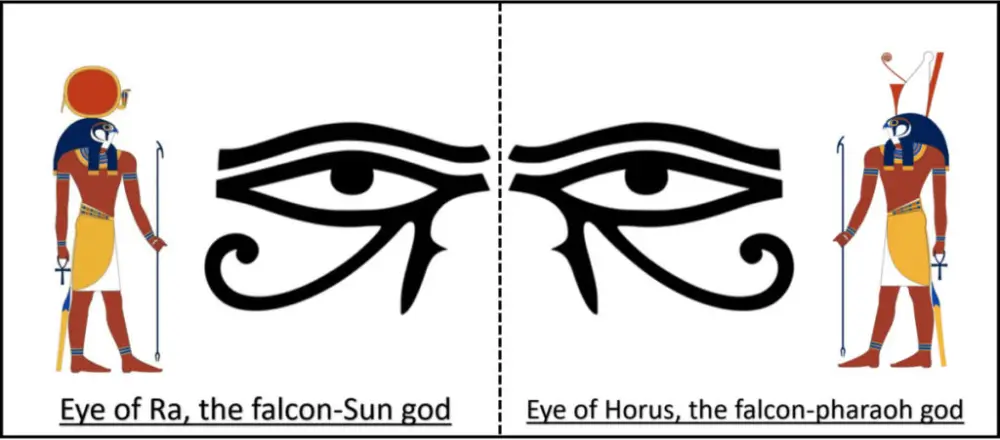
The difference between Eye of Ra and Eye of Horus is one of the most misunderstood topics in ancient Egyptian symbolism. At first glance, the two symbols look nearly identical — which leads many people to assume they mean the same thing.
They don’t.
While both eyes are powerful ancient Egyptian symbols, they represent very different forces, gods, and ideas. One is linked to protection, healing, and balance. The other is associated with power, destruction, and divine authority.
Understanding the difference between the Eye of Ra and the Eye of Horus isn’t just about mythology — it reveals how ancient Egyptians viewed order vs. chaos, mercy vs. punishment, and masculine vs. feminine energy.
In this article, we’ll break down the differences clearly and simply — no confusion, no myths, just accurate meanings rooted in Egyptian belief.
What is the Eye of Ra?
The Eye of Ra is a powerful ancient Egyptian symbol representing authority, destruction, protection, and divine vengeance. Unlike the Eye of Horus, which is closely tied to healing and restoration, the Eye of Ra reflects the active, forceful power of the sun god Ra.
In Egyptian belief, the Eye of Ra was not just a symbol — it was a living extension of Ra himself, capable of acting independently to enforce order and punish chaos.
Origin and Meaning
Ra was the supreme sun god and creator deity in ancient Egypt. The Eye of Ra symbolized:
-
The sun’s scorching power
-
Royal authority and dominance
-
Protection through force
-
Punishment of enemies of cosmic order (Ma’at)
In myths, Ra would send his Eye to destroy those who threatened balance in the world.
A Feminine Force of Power
Interestingly, the Eye of Ra is often personified as a female goddess, such as:
-
Sekhmet (destruction and war)
-
Hathor (fury and later compassion)
-
Bastet (controlled protection)
These goddesses represented different expressions of the same Eye — ranging from uncontrollable rage to protective strength.
The Eye of Ra and Destruction
One of the most famous myths describes Ra sending his Eye to punish humanity for disobedience. The Eye became so destructive that Ra eventually had to calm it down to prevent total annihilation.
This story highlights the Eye of Ra’s core theme:
power that protects order — even if it requires destruction.
Right Eye vs. Left Eye
Traditionally, the Eye of Ra is associated with the right eye, symbolizing:
-
The sun
-
Masculine energy
-
Action, dominance, and authority
This contrasts with the Eye of Horus, which is linked to the left eye and the moon.
Key Traits of the Eye of Ra
-
Symbol of raw power and authority
-
Connected to the sun and fire
-
Acts as a weapon of divine justice
-
Represents protection through strength, not healing
The Myth of the Eye of Ra
The myth of the Eye of Ra is one of the most dramatic and symbolic stories in ancient Egyptian mythology. It explains why the Eye of Ra represents destruction, control, and divine punishment, rather than healing or mercy.
Humanity’s Rebellion Against Ra
According to Egyptian myth, humans began to plot against Ra as he aged and ruled the world. They questioned his authority and threatened the balance of Ma’at (cosmic order).
Ra’s response was swift and absolute.
He sent his Eye — not as a warning, but as a weapon.
The Eye Becomes Sekhmet
The Eye of Ra transformed into Sekhmet, the fierce lioness goddess of war and plague. Sekhmet descended upon humanity and began slaughtering them mercilessly, restoring order through destruction.
This moment defines the Eye of Ra’s core nature:
-
It does not negotiate
-
It does not heal
-
It enforces order through fear and force
When Destruction Goes Too Far
Sekhmet’s rage became so intense that even Ra realized she might destroy all of humanity. To stop her, Ra devised a clever plan.
He ordered vast quantities of beer to be dyed red to resemble blood and poured across the land.
Sekhmet drank it, became intoxicated, and fell asleep, ending the massacre.
Transformation Into Hathor
After being calmed, Sekhmet transformed into Hathor, a goddess of love, joy, and motherhood. This transformation shows that the Eye of Ra is not a single personality, but a force that can shift between:
-
Destruction (Sekhmet)
-
Passion and joy (Hathor)
-
Protection and control (Bastet)
All are expressions of the same Eye.
Symbolic Meaning of the Myth
The myth teaches several key ideas central to Egyptian belief:
-
Order is more important than individual lives
-
Divine power must sometimes be restrained
-
Creation and destruction are two sides of the same force
The Eye of Ra represents unchecked power — necessary, dangerous, and ultimately controlled by the god Ra himself.
Why This Myth Matters
This story explains why the Eye of Ra is associated with:
-
The sun’s burning heat
-
Punishment rather than healing
-
Authority rather than compassion
It also highlights the biggest difference between the Eye of Ra and the Eye of Horus:
one destroys to restore order — the other heals to restore balance.
Read:
What is the Eye of Horus?
The Eye of Horus, also known as the Wedjat (or Udjat) Eye, is one of the most important symbols in ancient Egyptian mythology. It represents protection, healing, restoration, and balance, making it fundamentally different from the Eye of Ra.
Where the Eye of Ra is about power and punishment, the Eye of Horus is about repairing what was broken.
The Origin of the Eye of Horus
Horus was the sky god and rightful king of Egypt. In myth, he fought his uncle Set, the god of chaos, to avenge the murder of his father Osiris.
During their violent battles:
-
Horus lost his left eye
-
The eye was damaged or torn apart by Set
The god Thoth, deity of wisdom and magic, later restored the eye, making it whole again.
This restored eye became the Eye of Horus.
Meaning and Symbolism
Because the eye was injured and then healed, it came to symbolize:
-
Healing and recovery
-
Protection from harm
-
Wholeness and balance
-
Renewal after loss
For ancient Egyptians, the Eye of Horus represented the idea that order can be restored without destruction.
The Moon Connection
The Eye of Horus is traditionally linked to the left eye and the moon:
-
The moon’s phases reflect the eye being damaged and restored
-
This association reinforces themes of renewal and cycles
This lunar symbolism contrasts with the solar, fiery nature of the Eye of Ra.
Use in Daily Life and the Afterlife
The Eye of Horus was widely used in:
-
Amulets for protection
-
Medical and magical texts
-
Funerary practices, including burial rituals
It was believed to protect both the living and the dead, guiding souls safely into the afterlife.
Mathematical and Cosmic Meaning
The Eye of Horus was also used as a symbol of measurement and completeness. Its parts were associated with fractions used in ancient Egyptian mathematics, reinforcing the idea of balance and order.
Key Traits of the Eye of Horus
-
Symbol of healing and protection
-
Connected to the moon and restoration
-
Represents balance, justice, and wholeness
-
Protective rather than aggressive in nature
The Myth of the Eye of Horus
The myth of the Eye of Horus is a story of loss, struggle, and restoration — and it explains why this symbol became associated with healing, protection, and balance in ancient Egyptian belief.
Unlike the Eye of Ra, which is unleashed to punish, the Eye of Horus is earned through suffering and restored through wisdom.
The Battle Between Horus and Set
After the god Osiris was murdered by his brother Set, the throne of Egypt was left in dispute. Osiris’s son, Horus, challenged Set to reclaim his rightful place as king and restore cosmic order.
Their conflict was long and brutal, symbolizing the eternal struggle between:
-
Order (Horus)
-
Chaos (Set)
During one of their battles, Set damaged or tore out Horus’s left eye.
The Loss of the Eye
The destruction of Horus’s eye represented:
-
Disorder in the universe
-
The breaking of balance
-
The suffering required to achieve justice
This moment is crucial: the Eye of Horus is not born whole — it is broken first.
Thoth Restores the Eye
The god Thoth, deity of wisdom, magic, and knowledge, intervened. Using his divine skill, Thoth reassembled and healed the damaged eye, restoring it to wholeness.
This restored eye became known as the Wedjat, meaning “the whole one.”
The act of restoration transformed the eye into a symbol of:
-
Healing after injury
-
Balance after chaos
-
Wisdom overcoming violence
The Eye as an Offering
In some versions of the myth, Horus later offers the healed eye to Osiris in the underworld, helping revive or sustain him in the afterlife.
This act gives the Eye of Horus an even deeper meaning:
-
Sacrifice for renewal
-
Protection beyond death
-
Life continuing after destruction
Symbolic Meaning of the Myth
The myth teaches several core Egyptian values:
-
Order can be restored without annihilation
-
Healing is a divine act
-
Wholeness comes from wisdom, not rage
Unlike the Eye of Ra, which enforces order through fear, the Eye of Horus restores order through repair and balance.
Why This Myth Matters
This story explains why the Eye of Horus became:
-
A powerful protective amulet
-
A symbol of health and recovery
-
A guide for the soul in the afterlife
At its core, the myth of the Eye of Horus shows that true power lies not in destruction, but in restoration.
difference between eye of ra and eye of horus
Although the Eye of Ra and the Eye of Horus look similar, they represent very different meanings, gods, and forces in ancient Egyptian belief. Confusing them is common — but understanding the difference reveals how Egyptians viewed power, balance, and justice.
Core Difference (In Simple Terms)
-
Eye of Horus = healing, protection, restoration
-
Eye of Ra = power, authority, destruction
One repairs what is broken.
The other destroys what threatens order.
Side-by-Side Comparison
| Aspect | Eye of Horus | Eye of Ra |
|---|---|---|
| Associated God | Horus | Ra |
| Primary Meaning | Healing, protection, balance | Power, vengeance, authority |
| Eye Side | Left eye | Right eye |
| Celestial Body | Moon | Sun |
| Nature | Restorative and protective | Aggressive and controlling |
| Myth Origin | Eye damaged by Set and healed by Thoth | Eye sent by Ra to punish humanity |
| Symbolic Role | Repairing order | Enforcing order |
| Energy | Calm, measured, balanced | Fierce, active, destructive |
| Common Use | Amulets, healing, afterlife protection | Royal power, divine punishment |
Mythological Difference
-
The Eye of Horus is born from loss and healing. It is broken, restored, and made whole — symbolizing renewal and balance.
-
The Eye of Ra is unleashed as a weapon. It acts independently to destroy threats to cosmic order and must sometimes be restrained.
This contrast reflects a key Egyptian belief:
order can be restored either through healing or through force.
Symbolic Philosophy
-
The Eye of Horus represents wisdom, mercy, and recovery
-
The Eye of Ra represents raw power, dominance, and divine justice
Neither is “good” or “evil” — both are necessary forces in maintaining Ma’at (cosmic balance).
Why They’re Often Confused
-
Similar visual design
-
Both called “the Eye”
-
Both connected to protection
But their purpose and energy are fundamentally different.
Final Takeaway
If you remember just one thing:
- The Eye of Horus heals to restore balance.
- The Eye of Ra destroys to restore order.
That is the true difference between the Eye of Ra and the Eye of Horus.
Also read:
Explore the Secrets of Ancient Egypt Beyond the Eye of Ra and Eye of Horus
The Eye of Ra and the Eye of Horus are only the beginning. Ancient Egypt was a civilization built on layers of symbolism, where every god, object, and ritual carried multiple meanings tied to life, death, power, and the universe.
To truly understand Egyptian mythology, you have to look beyond the eyes.
Ma’at: The Principle That Ruled Everything
At the heart of Egyptian belief was Ma’at — the concept of truth, balance, order, and cosmic harmony. Every god, including Ra and Horus, existed to maintain Ma’at. When chaos threatened it, destruction followed. When balance was broken, healing was required. This is why both Eyes existed: different tools for the same cosmic goal.
Other Powerful Egyptian Symbols Worth Knowing
Ancient Egypt communicated ideas visually. Some of the most important symbols include:
-
Ankh – life, vitality, and eternal existence
-
Djed Pillar – stability, endurance, and the backbone of Osiris
-
Was Scepter – divine authority and control
-
Scarab Beetle – rebirth, transformation, and the rising sun
Each symbol worked together with others, forming a complete spiritual language rather than isolated meanings.
Gods as Forces, Not Characters
Egyptian gods were not just personalities — they were forces of nature and consciousness:
-
Osiris represented death, resurrection, and the afterlife
-
Isis symbolized magic, motherhood, and protection
-
Anubis governed mummification and the journey of the soul
-
Thoth embodied wisdom, writing, time, and divine order
These gods interacted constantly, shaping myths that explained the cycles of life and the universe.
The Afterlife: Egypt’s Greatest Obsession
More than anything, ancient Egyptians focused on what came after death. Tombs, spells, amulets, and rituals were all designed to ensure safe passage to the afterlife. Symbols like the Eye of Horus were placed on mummies not as decoration, but as spiritual tools.
The goal was not immortality alone — it was continuity.
Why These Myths Still Matter Today
The symbols of ancient Egypt survive because they address universal themes:
-
Order vs. chaos
-
Power vs. compassion
-
Destruction vs. healing
These ideas still resonate in modern spirituality, art, psychology, and popular culture.
Final Thought
The Eyes of Ra and Horus teach us how the universe responds to imbalance — sometimes with force, sometimes with healing. But Egypt’s wisdom goes far deeper. When you explore its myths as a connected system rather than isolated stories, you begin to see why this civilization continues to fascinate the world thousands of years later.
Which Symbol Resonates with You Between Eyes of Horus and Ra?




Leave a Reply