names of pharaohs in ancient egypt

Today, you can still discover the incredible monuments built by these legendary rulers on our Egypt Travel Guide, explore the Cairo Travel Guide, or follow the footsteps of the pharaohs on a luxury Egypt Nile Cruise Guide between Luxor and Aswan.
Merneith – ±2900 BC.
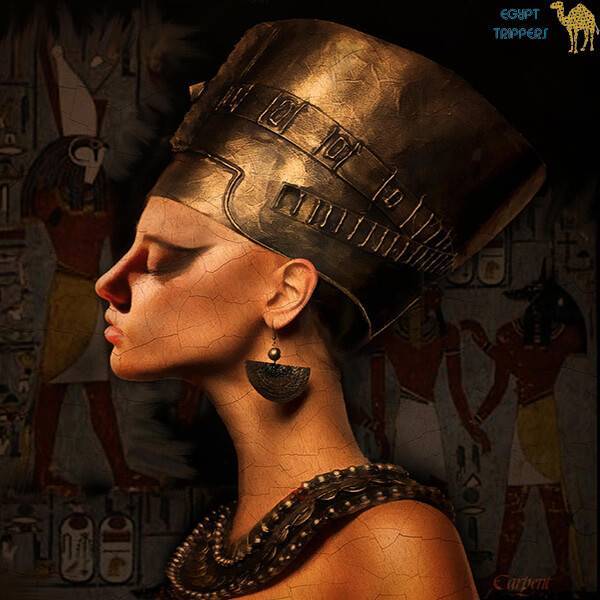
Mother herself came to the throne
‘Mother of the King’ reads the inscription on Merneith’s seal. But she was more than just Pharaoh Den’s mother.
She was Egypt’s first female pharaoh, and set an example for later women to gain power through their sons. Merneith has a beautiful funerary monument in the royal city of Abydos in the burial complex Umm al-Qa’ab. There she lies side by side with the greatest pharaohs of her time.
Tutankhamun – 1333-1323 BC.
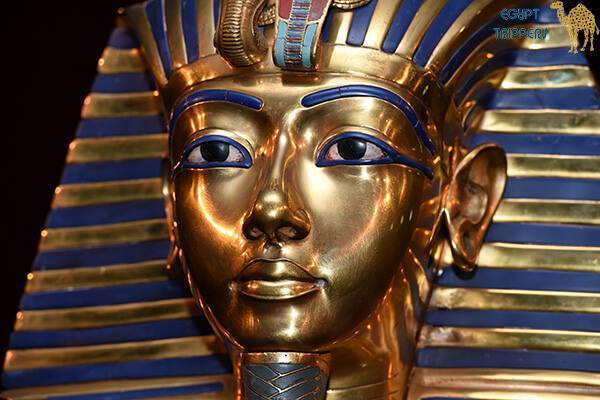
Child King became a source of knowledge about his country
Tutankhamun died at the age of 18 and therefore did not really leave his mark on Egypt. His heyday came over 3000 years later, in the year 1922, when his grave was discovered.
The archaeologist Howard Carter found more than 700 objects in the tomb, which tell us a lot about the young pharaoh and life in ancient times. And, very exceptionally, the mummy and the precious sarcophagus were intact.
In addition to a gold treasure, the well-preserved tomb also contained richly decorated chests and four chariots and beds in the shape of a hippopotamus. The Egyptian government nationalized the find, which is now on display in the Egyptian Museum.
Senuseret I – 1971-1926 BC.
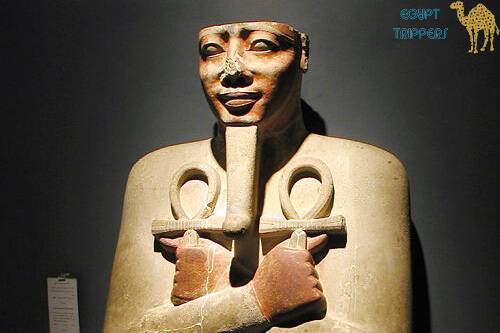
Cruel king called himself ‘decapitator of Asia’
Always on the warpath, Senuseret I expanded the empire into Palestine, Libya and Nubia.
The self-assured pharaoh called himself ‘decapitator of Asia’ and had the names of his Asian enemies carved on jars, which he then smashed during a ritual, as if they were his enemies themselves.
Cleopatra – 51-30 BC.
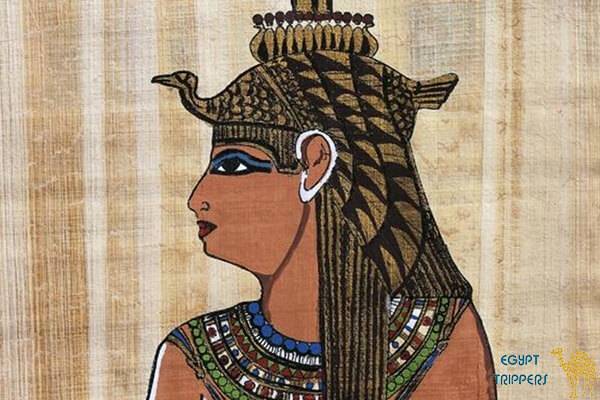
Last pharaoh lost everything
Cleopatra destroyed the Egypt of the pharaohs. She tried to ally herself with the most powerful Romans, but after an ignominious defeat, she committed suicide.
She had a son with Julius Caesar and married Mark Antony. But when Marcus and Cleopatra were defeated by Octavian at the Battle of Actium, the fate of Egypt was sealed.
With the death of Cleopatra, an era came to an end.
Thutmose III – 1479-1425 BC.
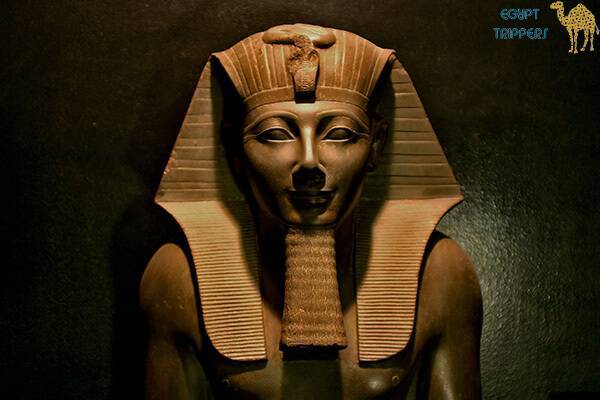
Napoleon of the Nile
Thutmose III was small in stature, but an excellent strategist, taking his troops far into Nubia and Syria and making Egypt bigger than ever.
His stepmother Hatshepsut had ruled in his name for 13 years, and in order to step out of her shadow, he had all images of her destroyed.
Many of the temples expanded during Thutmose III’s reign can still be explored today, especially the magnificent Karnak Temple, one of the highlights of every Luxor Tour.
Hatshepsut – 1479-1458 BC.
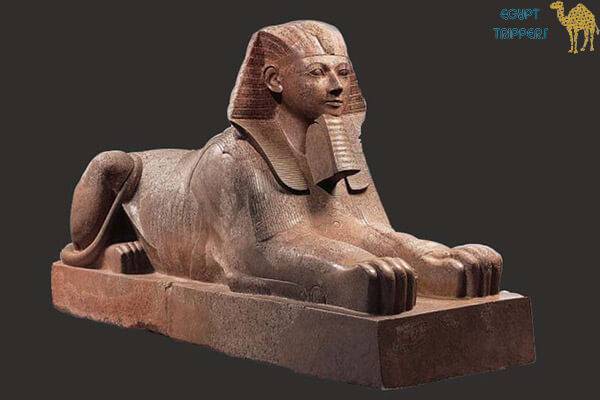
No other woman made such a shrewd grab for power as Hatshepsut.
Like Merneith, Hatshepsut used her son to gain power. She was appointed regent until her 3-year-old stepson, Thutmose III, was old enough to rule. But she soon declared herself sole ruler and waged a number of successful wars.
She is best known for her expedition to the mythical Land of Punt (the land of gold, whose location we do not know), where she sourced ebony and frankincense.
Depicted in her mortuary temple at Deir el-Bahari, the journey is considered the world’s first botanical expedition.
To survive in a man’s world, she called herself Maatkare – ‘truth is the soul of the sun god’ – to emphasize her divinity.
Djoser – 19 or 28 years from 2670 BC.
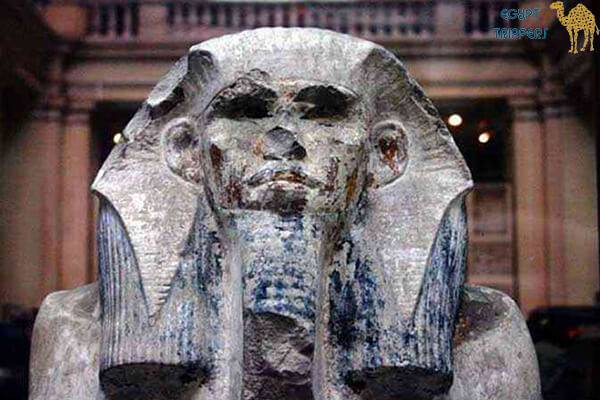
Inventor of the Classical Pyramid
The pharaoh Djoser went down in history as the creator of the pyramid. Its 62-metre-high step pyramid was a milestone in Egyptian architecture, partly because Djoser replaced claystone with stone.
A preserved papyrus shows that 100 years later Djoser’s successor Cheops ordered his subjects to sacrifice to Djoser when he began building his own pyramid at Giza.
Djoser’s revolutionary Step Pyramid remains one of Egypt’s greatest architectural achievements. Learn more about visiting this remarkable monument in our Saqqara Day Tour and discover why it’s included in many of our Egypt Tour Packages.
Ahmose I – 1539-1514 BC.
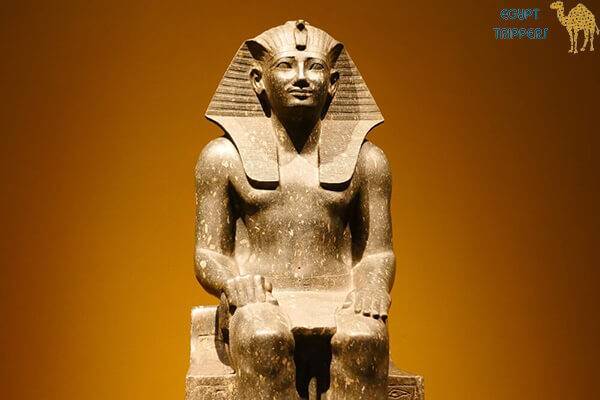
Ahmose reunited Egypt
When Ahmose was 10, his father and brother were killed in the war against the Hyksos and Egypt was on the brink of collapse.
The young pharaoh reformed the army and not only defeated the Hyksos, he also subdued the Nubians in the south and reunited the Egyptian empire.
Cheops – ±2600 BC.
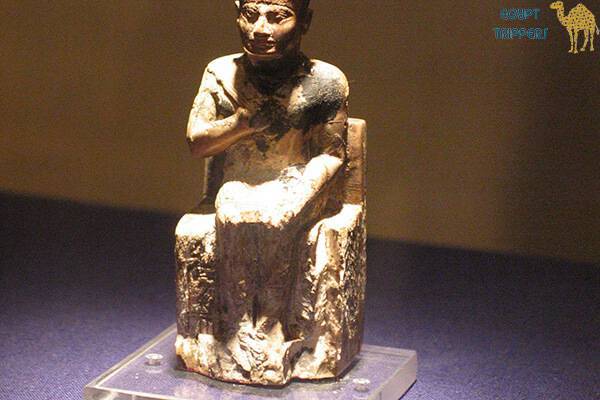
Cheops built a monument
As far back as classical antiquity, the Greeks considered his pyramid one of the Seven Wonders of the World – the only one that still exists.
Cheops became famous thanks to his pyramid. But we know relatively little about his life, partly because the pyramids were looted in antiquity and therefore do not contain many clues.
His gigantic structure has been searched countless times for hidden spaces in modern times, but the mystery remains.
And it’s still a mystery how the Egyptians were able to build the 150-meter-high pyramid with bronze tools.
Ramesses II – 1290-1224 BC.
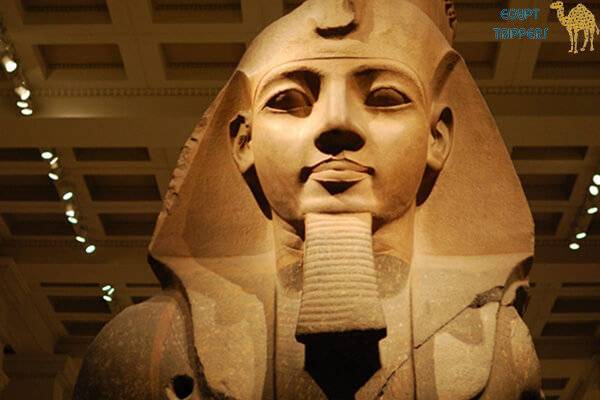
Ramesses II was known as ‘the Great’, and all subsequent pharaohs spoke reverently of ‘our great ancestor’. Nine pharaohs named themselves after him.
He sat on the throne for 67 years, and won many victories on the battlefield. He is therefore considered to be the most important and most powerful pharaoh the Egyptian empire ever had.
The Battle of Kadesh in 1274 BC. in Syria, where he defeated a Hittite force majeure, was Ramses’ first major victory, and he liked to show it off.
He recorded in inscriptions throughout Egypt that he defeated 40,000 Hittite foot soldiers and 2,500 chariots.
Ramses left behind a series of imposing buildings. He founded the city of Pi-Ramesse, north of present-day Cairo, which became the capital of his successors.
He also built the Ramesseum mortuary temple on the Nile Delta and the impressive, colossal statues near the city of Abu Simbel.
The magnificent temples of Abu Simbel are considered Ramesses II’s greatest architectural masterpiece and are among the most unforgettable excursions from Aswan.
🏺 Walk in the Footsteps of Egypt’s Greatest Pharaohs
Reading about Egypt’s legendary rulers is only the beginning. From Djoser’s Step Pyramid and the Great Pyramid of Giza to the breathtaking temples of Luxor, Karnak, and Abu Simbel, you can explore the extraordinary monuments built by these famous pharaohs with expert Egyptologists.
Whether you’re dreaming of cruising the Nile or discovering ancient tombs and temples, Egypt Trippers offers carefully designed itineraries that bring thousands of years of history to life.
👉 Start Your Journey
- Explore our Egypt Nile Cruise Guide and discover the best cruise itineraries between Luxor and Aswan.
- Browse our Egypt Tour Packages featuring the Pyramids, the Grand Egyptian Museum, Abu Simbel, and the Valley of the Kings.
- Plan your trip with our Egypt Travel Guide for expert advice, destination tips, and practical travel information.


Leave a Reply