Temple of Abu Simbel Facts: The Engineering Miracle of Ramses II
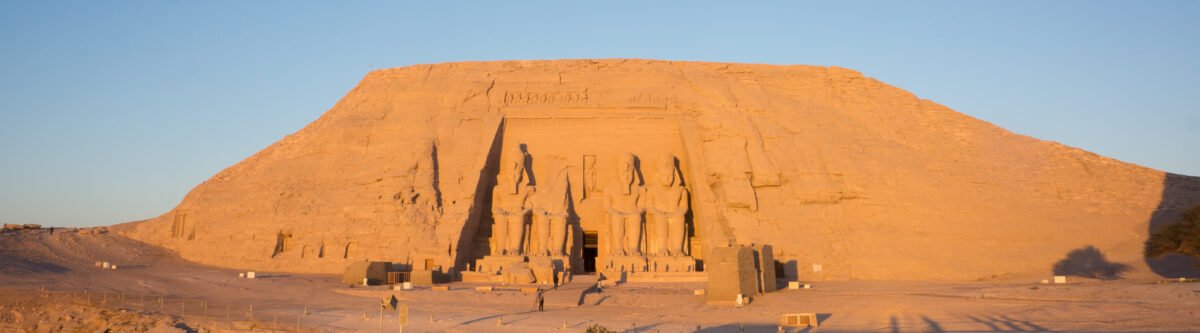
Temple of Abu Simbel facts reveal one of ancient Egypt’s most impressive achievements in architecture, engineering, and symbolism. Located in southern Egypt near the Sudanese border, the Abu Simbel temples were carved directly into a mountainside during the reign of Pharaoh Ramses II. Famous for their colossal statues, precise solar alignment, and dramatic relocation in the 20th century, these temples continue to fascinate historians, travelers, and archaeology lovers alike.
Best of temple of abu simbel facts
Here are the most impressive and fascinating Temple of Abu Simbel facts that make this site one of Egypt’s greatest ancient wonders:
Built by Ramses II
The Abu Simbel temples were constructed in the 13th century BCE during the reign of Pharaoh Ramses II, one of Egypt’s most powerful rulers. The main temple was dedicated to Ramses II himself and the gods Ra-Horakhty, Amun, and Ptah.
Carved from Solid Rock
One of the most remarkable Temple of Abu Simbel facts is that the temples were entirely carved into a sandstone cliff, not built with blocks. This required extreme precision and advanced engineering skills.
Solar Alignment Phenomenon
Twice a year—around February 22 and October 22—sunlight penetrates the temple and illuminates statues in the inner sanctuary. This alignment highlights Ramses II and two gods, while Ptah, the god of the underworld, remains in darkness.
Colossal Statues
The entrance of the Great Temple features four massive seated statues of Ramses II, each standing about 20 meters (65 feet) tall, symbolizing power, divinity, and eternal rule.
Two Temples, One Site
Abu Simbel includes:
-
The Great Temple of Ramses II
-
The Small Temple dedicated to Queen Nefertari, one of the few times a queen was honored equally with a pharaoh
A Modern Engineering Miracle
In the 1960s, the temples were relocated stone by stone to avoid flooding caused by the Aswan High Dam. This UNESCO-led rescue is considered one of the greatest archaeological preservation efforts in history.
UNESCO World Heritage Site
Today, Abu Simbel is protected as part of a UNESCO World Heritage Site, recognizing its global historical and cultural importance.
What is found on Abu Simbel comples?
The Abu Simbel complex consists of two massive rock-cut temples and several remarkable architectural and artistic elements. Below is a clear breakdown of what visitors can find at this iconic ancient site:
The Great Temple of Ramses II
-
Four colossal seated statues of Ramses II carved into the façade
-
Smaller statues of royal family members, including Queen Nefertari and royal children
-
An entrance hall with Osiride pillars shaped like Ramses II
-
Wall reliefs showing military victories, including the Battle of Kadesh
-
An inner sanctuary with statues of Ra-Horakhty, Amun, Ptah, and Ramses II
The Small Temple of Queen Nefertari
-
Dedicated to Queen Nefertari and the goddess Hathor
-
Six large standing statues—four of Ramses II and two of Nefertari—an unusual honor for a queen
-
Interior carvings showing the queen participating in religious rituals
-
Hathor-headed columns and detailed wall reliefs
Sacred Solar Alignment
-
A precisely designed corridor that allows sunlight to reach the inner sanctuary
-
Occurs twice a year, illuminating specific statues while leaving Ptah in shadow
Rock-Cut Architecture and Reliefs
-
Temples carved directly into a sandstone cliff
-
Highly detailed hieroglyphs, inscriptions, and symbolic artwork
-
Scenes representing religion, power, and divine kingship
Together, these features show why the site is so famous. The Temple of Abu Simbel facts highlight not just monumental statues, but a complete religious and political complex designed to display royal authority and divine connection.
Read:
Discover of Abu Simbel
The discovery of Abu Simbel is a fascinating story of exploration, sand burial, and rediscovery that adds to the site’s historical importance.
Rediscovered in the 19th Century
Although the temples were built in the 13th century BCE, they were largely buried under desert sand for centuries. Only the upper parts of the colossal statues were visible for a long time.
Giovanni Belzoni’s Discovery (1817)
The Abu Simbel temples were officially rediscovered in 1817 by Italian explorer Giovanni Belzoni. With the help of local workers, he cleared massive amounts of sand to reveal the entrance to the Great Temple.
A Lost Monument Beneath the Sand
Before rediscovery:
-
The temples were almost completely hidden
-
Wind-blown sand from the Nubian Desert covered the façades
-
Local communities knew of the statues but not the full complex
Importance of the Discovery
The rediscovery of Abu Simbel:
-
Revealed one of the largest rock-cut temples in ancient Egypt
-
Provided valuable insights into the reign of Ramses II
-
Sparked global interest in Nubian monuments and archaeology
From Discovery to Preservation
The discovery later played a key role in the UNESCO rescue project of the 1960s, when the temples were relocated to save them from flooding caused by the Aswan High Dam.
The discovery of Abu Simbel transformed a sand-buried monument into one of the most celebrated archaeological sites in the world and remains a key part of Temple of Abu Simbel facts today.
Also read:
Abu Simbel Astrological – Archaeological Mystery
The Abu Simbel astrological–archaeological mystery is one of the most fascinating aspects of the site, blending ancient astronomy, religion, and advanced engineering in a way that still amazes scholars today.
The Solar Alignment Phenomenon
The most famous mystery of Abu Simbel occurs twice each year, around February 22 and October 22. On these days, sunlight travels deep into the Great Temple and illuminates the statues in the inner sanctuary.
Precise Astronomical Design
During the alignment:
-
The statues of Ramses II, Amun, and Ra-Horakhty are lit
-
The statue of Ptah, the god associated with the underworld, remains in darkness
-
This precision suggests advanced knowledge of solar movement and seasonal cycles
Symbolism Behind the Dates
Many researchers believe the dates may relate to:
-
The coronation day of Ramses II
-
The pharaoh’s birthday
-
Seasonal markers connected to ancient Egyptian religious calendars
While the exact meaning remains debated, the consistency of the alignment supports its intentional design.
Engineering Beyond Its Time
What deepens the mystery is that the solar alignment still works today, even after the temples were relocated in the 1960s. The shift altered the dates by only about one day, highlighting the extraordinary accuracy of the original construction.
A Blend of Science and Belief
The Abu Simbel mystery reflects how ancient Egyptians merged:
-
Astronomy to track the sun
-
Architecture to shape sacred space
-
Religion to reinforce divine kingship
This astrological–archaeological phenomenon is a key reason the site continues to intrigue historians, archaeologists, and travelers, and it remains one of the most compelling Temple of Abu Simbel facts.
Saving Abu Simble
The saving of Abu Simbel is one of the greatest achievements in modern archaeological preservation and a landmark moment in global heritage protection.
Threat from the Aswan High Dam
In the 1950s, the construction of the Aswan High Dam threatened to submerge the Abu Simbel temples under the rising waters of Lake Nasser. Without intervention, the temples would have been lost forever.
UNESCO’s International Rescue Campaign
In 1960, UNESCO launched an unprecedented international campaign to save Abu Simbel. Experts, engineers, and archaeologists from around the world collaborated on a solution.
Dismantling and Relocation
To preserve the temples:
-
Abu Simbel was cut into more than 1,000 massive stone blocks
-
Each block weighed up to 30 tons
-
The temples were reassembled 65 meters higher and about 200 meters inland
-
An artificial mountain was created to replicate the original setting
Preserving the Solar Alignment
One of the greatest challenges was maintaining the solar alignment phenomenon. Engineers successfully preserved it, with only a slight shift of about one day in the alignment dates.
A Global Preservation Milestone
The saving of Abu Simbel:
-
Set new standards for heritage conservation
-
Inspired future UNESCO preservation projects
-
Ensured the survival of one of the most important Temple of Abu Simbel facts for future generations
Today, Abu Simbel stands not only as a monument to ancient Egyptian genius, but also as a symbol of what global cooperation can achieve in protecting human history.
Relocation of Abu Simbel Temple
The relocation of Abu Simbel Temple is considered one of the most extraordinary engineering and archaeological operations of the 20th century, carried out to save the monument from destruction.
Why the Temple Was Relocated
In the 1960s, the construction of the Aswan High Dam caused water levels to rise, threatening to flood the Abu Simbel temples permanently under Lake Nasser. Relocation was the only solution to preserve the site.
How the Relocation Was Done
The relocation process was complex and highly precise:
-
The temples were cut into more than 1,000 sandstone blocks
-
Each block weighed between 20 and 30 tons
-
Every piece was carefully numbered and documented
-
The temples were reassembled on a man-made hill, about 65 meters higher and 200 meters inland
Recreating the Original Setting
Engineers constructed an artificial dome and mountain to mimic the original cliff face. This ensured the temples retained their original appearance and symbolic relationship with the landscape.
Impact on the Solar Alignment
One of the greatest concerns was preserving the famous solar alignment. After relocation, the phenomenon continued to occur with only a one-day shift, proving the remarkable accuracy of both ancient and modern engineering.
Historical Significance
The relocation of Abu Simbel Temple:
-
Saved a priceless ancient monument from destruction
-
Became a model for future UNESCO heritage rescue projects
-
Strengthened global awareness of cultural preservation
This relocation remains a defining chapter in Temple of Abu Simbel facts, showing how modern science worked hand in hand with ancient genius to protect history.
Great Temple of Abu Simbel
The Great Temple of Abu Simbel is the largest and most famous monument at the site, built to demonstrate the power, divinity, and eternal legacy of Pharaoh Ramses II.
Purpose and Dedication
The temple was constructed in the 13th century BCE and dedicated to Ra-Horakhty, Amun, Ptah, and Ramses II himself, who was worshipped as a living god. It served both religious and political purposes, reinforcing royal authority in Nubia.
Colossal Façade
The most striking feature of the Great Temple is its monumental entrance:
-
Four seated statues of Ramses II, each about 20 meters (65 feet) tall
-
Smaller figures of royal family members carved beside the legs
-
One statue collapsed in ancient times, with fragments still visible at the base
Interior Design
Inside the temple, visitors find:
-
A grand hypostyle hall with Osiride pillars shaped like Ramses II
-
Wall reliefs depicting military victories, including the Battle of Kadesh
-
A long corridor leading to the inner sanctuary
Sacred Sanctuary and Solar Alignment
At the heart of the temple lies the sanctuary with statues of Ra-Horakhty, Amun, Ptah, and Ramses II. Twice a year, sunlight reaches this chamber, illuminating all statues except Ptah, reinforcing the temple’s cosmic symbolism.
Historical Importance
The Great Temple of Abu Simbel represents:
-
Advanced rock-cut architecture
-
Precise astronomical knowledge
-
A powerful statement of ancient Egyptian religion and kingship
As a centerpiece of Temple of Abu Simbel facts, the Great Temple stands as a lasting symbol of ambition, belief, and architectural mastery.
Related:
Why is the Abu Simbel Temple important?



Leave a Reply