Face to Face with History: What Did Mummies Look Like in Real Life?
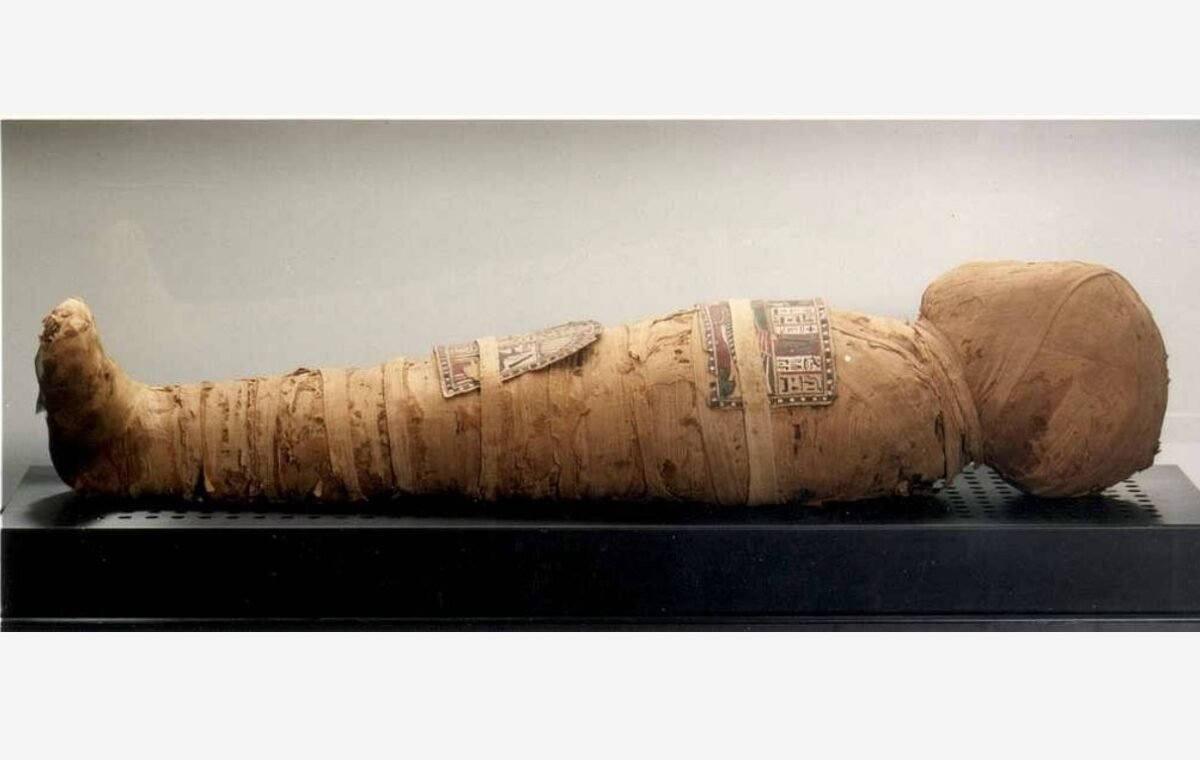
What we imagine often says more about us than about history itself.
Close your eyes and picture a mummy. Linen-wrapped silence. A rigid human outline resisting time. But is that image honest?
The question what did mummies look like forces us to confront a gap between pop culture and archaeology. Real mummies were not uniform. Their appearance shifted by era, region, and purpose. Some were carefully preserved works of ritual. Others were darkened, shrunken bodies shaped by climate rather than ceremony. Understanding their look is really about understanding how ancient people viewed death, memory, and the body itself.
Table of Contents:
ToggleEgyptian Mummies
Imagine a body prepared not for burial, but for eternity. Egyptian mummies were carefully transformed human remains, shaped by belief more than decay. The skin often turned dark brown or black from resins and oils. Facial features remained recognizable, sometimes startlingly so. Arms were crossed, the body wrapped in dozens of linen layers, each pulled tight with intent.
Elite mummies could include painted masks, glass eyes, and amulets pressed between bandages. Ordinary Egyptians looked different. Less linen. Fewer resins. Nature played a larger role than ritual. The final appearance reflected status, era, and access to priests.
So when asking what did mummies look like, Egypt offers many answers. Not one face of death, but many.
Read:
what did mummies look like?
- Every civilization leaves bodies behind. Few leave questions this stubborn.
- The phrase what did mummies look like seems simple, yet it unsettles certainty the moment you think past movies and museums.
- Were they peaceful sleepers wrapped in linen, or distorted remains shaped by heat, salt, and belief? Reality lives between reverence and biology.
- Mummies could appear darkened, shrunken, rigid, or eerily lifelike. Their look depended on culture, climate, and intention. To understand their appearance is to glimpse how ancient people imagined the afterlife—and feared forgetting.
Mummification Process
- Death, for ancient Egyptians, was not an ending. It was a technical challenge. The mummification process was a precise ritual designed to preserve identity, not just flesh.
- First, embalmers removed the brain through the nose. Quiet. Invasive. Intentional. Internal organs followed, except the heart, which stayed as the seat of memory. The body was then covered in natron salt for weeks, drawing out moisture until skin tightened and darkened. After drying, oils and resins were applied. This gave mummies their deep brown color and hardened surface.
- Finally came linen. Layer upon layer. Amulets placed with care. Each step shaped how mummies looked centuries later.
- The result was not natural preservation. It was engineered eternity.
Also read:
Who Was Mummified?
- Not everyone earned eternity the same way. Mummification began as a privilege, then slowly widened its circle. In early periods, it belonged almost exclusively to pharaohs. Their bodies were divine vessels, not ordinary remains.
- Later, nobles and high officials followed. Wealth opened the door. Priests, scribes, and military leaders joined as techniques became more accessible. By the New Kingdom, even middle-class Egyptians could afford simplified mummification. Cheaper materials. Shorter rituals. Fewer amulets.
- The poor were different. Many were buried in desert sand, where nature, not priests, preserved them. These bodies still became mummies, but by accident, not design.
- So who was mummified? Anyone who believed the body mattered after death—and had the means to protect it.
Why are there so little mummies left?
- Time is not gentle, even with the dead. Most mummies never stood a chance.
- First, nature won. Floods, humidity, insects, and bacteria slowly erased bodies that were never perfectly sealed. Preservation was fragile. A small failure meant total loss.
- Second, humans interfered. Tombs were robbed for gold and amulets. Mummies were burned as fuel, ground into medicine, or unwrapped for spectacle in Europe. Yes, that happened.
- Third, politics mattered. Entire burial sites vanished under cities, farms, and modern roads. Progress buried the past without asking permission.
- Finally, survival was selective. Only dry climates, sealed tombs, and sheer luck allowed some mummies to endure.
- So the mystery isn’t why so few remain, The real question is why any survived at all.
Related:
What race were mummies?
This question feels modern, but the past didn’t think this way. Ancient people did not classify themselves by “race” as we do now.
Most mummies people picture come from ancient Egypt. These individuals were native Egyptians, a population shaped by Africa, the Mediterranean, and the Near East. Their physical features varied widely. Skin tones ranged from light brown to dark brown. Hair textures ranged from straight to tightly curled. That diversity was normal along the Nile.
Mummies elsewhere tell different stories.
In South America, mummies were Indigenous Andean peoples.
In China, they were ancient East Asian populations.
In Europe, naturally preserved bodies were local inhabitants shaped by cold climates.
So what race were mummies?
They were the people of their regions. Real humans. Complex ancestries. Not a single category.
Trying to force them into modern racial boxes tells us less about them—and more about us.
What is inside a mummy?
- At first glance, the answer seems obvious. A body. But that’s only the surface.
- Inside an Egyptian mummy, you usually find a carefully altered human form. The brain was removed. The lungs, liver, stomach, and intestines were taken out and stored separately. The heart remained, believed to hold memory and judgment.
- The chest and abdomen were then packed. Linen bundles. Resin-soaked cloth. Sometimes sawdust or mud. This prevented collapse and preserved shape. Over time, these materials hardened, turning the body almost shell-like.
- Between the wrappings, other things waited.
Amulets for protection. Scarabs over the heart. Charms placed at joints and scars. Each object had a purpose tied to the afterlife. - So what’s inside a mummy?
A body, yes. But also belief, fear, hope, and preparation for a life that was supposed to continue.
Suggested:
FAQ
Were all mummies wrapped in bandages?
No. Linen wrapping was common in Egypt, but many mummies around the world were preserved naturally without bandages or human intervention.
Do mummies still have skin and hair?
Often, yes. Skin usually darkened and tightened over time. Hair could survive, especially in dry deserts or frozen environments.
Did mummies smell bad?
Freshly opened mummies often smell of resin and oils, not decay. Ancient embalmers actively worked to control odor.
Are mummies always ancient?
No. Some mummies are only a few hundred years old. Preservation depends on conditions, not just age.
Can modern humans be mummified naturally?
Yes. Extreme dryness, cold, or lack of oxygen can still preserve bodies today.
Are mummies dangerous or cursed?
No. Curses belong to fiction. Mummies are human remains shaped by history, not supernatural forces.
Conclusion
Mummies are not frozen clichés from movies. They are outcomes of belief, environment, and human choice. Some were carefully engineered for eternity. Others survived by accident. Their appearance, contents, and survival tell us how different cultures understood death and memory.
When you look past the wrappings, you see something familiar. Fear of loss. Hope for continuation. A refusal to disappear quietly.
Mummies endure because humans always wanted to be remembered.

Hamdy
An Egyptian travel writer and researcher dedicated to helping visitors craft smart, well-planned itineraries. Hamdy doesn't just provide geographical facts; he shares personal insights on transportation, hospitality, and ancient sites to ensure every traveler’s visit to Egypt is both safe and unforgettable.

Leave a Reply