The Sun Feast at Abu Simbel is a rare astronomical and religious event linked to the famous solar alignment inside the Great Temple of Abu Simbel. It is one of the most remarkable achievements of ancient Egyptian engineering and belief.
The Solar Alignment Explained
Twice a year—around February 22 and October 22—the rising sun enters the Great Temple and travels down its long corridor to the inner sanctuary. During this moment:
-
The statues of Ramses II, Amun, and Ra-Horakhty are illuminated
-
The statue of Ptah, god of the underworld, remains in shadow
This precise event is what is commonly referred to as the Sun Feast.
Religious and Symbolic Meaning
The Sun Feast symbolized:
-
The divine status of Ramses II, who appears among the gods
-
The harmony between the sun, the gods, and the pharaoh
-
Renewal, power, and cosmic order in ancient Egyptian belief
Many scholars believe the dates may correspond to Ramses II’s birthday and coronation, though this remains debated.
Why It Is Considered Extraordinary
The Sun Feast is considered exceptional because:
-
The temple was carved over 3,000 years ago
-
The alignment still works with near-perfect accuracy
-
It continued even after the temple’s relocation in the 1960s, shifting by only about one day
Modern Celebration
Today, the Sun Feast is celebrated with:
-
Cultural events and performances
-
Visitors gathering to witness the sunrise alignment
-
Recognition of Abu Simbel as a blend of science, religion, and architecture
The Sun Feast perfectly illustrates why Abu Simbel is more than a monument—it is a living example of ancient knowledge, directly connected to understanding when was the Abu Simbel built and how advanced its builders truly were.
Also read:
Visiting the Abu Simbel Temple
Visiting the Abu Simbel Temple is a memorable experience that combines history, engineering, and breathtaking scenery. Whether you’re interested in learning when was the Abu Simbel built or witnessing its famous solar alignment, planning ahead helps make the visit smooth and rewarding.
Where Abu Simbel Is Located
Abu Simbel is located in southern Egypt, near the border with Sudan, on the western shore of Lake Nasser. It is about 280 kilometers south of Aswan.
How to Get There
You can reach Abu Simbel by:
-
Domestic flight from Aswan (the fastest option)
-
Private car or guided tour from Aswan (usually a very early start)
-
Organized convoys or tours arranged by hotels or travel agencies
Best Time to Visit
-
October to April for cooler weather
-
Early morning visits are ideal to avoid heat and crowds
-
February and October are popular due to the Sun Feast
What to Expect On-Site
Visitors can explore:
-
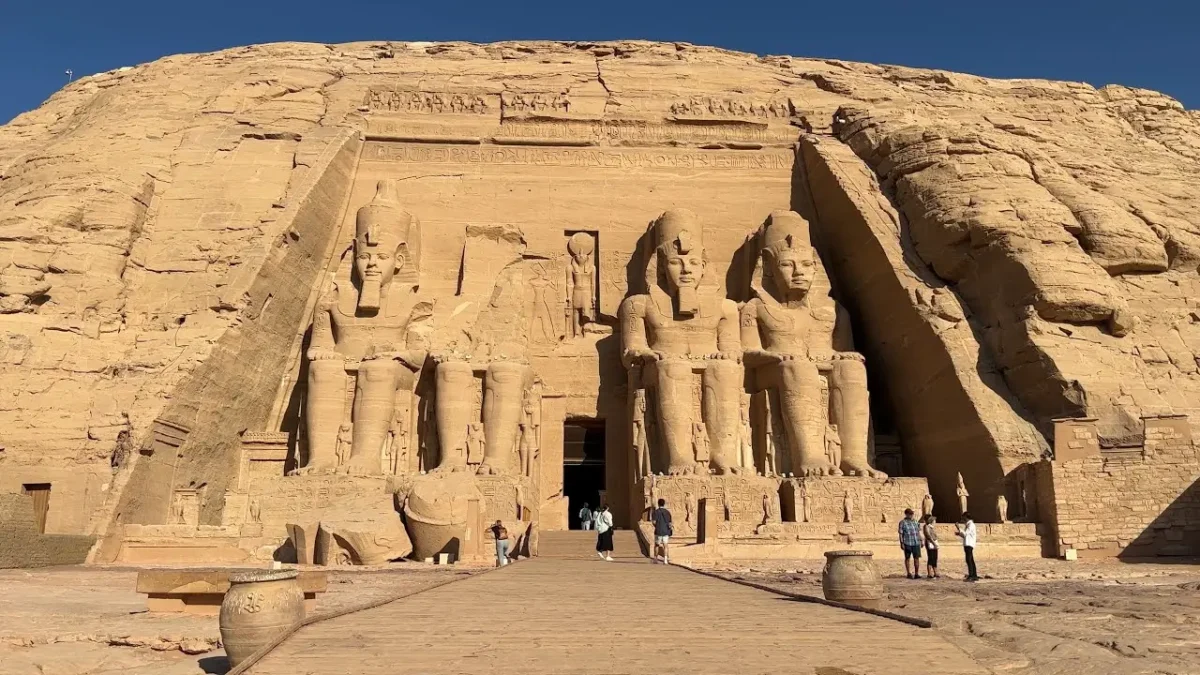
The Great Temple of Ramses II
-
The Small Temple of Queen Nefertari
-
Interior halls with reliefs and statues
-
Views over Lake Nasser
Visitor Tips
-
Wear comfortable walking shoes
-
Bring sun protection and water
-
Photography is allowed, but flash may be restricted indoors
Visiting Abu Simbel offers a deeper appreciation of ancient Egyptian skill and vision, especially when you understand when was the Abu Simbel built and how it has survived for over three millennia.
Inside Abu Simbel Temple Tour
An inside Abu Simbel Temple tour reveals the incredible detail, symbolism, and engineering hidden behind the colossal façade. Stepping inside the temples helps visitors truly understand when was the Abu Simbel built and how advanced its creators were more than 3,000 years ago.
Inside the Great Temple of Ramses II
As you enter the Great Temple, you’ll walk through a series of carefully designed spaces:
The Hypostyle Hall
-
Supported by eight massive Osiride pillars, each carved as Ramses II
-
Walls covered with reliefs showing military victories, including the Battle of Kadesh
-
Scenes emphasize Ramses II’s strength and divine support
The Second Hall and Corridor
-
Narrower passageways decorated with religious carvings
-
Ritual scenes showing offerings to the gods
-
A gradual movement toward the sacred heart of the temple
The Inner Sanctuary
-
Contains statues of Ra-Horakhty, Amun, Ptah, and Ramses II
-
Famous for the solar alignment, when sunlight reaches this chamber twice a year
-
Ptah remains in darkness, symbolizing the underworld
Inside the Small Temple of Nefertari
The smaller temple is dedicated to Queen Nefertari and the goddess Hathor:
-
Elegant wall reliefs showing Nefertari participating in rituals
-
Hathor-headed columns inside the hall
-
One of the rare examples where a queen is honored almost equally to a pharaoh
What Makes the Interior Special
Inside Abu Simbel, visitors experience:
-
Precise symmetry and alignment
-
Deep religious symbolism carved into stone
-
A powerful blend of architecture, art, and astronomy
An inside Abu Simbel Temple tour transforms the visit from sightseeing into understanding—bringing to life the history behind when was the Abu Simbel built and why it remains one of ancient Egypt’s greatest achievements.
Suggested:
FAQ
When was the Abu Simbel built?
The Abu Simbel temples were built during the reign of Pharaoh Ramses II, with construction beginning around 1264 BCE and completed approximately 1244 BCE, during Egypt’s New Kingdom period.
Who built Abu Simbel?
Abu Simbel was built by King Ramses II as a monument to honor the gods and to glorify himself as a divine ruler.
Why was Abu Simbel built?
The temples were built to:
-
Honor the gods Ra-Horakhty, Amun, and Ptah
-
Deify Ramses II during his lifetime
-
Demonstrate Egyptian power in Nubia, near Egypt’s southern border
What is the Sun Feast at Abu Simbel?
The Sun Feast is a solar alignment event that occurs twice a year, when sunlight reaches the inner sanctuary and illuminates specific statues, showcasing advanced ancient astronomical knowledge.
Why was Abu Simbel relocated?
Abu Simbel was relocated in the 1960s to prevent it from being flooded by Lake Nasser, which formed after the construction of the Aswan High Dam.
How long did it take to relocate Abu Simbel?
The relocation took about four years, from 1964 to 1968, and involved cutting the temples into more than 1,000 stone blocks.
Can visitors go inside Abu Simbel today?
Yes, visitors can explore both the Great Temple of Ramses II and the Small Temple of Queen Nefertari, including their interior halls and sanctuaries.
Conclusion
Understanding when was the Abu Simbel built reveals much more than a date—it uncovers the ambition, belief, and advanced knowledge of ancient Egypt. Constructed in the 13th century BCE during the reign of Pharaoh Ramses II, Abu Simbel was designed to project divine power, honor the gods, and secure Egypt’s influence in Nubia. Its survival through centuries of sand burial and its remarkable relocation in the 20th century further highlight its global importance. Today, Abu Simbel stands as a timeless masterpiece, connecting ancient ingenuity with modern preservation and continuing to inspire visitors from around the world.



Leave a Reply