The Mystery Solved: Where Does the Nile River Originate Exactly?
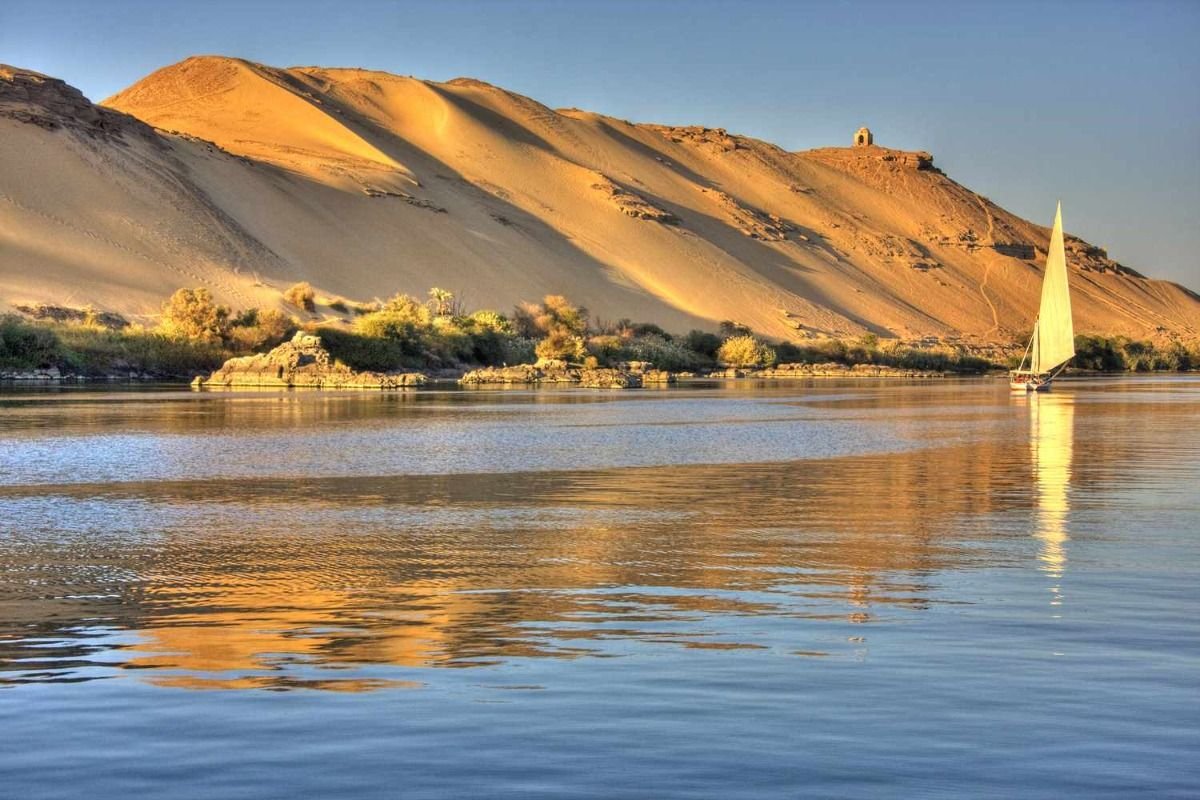
Where does the Nile River originate? This question has fascinated explorers, historians, and geographers for centuries. As the longest river in the world, the Nile plays a vital role in the cultures, agriculture, and civilizations of Africa. Tracing its origins leads us through multiple countries, ancient mysteries, and two major river systems that together form the legendary Nile.
Where does the nile river originate?
The Nile River originates from two main sources in Africa: the White Nile and the Blue Nile. These two rivers meet in Khartoum, Sudan, where they form the Nile that flows north through Egypt and into the Mediterranean Sea.
The White Nile Source
The White Nile begins in East Africa and is considered the longer and more constant source of the Nile.
-
Its most widely accepted origin is Lake Victoria, which is bordered by Uganda, Kenya, and Tanzania
-
The river flows out of Lake Victoria at Jinja, Uganda
-
It provides the Nile with a steady flow throughout the year
The Blue Nile Source
The Blue Nile originates in Lake Tana in the Ethiopian Highlands.
-
It contributes most of the Nile’s water volume and fertile silt
-
The Blue Nile is responsible for the annual floods that once enriched Egypt’s farmland
Meeting Point: Khartoum
The White Nile and Blue Nile join in Khartoum, the capital of Sudan. From there, the river continues north as the Nile River, flowing through Egypt before emptying into the Mediterranean Sea.
So, when asking where does the Nile River originate, the most accurate answer is that it begins from Lake Victoria and Lake Tana, through the White and Blue Nile systems.
Lake Victoria: The Primary Source of the White Nile
Lake Victoria is widely recognized as the primary source of the White Nile, making it a crucial answer to the question where does the Nile River originate. It is the largest lake in Africa and one of the largest freshwater lakes in the world.
Location and Geography
Lake Victoria is located in East Africa and is shared by three countries:
-
Uganda
-
Kenya
-
Tanzania
The White Nile officially begins where water flows out of Lake Victoria at Jinja, Uganda.
Why Lake Victoria Is Important
Lake Victoria is considered the main source of the White Nile because:
-
It provides a continuous and reliable flow of water year-round
-
It feeds the Nile even during dry seasons
-
It supports millions of people through fishing, agriculture, and transportation
Connection to the Nile River
Water from Lake Victoria flows north through:
-
Uganda
-
South Sudan
-
Sudan
It eventually meets the Blue Nile in Khartoum, forming the Nile River that continues into Egypt.
Historical Significance
For centuries, explorers searched for the Nile’s source. In the 19th century, John Hanning Speke identified Lake Victoria as the Nile’s primary source, solving one of geography’s greatest mysteries.
Because of its size, location, and steady outflow, Lake Victoria remains central to understanding where the Nile River originates and why the White Nile is essential to the river’s existence.
The Blue Nile: Ethiopia’s Contribution from Lake Tana
The Blue Nile is Ethiopia’s major contribution to the Nile River system and a key part of the answer to where does the Nile River originate. Although shorter than the White Nile, it supplies most of the Nile’s water and fertile sediment.
Source at Lake Tana
The Blue Nile originates from Lake Tana, located in the Ethiopian Highlands.
-
Lake Tana is Ethiopia’s largest lake
-
The river begins its journey at the lake’s southeastern edge
-
From there, it flows northwest toward Sudan
Role in the Nile’s Water Supply
The Blue Nile is critically important because:
-
It provides about 60–70% of the Nile’s total water volume
-
It carries nutrient-rich silt that historically fertilized Egyptian farmland
-
Its seasonal rains caused the annual Nile floods
Seasonal Nature
Unlike the White Nile, the Blue Nile is seasonal:
-
Its flow increases dramatically during Ethiopia’s rainy season (June to September)
-
Water levels drop during the dry months
This seasonal contrast explains why both branches are essential to the Nile’s survival.
Meeting the White Nile
The Blue Nile joins the White Nile in Khartoum, Sudan, where they merge to form the Nile River that flows north through Egypt to the Mediterranean Sea.
Together, Lake Tana and the Blue Nile play a decisive role in understanding where the Nile River originates, highlighting Ethiopia’s vital contribution to one of the world’s most famous rivers.
Read:
Why Burundi and Rwanda Claim the “True” Origin?
The question of where does the Nile River originate becomes more complex when considering Burundi and Rwanda, as both countries claim to hold the true, farthest source of the Nile.
The Concept of the “Farthest Source”
Geographers often define a river’s true source as the most distant point from its mouth. Using this definition, some tributaries feeding Lake Victoria stretch farther south than the lake itself.
Burundi’s Claim
Burundi is often cited as the location of the Nile’s most distant source:
-
The Ruvyironza River, a headstream of the Kagera River, rises in southern Burundi
-
The Kagera River flows into Lake Victoria
-
From Lake Victoria, water continues through the White Nile
By distance alone, this makes Burundi a strong candidate for the Nile’s true origin.
Rwanda’s Claim
Rwanda also presents a compelling case:
-
Several headwaters of the Kagera River begin in Rwanda’s highlands
-
These tributaries contribute significant flow into Lake Victoria
-
Some measurements place Rwanda’s sources at comparable or greater distances than Burundi’s
Why the Debate Continues
The debate persists because:
-
Rivers have multiple tributaries, not a single starting point
-
Different scientific definitions produce different answers
-
Political, historical, and national pride also influence claims
Accepted Geographic View
While Lake Victoria is widely accepted as the primary source of the White Nile, Burundi and Rwanda are often recognized as holding the most distant headwaters feeding the Nile system.
This is why the question where does the Nile River originate has more than one correct answer, depending on whether the focus is on primary flow, distance, or hydrological complexity.
Also read:
The Nile in Ancient Egyptian Mythology vs. Modern Geography
The question where does the Nile River originate has been answered very differently by ancient belief and modern science. Comparing mythology with geography reveals how understanding of the Nile evolved over time.
The Nile in Ancient Egyptian Mythology
To the ancient Egyptians, the Nile was not just a river—it was a divine force.
-
The river was believed to originate from the underworld, known as the Duat
-
It was associated with the god Hapi, who controlled the Nile’s floods and fertility
-
The annual flooding was seen as a sacred event that renewed life and order
Rather than a physical location, the Nile’s source was viewed as mystical and spiritual, beyond human reach.
Early Theories of the Source
Ancient Egyptian texts and later Greek historians suggested:
-
The Nile flowed from hidden springs
-
Mountains or eternal waters located far to the south
-
A cosmic source connected to the gods
These ideas reflected limited geographic knowledge but deep religious symbolism.
The Nile in Modern Geography
Modern science provides a clearer answer:
-
The Nile originates from two main river systems
-
The White Nile flows from Lake Victoria
-
The Blue Nile flows from Lake Tana in Ethiopia
-
Both rivers meet in Khartoum, Sudan
Advanced mapping, satellite imagery, and hydrological studies confirm these sources.
From Myth to Measurement
The contrast between mythology and geography shows:
-
A shift from spiritual explanation to scientific understanding
-
How exploration and technology solved an ancient mystery
-
Why the Nile fascinated humanity for thousands of years
Today, modern geography answers where does the Nile River originate with precision, while ancient mythology reminds us how deeply the river shaped belief, culture, and identity in ancient Egypt.
Related:
FAQ
Where does the Nile River originate?
The Nile River originates from two main sources: the White Nile, which flows from Lake Victoria in East Africa, and the Blue Nile, which begins at Lake Tana in Ethiopia. The two rivers meet in Khartoum, Sudan.
Is Lake Victoria the true source of the Nile?
Lake Victoria is widely accepted as the primary source of the White Nile, but some geographers argue that the Nile’s most distant headwaters lie in Burundi or Rwanda, feeding the Kagera River into Lake Victoria.
Why is the Blue Nile important if it is shorter?
Although shorter, the Blue Nile provides most of the Nile’s water and fertile silt, making it essential to agriculture and historical flooding in Egypt.
Which countries does the Nile flow through?
The Nile flows through or is fed by several countries, including Uganda, Tanzania, Kenya, Rwanda, Burundi, South Sudan, Sudan, Ethiopia, and Egypt.
How did ancient Egyptians explain the Nile’s origin?
Ancient Egyptians believed the Nile originated from the underworld (Duat) and was controlled by the god Hapi, rather than from a physical geographic source.
Why was the source of the Nile a mystery for so long?
The Nile’s source remained unknown for centuries due to vast distances, difficult terrain, and limited exploration technology, making it one of geography’s greatest historical puzzles.
Conclusion



Leave a Reply