Unveiling the Divine: The Ultimate Ancient Egypt Egyptian Gods Family Tree Guide
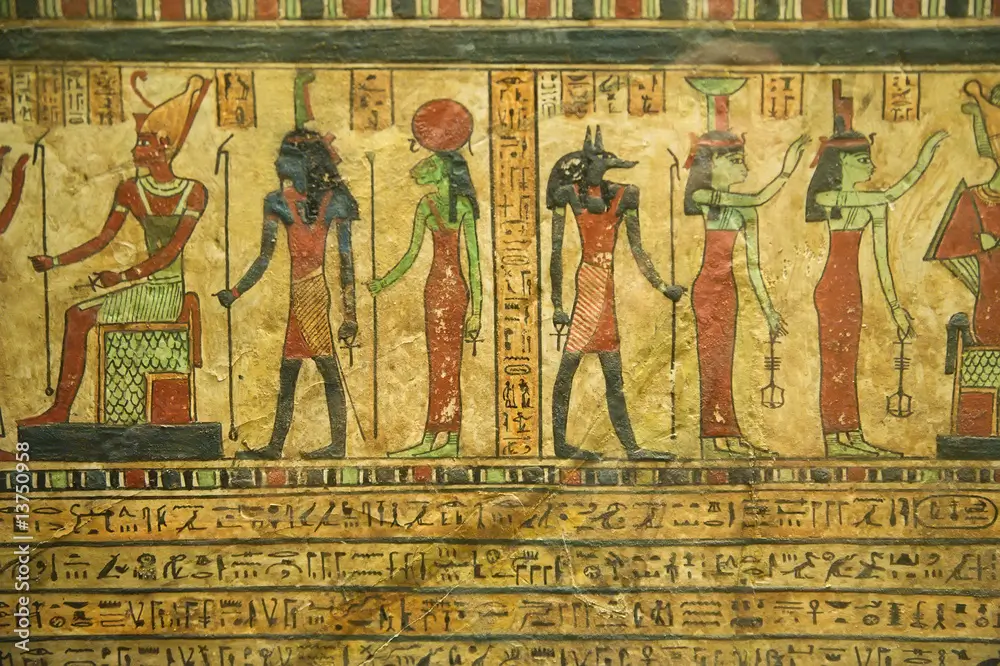
Ancient Egypt Egyptian gods family tree is one of the most fascinating ways to understand how ancient Egyptians viewed the universe, creation, and divine power.
Rather than isolated deities, Egyptian gods were organized into complex family relationships that explained natural forces, kingship, life, death, and the balance of the cosmos.
These divine family trees connected creator gods with their descendants, linking sky, earth, and the underworld into a single sacred system. Gods were parents, siblings, spouses, and rivals, and their relationships shaped mythology, temple worship, and royal ideology.
In this article, we will explore the ancient Egypt Egyptian gods family tree, identify the major divine families, and explain how these relationships influenced Egyptian religion and worldview.
What are Egyptian gods?
- Egyptian gods were divine beings worshipped in ancient Egypt, believed to control nature, life, death, and the order of the universe. They were not distant or abstract forces, but active powers that influenced daily life, kingship, and the fate of both humans and the afterlife.
- Each god represented specific elements of existence, such as the sun, the sky, the earth, fertility, wisdom, chaos, or protection. Rather than a single all-powerful deity, ancient Egyptian religion was polytheistic, meaning it included many gods who worked together within a balanced cosmic system known as ma’at, the principle of order and harmony.
- Egyptian gods were often depicted with human bodies and animal heads, symbolizing their powers and characteristics. For example, Horus was associated with the falcon, Anubis with the jackal, and Thoth with the ibis. These forms helped worshippers understand the gods’ roles and attributes.
- Most importantly, Egyptian gods were connected through family relationships. They formed divine lineages of parents, children, and siblings, creating what is known today as the ancient Egypt Egyptian gods family tree.
- These relationships explained creation, succession, conflict, and renewal, forming the foundation of Egyptian mythology and religious belief.
Read:
ancient egypt egyptian gods family tree
The ancient Egypt Egyptian gods family tree describes how the gods were connected through lineage, marriage, and succession. These divine relationships helped explain creation, natural forces, and the transfer of power in both the cosmos and kingship.
The First Generation of Gods.
At the beginning stood the creator god Atum, who emerged from the primordial waters of chaos. From Atum came the first divine pair, Shu (god of air) and Tefnut (goddess of moisture).
The Second Generation.
Shu and Tefnut gave birth to Geb (god of the earth) and Nut (goddess of the sky). Their separation created space for life to exist, forming the structure of the universe.
The Osirian Family.
Geb and Nut produced four major gods who form the core of Egyptian mythology:
- Osiris: God of the afterlife and resurrection.
- Isis: Goddess of magic, healing, and motherhood.
- Set: God of chaos and disorder.
- Nephthys: Goddess of protection and mourning.
Osiris and Isis married and gave birth to Horus, the falcon-headed god of kingship and the sky. Horus’s struggle against Set symbolized the eternal conflict between order and chaos.
Divine Kingship.
Pharaohs were believed to be the living embodiment of Horus and the heirs of Osiris after death. This belief linked royal authority directly to the ancient Egypt Egyptian gods family tree, reinforcing divine legitimacy.
Together, these generations form the most well-known Egyptian divine lineage, often called the Ennead of Heliopolis, which served as the foundation of Egyptian religious thought for centuries.
Also read:
The Relationship Of The Egyptians With Their Gods
- The relationship between the ancient Egyptians and their gods was deeply personal, practical, and ever-present in daily life. Gods were not distant beings but active forces who influenced health, fertility, protection, success, and the afterlife.
- Egyptians believed maintaining harmony with the gods was essential to preserving ma’at, the cosmic balance of order and justice.
- Worship took place on multiple levels. At the state level, pharaohs acted as intermediaries between humanity and the divine.
- As living representatives of the gods, kings performed rituals, built temples, and upheld religious order on behalf of the people. This role tied royal authority directly to the ancient Egypt Egyptian gods family tree.
- At the personal level, ordinary Egyptians prayed to gods for protection, healing, and guidance. Household shrines, amulets, and offerings were common, reflecting an intimate connection with deities such as Isis, Bes, and Hathor. Gods were seen as compassionate and responsive, capable of intervening in everyday concerns.
- Temples served as sacred homes for the gods rather than public gathering spaces. Priests cared for divine statues through daily rituals, believing the gods inhabited these physical forms. Festivals allowed the wider population to interact with the gods through processions, music, and celebration.
- Overall, the Egyptians’ relationship with their gods was based on mutual dependence. Humans honored the gods through worship and offerings, while the gods ensured protection, fertility, and cosmic stability.
- This close bond formed the spiritual foundation of ancient Egyptian society and sustained religious traditions for thousands of years.
Related:
How do modern Egyptians feel about the Egyptian gods and goddesses of old?
- Modern Egyptians generally view the ancient Egyptian gods and goddesses as an important part of their historical and cultural heritage rather than as objects of religious worship.
- Today, Egypt is predominantly Muslim, with a significant Christian population, and contemporary religious life is centered on Islam and Christianity.
- For most Egyptians, the gods of ancient Egypt are symbols of a remarkable civilization that shaped the country’s identity and global legacy. Figures such as Ra, Isis, Osiris, and Horus are respected as cultural icons connected to history, archaeology, and national pride, not as deities to whom prayers are offered.
- Ancient Egyptian religion is commonly studied in schools, universities, and museums as part of Egypt’s past. Many Egyptians feel a strong sense of admiration for the creativity, symbolism, and philosophical depth behind the ancient belief system, especially its emphasis on order, balance, and the afterlife.
- At the same time, some cultural elements survive in indirect ways. Concepts such as respect for ancestors, symbolic protection, and the celebration of ancient sites reflect continuity with the past, even though the original religious meanings have changed.
- Overall, modern Egyptians see the ancient Egyptian gods and goddesses as a source of historical fascination and cultural identity. They are viewed as part of Egypt’s ancient story, deeply respected for their legacy, but separate from the religious beliefs practiced in Egypt today.
What Are Some Of The Strangest Egyptian Gods?
Ancient Egyptian religion included hundreds of deities, some of whom appear unusual or even strange by modern standards. These gods often combined human and animal traits or represented very specific forces of nature, protection, or fear. Their forms were symbolic rather than random, designed to express power, danger, or mystery.
- Bes: A dwarf god with a lion-like face, protruding tongue, and fierce expression. Despite his frightening appearance, Bes was a protective deity who guarded homes, children, and women during childbirth.
- Taweret: A goddess with the body of a hippopotamus, limbs of a lion, and tail of a crocodile. She was associated with fertility and childbirth, turning one of the Nile’s most dangerous animals into a symbol of protection.
- Sobek: A crocodile-headed god linked to the Nile, military strength, and fertility. Sobek represented both creation and destruction, reflecting the unpredictable nature of the river.
- Khepri: A scarab beetle god associated with the rising sun and rebirth. The scarab’s habit of rolling dung balls was seen as a symbol of the sun’s movement across the sky.
- Ammut: A fearsome goddess with the head of a crocodile, front of a lion, and hindquarters of a hippopotamus. She devoured the souls of the unworthy during judgment in the afterlife.
- Set: Though a major god, Set was considered strange due to his unidentified animal form. He represented chaos, storms, and disorder, standing in constant opposition to harmony.
These gods reveal how imaginative and symbolic ancient Egyptian religion was. What may seem strange today made perfect sense within the ancient worldview, where animals, nature, and the divine were deeply interconnected. Together, these unusual deities add depth and complexity to the ancient Egypt Egyptian gods family tree.
Suggested:
Who are the 42 in Egyptian mythology?
In Egyptian mythology, the 42 refer to the Forty-Two Judges of Ma’at, also known as the 42 Assessors. These were minor deities who played a crucial role in the judgment of the dead in the afterlife.
According to ancient Egyptian belief, when a person died, their soul entered the Hall of Ma’at to face judgment. During this process, the deceased stood before the god Osiris and declared their innocence by reciting the Negative Confession, a list of moral statements denying wrongdoing. Each confession was addressed to one of the 42 judges.
Role of the 42 Judges.
- Each judge represented a specific moral law or sin, such as theft, murder, deceit, or disrespect toward the gods.
- Together, they symbolized the ethical order that governed Egyptian society.
- They worked alongside Osiris, Anubis, and Thoth during the weighing of the heart ceremony.
Connection to Ma’at.
The number 42 likely corresponded to the 42 nomes, or administrative regions, of ancient Egypt. This connection reinforced the idea that moral order applied to the entire land and every aspect of life. Upholding ma’at, the principle of truth, balance, and justice, was essential for both earthly harmony and eternal life.
Importance in the Afterlife.
- If the deceased successfully satisfied the 42 judges and their heart balanced against the Feather of Ma’at, they were granted eternal life. Failure resulted in the heart being devoured by Ammut, ending the soul’s existence.
- The Forty-Two Judges highlight how morality, law, and religion were deeply interconnected in ancient Egyptian belief. They form a key part of the ancient Egypt Egyptian gods family tree and demonstrate how divine order governed both life and the afterlife.
Who are the 9 Egyptian gods?
The nine Egyptian gods usually refer to the Ennead of Heliopolis, one of the most important divine groups in ancient Egyptian religion. This group represents a family of gods connected through creation, lineage, and cosmic order, forming a central part of the ancient Egypt Egyptian gods family tree.
The Ennead of Heliopolis.
The Ennead consists of nine deities worshipped primarily in the city of Heliopolis. They explain how the universe was created and how divine authority passed from one generation to the next.
- Atum: The creator god who emerged from the primordial waters and brought creation into existence.
- Shu: God of air and light, and the force that separated the sky from the earth.
- Tefnut: Goddess of moisture and order, associated with rain and balance.
- Geb: God of the earth, representing fertility and the physical world.
- Nut: Goddess of the sky, who protected and gave birth to the stars and heavenly bodies.
- Osiris: God of the afterlife, resurrection, and eternal kingship.
- Isis: Goddess of magic, healing, and motherhood, and one of the most beloved Egyptian deities.
- Set: God of chaos, storms, and disorder, often portrayed as the adversary of Osiris and Horus.
- Nephthys: Goddess of protection, mourning, and transition, associated with funerary rites.
Importance of the Nine Gods.
- Together, these nine gods explained the structure of the universe, natural forces, moral order, and royal authority. Their relationships shaped myths of creation, death, rebirth, and kingship, making the Ennead a cornerstone of Egyptian theology.
- The nine Egyptian gods of the Ennead remain one of the clearest examples of how ancient Egyptians organized divine power through family relationships and cosmic balance.
FAQ
What is the ancient Egypt Egyptian gods family tree?
The ancient Egypt Egyptian gods family tree is a way of organizing Egyptian deities based on their family relationships, including parents, children, siblings, and spouses. It explains creation, cosmic order, and divine kingship.
How many gods did ancient Egypt have?
Ancient Egypt had hundreds of gods and goddesses. Some were major deities worshipped across the country, while others were local or minor gods tied to specific regions or functions.
Who are the most important Egyptian gods?
Some of the most important Egyptian gods include Ra, Osiris, Isis, Horus, Anubis, Thoth, Set, and Hathor. Their roles covered creation, the afterlife, protection, wisdom, and kingship.
What are the nine Egyptian gods?
The nine Egyptian gods usually refer to the Ennead of Heliopolis, consisting of Atum, Shu, Tefnut, Geb, Nut, Osiris, Isis, Set, and Nephthys.
Who are the 42 judges in Egyptian mythology?
The 42 judges, known as the Forty-Two Judges of Ma’at, were deities who assessed the moral purity of the dead during judgment in the afterlife.
Did ancient Egyptians worship all gods equally?
No. Worship varied by region, profession, and period. Some gods were nationally important, while others were honored locally or within households.
Do people still worship Egyptian gods today?
No. Modern Egyptians generally view ancient Egyptian gods as part of their cultural and historical heritage, not as religious figures to be worshipped.
Why were Egyptian gods depicted as animals?
Animals symbolized specific powers and qualities. Using animal forms helped Egyptians understand the gods’ attributes and divine roles.
Conclusion
The ancient Egypt Egyptian gods family tree reveals how deeply interconnected religion, nature, and society were in ancient Egyptian belief. Gods were organized into families that explained creation, balance, conflict, and renewal, giving meaning to the natural world and human existence.
Through divine lineages such as the Ennead of Heliopolis, Egyptians understood the origins of the universe, the role of kingship, and the journey of the soul after death.
These relationships shaped mythology, temple rituals, moral values, and the authority of the pharaoh, linking earthly life to cosmic order.
Today, the Egyptian gods are studied not as objects of worship, but as powerful symbols of one of the world’s greatest civilizations.
Exploring the ancient Egypt Egyptian gods family tree offers lasting insight into how the Egyptians viewed life, death, justice, and the divine, preserving a legacy that continues to fascinate and inspire across cultures and centuries.


Leave a Reply