Beyond the Stones: Fun Facts About the Great Pyramid of Giza You Never Knew
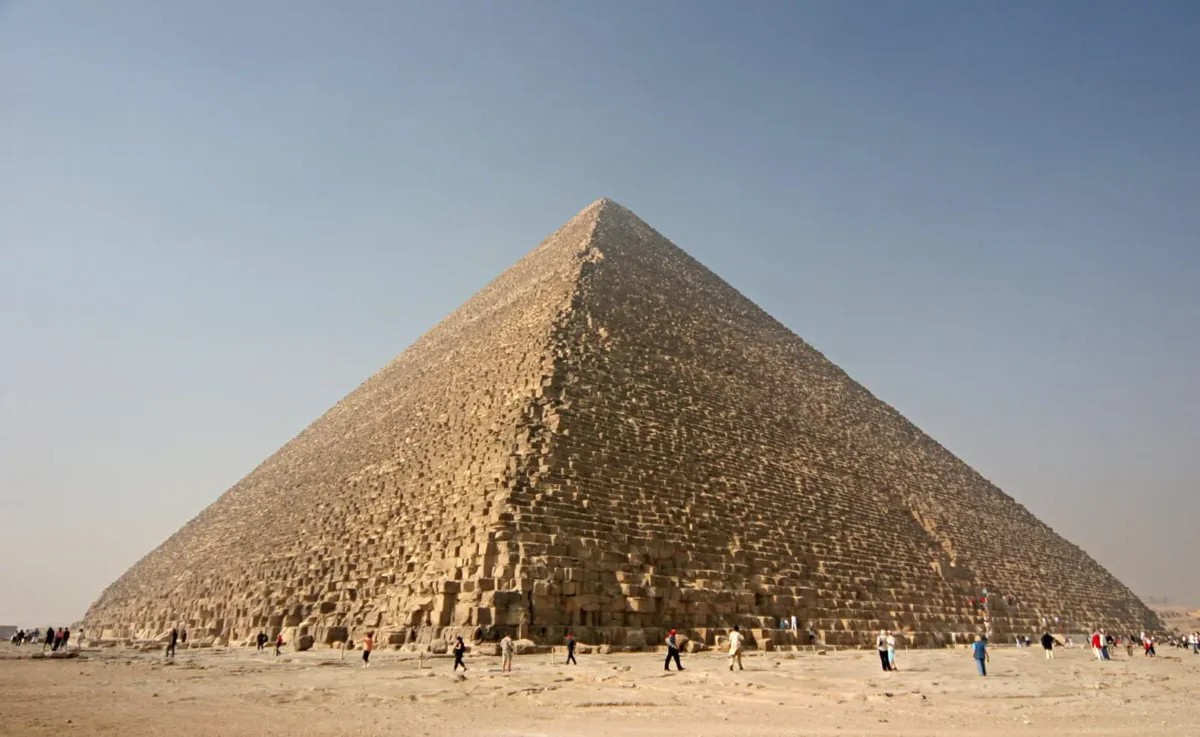
The Great Pyramid of Giza has fascinated historians, travelers, and mystery lovers for centuries. If you’re searching for the most interesting fun facts about the Great Pyramid of Giza, you’re about to discover why this ancient wonder still captures the world’s imagination. Built over 4,500 years ago, it remains one of the greatest architectural achievements in human history — and it holds secrets that continue to surprise experts today.
Best of fun facts about the great pyramid of giza
When it comes to ancient wonders, few structures can compete with the mystery and scale of the Great Pyramid. Here are the best fun facts about the Great Pyramid of Giza that make it one of the most astonishing achievements in human history.
1. It’s the Only Surviving Ancient Wonder
The Great Pyramid is the last remaining Wonder of the Ancient World. While the Hanging Gardens of Babylon and the Colossus of Rhodes have vanished, this pyramid has stood strong for over 4,500 years.
2. It Was Once Covered in Shiny White Limestone
Originally, the pyramid was covered in smooth, polished white limestone casing stones. Under the sun, it would have shone brilliantly — almost like a giant mirror visible from miles away.
3. It Was the Tallest Structure on Earth for 3,800 Years
At 146.6 meters (481 feet) tall when completed, the Great Pyramid held the record as the world’s tallest man-made structure until the Eiffel Tower was built in 1889.
4. It’s Made of Around 2.3 Million Stone Blocks
Experts estimate the pyramid contains roughly 2.3 million limestone blocks, each weighing between 2 to 15 tons. Some granite stones inside weigh even more.
5. It’s Incredibly Well-Aligned
One of the most impressive fun facts about the Great Pyramid of Giza is its precision. The pyramid is aligned almost perfectly with the cardinal points — north, south, east, and west — with minimal margin of error.
6. It Was Built Without Modern Machinery
No cranes. No steel tools. No advanced technology. Ancient Egyptians built this massive structure using simple tools, ramps, manpower, and extraordinary planning.
7. It Was Originally Slightly Taller
Over time, earthquakes and the removal of outer casing stones reduced its height by about 8 meters (26 feet).
8. It Has Hidden Chambers
The pyramid contains internal chambers, including:
-
The King’s Chamber
-
The Queen’s Chamber
-
The Grand Gallery
In recent years, advanced scanning technology even revealed previously unknown voids inside the structure.
9. It’s Part of a Larger Complex
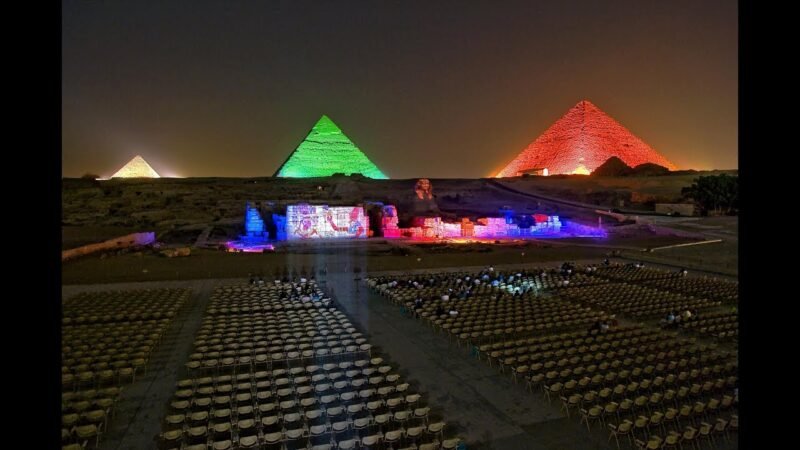
The Great Pyramid isn’t standing alone. It’s part of a complex that includes:
-
Two smaller pyramids
-
The Great Sphinx
-
Mortuary temples
-
Ancient boat pits
10. It Was Built as a Tomb for Pharaoh Khufu
Constructed around 2560 BC, the pyramid served as a royal tomb for Pharaoh Khufu (also known as Cheops). It was designed to help him ascend to the afterlife.
These fun facts about the Great Pyramid of Giza show why it continues to amaze scientists, historians, and travelers alike. Even after thousands of years, it remains a symbol of human ambition, engineering brilliance, and enduring mystery.
Check these trips:
Who built the Great Pyramids of Egypt?
One of the most fascinating questions behind the many fun facts about the Great Pyramid of Giza is this: who actually built it?
The Great Pyramid — along with the other pyramids of Giza — was built by ancient Egyptians, not aliens or enslaved people as some myths suggest.
Built for Pharaoh Khufu
The Great Pyramid was constructed around 2560 BC during Egypt’s Fourth Dynasty. It was built as a royal tomb for Pharaoh Khufu (also known as Cheops).
Khufu ruled during a time of strong central government, economic stability, and advanced engineering knowledge — conditions that made such an ambitious project possible.
Skilled Workers, Not Slaves
For many years, people believed slaves built the pyramids. However, archaeological discoveries have shown otherwise.
Evidence suggests the pyramids were built by:
-
Skilled laborers
-
Craftsmen
-
Engineers
-
Seasonal workers (especially during Nile flood seasons)
Workers were housed in nearby villages, received food and medical care, and were highly organized into labor teams.
A Massive Workforce
Historians estimate that tens of thousands of workers participated in construction over a period of about 20 years.
The workforce included:
-
Quarry workers cutting limestone blocks
-
Transport teams moving stones
-
Skilled masons placing blocks precisely
-
Architects and planners overseeing alignment and design
How Did They Do It?
While scholars continue to debate exact techniques, most agree the builders used:
-
Ramps made of mudbrick or limestone
-
Wooden sledges to move heavy stones
-
Copper tools for shaping blocks
-
Careful mathematical planning
The pyramid’s near-perfect alignment with the cardinal directions shows extraordinary precision.
A Testament to Ancient Egyptian Ingenuity
One of the most impressive fun facts about the Great Pyramid of Giza is that it was built without modern machinery — yet remains standing after more than 4,500 years.
The Great Pyramids were the result of human intelligence, organization, and determination — a remarkable achievement of ancient Egyptian civilization.
How many stones make up the Great Pyramid?
Among the most impressive fun facts about the Great Pyramid of Giza is the sheer number of stones used in its construction.
Experts estimate that the Great Pyramid is made up of approximately 2.3 million stone blocks.
How Big Are the Stones?
The size and weight of the blocks vary:
-
Most limestone blocks weigh between 2 and 3 tons
-
Some interior granite blocks weigh up to 15–80 tons
-
The granite used in the King’s Chamber was transported from Aswan, over 800 km (500 miles) away
Just imagining moving millions of multi-ton stones without modern machinery makes the achievement even more astonishing.
How Long Did It Take?
The pyramid was built over roughly 20 years during Pharaoh Khufu’s reign (around 2560 BC).
If you break that down, it would mean:
-
Around 300 blocks placed per day
-
Nearly one block every few minutes during working hours
This shows how organized and skilled the ancient Egyptian workforce must have been.
Was It Always 2.3 Million Stones?
Over time, some outer casing stones were removed or damaged by earthquakes. Originally, the pyramid had smooth white limestone casing that made it shine brightly under the sun.
Even today, despite erosion and missing stones, the structure remains one of the most precise and durable buildings ever created.
The fact that around 2.3 million stones were carefully cut, transported, and placed with remarkable accuracy is one of the most mind-blowing fun facts about the Great Pyramid of Giza — and a testament to ancient Egyptian engineering brilliance.
The Engineering Marvel: More Than Just Giant Stones
When people think about the fun facts about the Great Pyramid of Giza, they often focus on its size and the millions of stones used to build it. But the true wonder isn’t just the weight of the blocks — it’s the astonishing engineering precision behind the entire structure.
The Great Pyramid isn’t simply a pile of giant stones. It’s a masterclass in ancient design, mathematics, and astronomical alignment.
Near-Perfect Alignment with True North
One of the most impressive engineering achievements is its alignment.
The pyramid is oriented almost perfectly to the four cardinal directions — north, south, east, and west — with only a tiny margin of error. Considering it was built around 2560 BC without compasses or GPS, this precision is extraordinary.
A Level Foundation on Uneven Ground
Before construction began, the builders leveled the bedrock base with remarkable accuracy. The foundation varies by only a few centimeters across its entire footprint.
Creating such a flat surface over a massive area required advanced surveying techniques — thousands of years before modern equipment existed.
The Grand Gallery Design
Inside the pyramid, the Grand Gallery rises over 8 meters (26 feet) high. Its corbelled ceiling design distributes weight away from the chamber below.
This wasn’t accidental. It was a deliberate architectural solution to prevent collapse — and it has worked for more than 4,500 years.
Stress-Relieving Chambers
Above the King’s Chamber are multiple “relieving chambers” made of massive granite blocks. These were designed to redirect the immense weight of the pyramid away from the burial chamber.
Without this innovation, the chamber likely would have collapsed long ago.
Mathematical Precision
Some researchers have noted fascinating mathematical relationships in the pyramid’s proportions:
-
The ratio of the perimeter to its height closely relates to pi (π).
-
Its dimensions show a deep understanding of geometry.
While scholars debate how intentional these calculations were, the precision is undeniable.
Built to Endure Millennia
Unlike many ancient structures, the Great Pyramid was engineered for permanence. Its inward-sloping sides and massive base create structural stability that has survived:
-
Earthquakes
-
Erosion
-
Human interference
Among all the fun facts about the Great Pyramid of Giza, its engineering brilliance may be the most impressive. It’s not just a monument — it’s a carefully calculated masterpiece of ancient science and architecture.
Also check these trips:
Can you go inside them?
One of the most common questions — and one of the most intriguing fun facts about the Great Pyramid of Giza — is whether visitors can actually go inside.
The answer is yes, you can enter the Great Pyramid, but there are a few important things to know.
What’s Inside the Great Pyramid?
Visitors can access certain interior passages, including:
-
The ascending corridor
-
The Grand Gallery
-
The King’s Chamber
The King’s Chamber contains a large granite sarcophagus, believed to have once held Pharaoh Khufu’s remains.
However, don’t expect decorated walls like in some tombs in Luxor. The interior is mostly plain stone — the magic lies in the scale and atmosphere rather than artwork.
Is It Worth Going Inside?
It depends on your expectations.
Inside, you’ll experience:
-
Narrow passageways
-
Steep climbs
-
Warm, humid air
-
A powerful sense of history
There are no hieroglyphics or treasures inside — those were either never placed there or removed long ago.
For history lovers, standing inside a 4,500-year-old structure is unforgettable. For others, the outside view may be more impressive.
Are All Pyramids Open?
Not all pyramids are open at the same time. Access can change due to:
-
Restoration work
-
Preservation efforts
-
Visitor limits
The Great Pyramid usually requires an additional ticket beyond the general Giza Plateau entry fee.
Is It Safe?
Yes, it is generally safe for visitors. However:
-
The corridors are tight and steep
-
It may not be suitable for people with claustrophobia
-
It can be physically demanding
So, can you go inside them? Yes — and for many travelers, stepping into the Great Pyramid is one of the most memorable fun facts about the Great Pyramid of Giza brought to life.
What is written inside the King’s Chamber in the Great Pyramid?
When exploring fun facts about the Great Pyramid of Giza, many people expect to find walls covered in hieroglyphics inside the King’s Chamber. Surprisingly, the reality is quite different.
The King’s Chamber Is Mostly Plain
Inside the King’s Chamber, there are no decorative hieroglyphics, wall carvings, or elaborate paintings.
The chamber is constructed from massive blocks of red granite and has a simple, powerful design. The only major feature inside is a large granite sarcophagus believed to have once held Pharaoh Khufu’s remains.
This simplicity often surprises visitors.
So, Is There Any Writing at All?
There are no formal inscriptions inside the King’s Chamber itself. However, in the relieving chambers above it (which are not open to the public), archaeologists discovered quarry marks and red-painted graffiti left by ancient workers.
These markings include:
-
Crew names such as “Friends of Khufu”
-
Work gang identifiers
-
Construction markings
These discoveries were crucial in confirming that the pyramid was built during Pharaoh Khufu’s reign.
Why Are There No Decorations?
Unlike later tombs in the Valley of the Kings, Old Kingdom pyramids were not heavily decorated internally. During Khufu’s time (around 2560 BC), pyramid interiors were designed with structural precision rather than artistic embellishment.
Elaborate tomb art became more common in later dynasties.
A Different Kind of Power
While there may not be dramatic carvings inside, standing in the King’s Chamber is still powerful. The scale, the precision of the granite blocks, and the sheer age of the structure create an atmosphere that feels monumental.
One of the most surprising fun facts about the Great Pyramid of Giza is that its most famous chamber is nearly empty — a reminder that its true wonder lies in engineering mastery rather than decoration.
Are there still mysteries to discover?
Absolutely. One of the most fascinating fun facts about the Great Pyramid of Giza is that, even after more than 4,500 years, it still hasn’t revealed all its secrets.
Despite decades of research, advanced scanning, and archaeological exploration, the pyramid continues to surprise experts.
Hidden Voids Discovered Recently
In 2017, scientists using advanced muon-scanning technology discovered a large hidden void above the Grand Gallery. This space had never been seen before and remains unexplored.
Researchers are still debating:
-
What the void was used for
-
Whether it serves a structural purpose
-
If additional chambers exist
It proves that modern technology is still uncovering new clues.
How Exactly Was It Built?
While historians have strong theories, the exact construction methods are still debated.
Questions remain about:
-
The precise ramp system used
-
How massive granite blocks were lifted
-
The logistics of organizing thousands of workers
No definitive blueprint has ever been found.
What Was Its Full Purpose?
Although it was built as a tomb for Pharaoh Khufu, some researchers continue to explore:
-
Astronomical alignments
-
Symbolic meanings
-
Mathematical patterns embedded in its design
Some theories are scientific, others speculative — but the discussion continues.
Are There Undiscovered Chambers?
Given the size of the pyramid and the limited areas explored, it’s possible that additional hidden spaces exist. Non-invasive scanning technologies are currently the safest way to search without damaging the structure.
A Monument That Still Guards Secrets
The fact that we’re still asking questions is part of what makes the pyramid extraordinary. Few buildings in human history continue to generate this level of curiosity thousands of years later.
Yes — there are still mysteries to discover. And that may be one of the most exciting fun facts about the Great Pyramid of Giza: even today, it refuses to give up all its secrets.
Read:
Why the Pyramid was Originally White and Gold?
Among the most surprising fun facts about the Great Pyramid of Giza is that it didn’t always look like the sandy, rough structure we see today. When it was first completed around 2560 BC, the pyramid would have appeared dazzling — almost glowing under the Egyptian sun.
Covered in Shining White Limestone
The outer layer of the Great Pyramid was originally covered in highly polished Tura limestone casing stones.
These stones were:
-
Smooth and precisely fitted
-
Bright white in color
-
Reflective under sunlight
From a distance, the pyramid would have looked like a radiant geometric mountain rising from the desert.
Topped with a Golden Capstone
At the very top sat a pyramidion (capstone), which many historians believe was covered in electrum — a natural alloy of gold and silver.
This golden tip would have:
-
Reflected sunlight brilliantly
-
Symbolized divine power
-
Represented the sun god Ra
Together, the white limestone and golden capstone created a structure that shimmered dramatically at sunrise and sunset.
Why Is It No Longer White?
Over time, earthquakes loosened the outer casing stones. Many were later removed and reused in medieval Cairo construction projects.
What remains today is the inner limestone core, giving the pyramid its rough, stepped appearance.
A Symbol of Light and Power
The pyramid’s original white-and-gold design wasn’t just aesthetic. It carried deep symbolic meaning:
-
White represented purity and sacredness
-
Gold symbolized eternity and the gods
-
The shining surface may have been linked to solar worship
It wasn’t just a tomb — it was a monumental statement of divine kingship.
One of the most fascinating fun facts about the Great Pyramid of Giza is imagining it as it once stood: smooth, brilliant white, crowned in gold, and glowing like a beacon in the desert sun.
How to Visit the Great Pyramid Like a Pro in 2026?
Reading about it is one thing — standing before it is something else entirely. If you’re collecting fun facts about the Great Pyramid of Giza, why not experience them in person? Visiting like a pro in 2026 means planning smart, timing your entry right, and knowing a few insider tips.
Here’s how to do it.
1. Arrive Early — Very Early
The Giza Plateau opens in the morning, and the first hour is pure gold.
Arriving early means:
-
Fewer crowds
-
Cooler temperatures
-
Better photos without large tour groups
-
A calmer atmosphere
By mid-morning, the site becomes significantly busier.
2. Buy the Right Tickets
Your standard Giza Plateau ticket gives you access to:
-
The pyramid complex grounds
-
Exterior views of the Great Pyramid
-
The Sphinx
If you want to go inside the Great Pyramid, you’ll need an additional ticket. These are limited daily, so arrive early to secure one.
3. Go Inside (If You’re Physically Prepared)
Entering the Great Pyramid is unforgettable — but it’s not easy.
Expect:
-
Narrow passageways
-
Steep inclines
-
Warm air inside
-
Minimal ventilation
There are no decorations, but standing in the King’s Chamber connects you directly to 4,500 years of history.
4. Hire a Licensed Guide
A knowledgeable Egyptologist transforms your visit. Instead of just seeing giant stones, you’ll understand:
-
The engineering precision
-
The burial rituals
-
The alignment mysteries
-
The symbolism behind the structure
It’s one of the best ways to bring those fun facts about the Great Pyramid of Giza to life.
5. Find the Best Photo Angles
For iconic photos:
-
Walk toward the panoramic viewpoint (slightly elevated desert area)
-
Visit the Sphinx platform for dramatic angles
-
Stay until late afternoon for softer golden light
Sunrise and sunset offer the most dramatic shadows.
6. Dress Smart
In 2026, expect similar desert conditions:
-
Light, breathable clothing
-
Sunglasses and sunscreen
-
Comfortable walking shoes
-
Water bottle
The plateau is large and exposed.
7. Avoid Common Tourist Traps
Be cautious of:
-
Unofficial “helpers” offering photos
-
Camel ride pressure
-
Vendors insisting on souvenirs
A polite but firm “No, thank you” works well.
Visiting the Great Pyramid isn’t just about checking a landmark off your list. It’s about standing before the last surviving Wonder of the Ancient World and truly understanding its scale, history, and mystery.
If you’ve been fascinated by the fun facts about the Great Pyramid of Giza, 2026 might be the perfect year to see them come to life — like a true insider.
Also read:
FAQ
How old is the Great Pyramid of Giza?
The Great Pyramid was built around 2560 BC, making it over 4,500 years old. It was constructed during the reign of Pharaoh Khufu in Egypt’s Fourth Dynasty.
How tall is the Great Pyramid?
Originally, the pyramid stood at 146.6 meters (481 feet). Today, it measures about 138.8 meters (455 feet) due to the loss of its outer casing stones and capstone.
How many stones are in the Great Pyramid?
It’s estimated that approximately 2.3 million stone blocks were used in its construction, with some weighing several tons each.
Can tourists go inside the Great Pyramid?
Yes, visitors can enter the Great Pyramid with a special additional ticket. Inside, you can access the Grand Gallery and the King’s Chamber, though there are no wall decorations.
Was the Great Pyramid built by slaves?
No. Archaeological evidence shows that skilled workers and laborers built the pyramid. They were organized into teams and lived in nearby worker villages.
Why was the Great Pyramid originally white?
The pyramid was once covered in polished white limestone casing stones, which reflected sunlight. It was likely topped with a gold or electrum capstone, making it shine brightly in the desert.
Are there still hidden chambers inside the pyramid?
Yes, modern scanning technology has revealed large unexplored voids inside the pyramid. Researchers continue to study these areas to understand their purpose.
Is the Great Pyramid perfectly aligned?
It is almost perfectly aligned with the cardinal directions (north, south, east, and west), showcasing extraordinary engineering precision for its time.
Conclusion



Leave a Reply