Tipping Etiquette in Egypt for US/UK Travelers: 2026 Baksheesh Guide
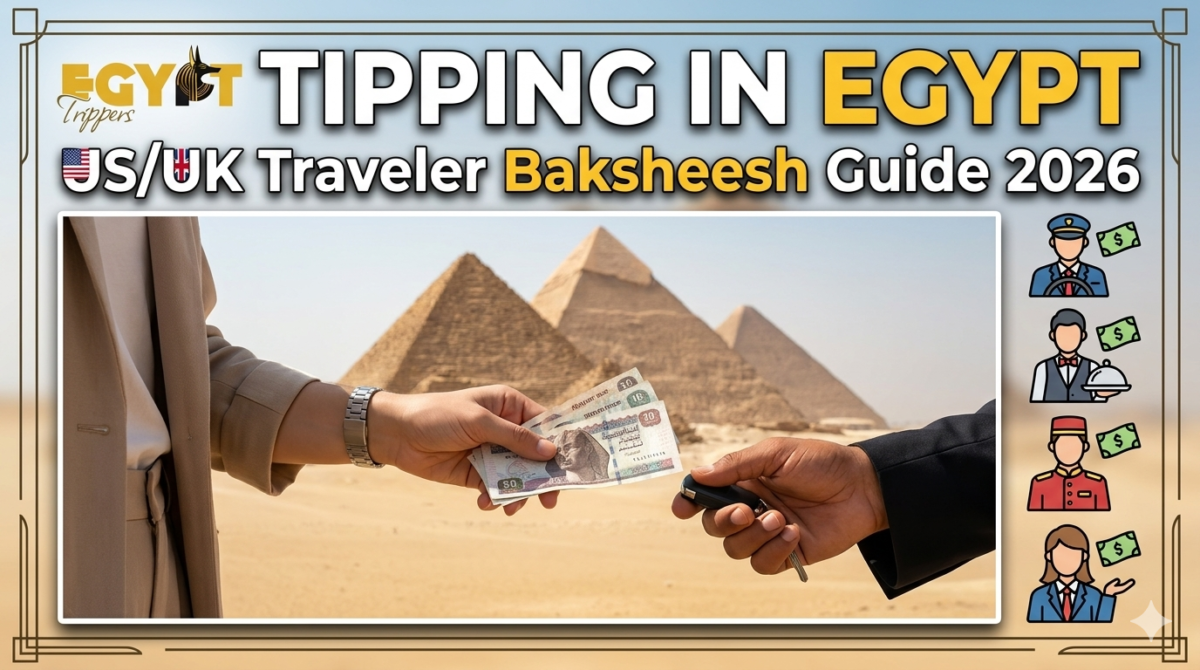
For travelers from the United States or the United Kingdom, stepping into Egypt’s vibrant culture is an exhilarating experience. However, few things cause more initial anxiety for Western tourists than navigating tipping etiquette in Egypt for US/UK travelers (Baksheesh).
In Egypt, tipping—locally referred to as Baksheesh—is not merely an occasional bonus for exceptional service; it is a fundamental socio-economic practice deeply woven into the fabric of daily life. Because service industry wages are low, local workers depend heavily on baksheesh to support their households.
This comprehensive, data-backed 2026 guide will demystify the cultural nuances of baksheesh, provide exact up-to-date tipping figures in Egyptian Pounds (EGP) and foreign currency, and help you carry yourself with confidence from Cairo to Luxor.
The Master 2026 Baksheesh Cheat Sheet
To keep you from guessing during your trip, this reference table outlines exactly how much to tip across various service tiers in Egypt.
| Service Provider Tier | Recommended Tip Amount (EGP) | Recommended Tip Amount (USD/GBP) | Best Timing & Delivery Method |
| Private Egyptologist Guide | 250 – 500 EGP per day | $10 – $20 USD per day | Discreetly in an envelope at the end of the tour. |
| Private Tour Driver | 150 – 350 EGP per day | $5 – $15 USD per day | Handed directly at the end of the day’s driving. |
| Hotel Porter / Bellhop | 50 – 100 EGP total | $1 – $2 USD / GBP | Immediately upon delivery of bags to your room. |
| Hotel Housekeeping | 50 – 100 EGP per day | EGP preferred for small daily tips | Left clearly on the bedside table every morning. |
| Sit-Down Restaurant Server | 5% – 10% on top of bill | Match local currency on bill | Left in cash on the table or handed to the server. |
| Nile Cruise Crew (Pooled) | See Cruise Section Below | $10 – $15 USD per person/night | Left in a sealed envelope at reception on the final night. |
| Public Restroom Attendant | 10 – 20 EGP | Small change only | Handed over upon exiting the facility. |
Deep Dive: Understanding the Concept of “Baksheesh”
For US travelers used to standard percentage-based screen prompts, and UK travelers accustomed to tipping being entirely optional, the Egyptian system requires a shift in perspective.
Baksheesh is broader than Western tipping. It is a blend of charitable giving, gratitude for labor, and a practical mechanism for smoothing out social interactions.
The Three Forms of Baksheesh
-
Gratuity for Service: The focus of this guide—tipping someone who has performed a specific task for you (e.g., carrying luggage, driving, or guiding).
-
Alms or Charity (Zakat): Small changes given to the elderly, vulnerable, or unhoused. This is deeply tied to Islamic traditions and values.
-
Solicited Favors: A small token given to someone who opens a locked gate at an archaeological site or points you toward a hidden vantage point.
Tipping Protocol for Daily Travel Scenarios
1. Guided Excursions and Drivers
Your private tour guide and driver are the most critical players in your vacation experience. They work long hours to shield you from aggressive street hassles and keep you safe.
-
Tour Guides: A professional, licensed Egyptologist guide should be tipped around 250 to 500 EGP per day from a solo traveler or couple. If you are traveling as part of a larger group, contributing 100 to 200 EGP per person is standard.
-
Drivers: Your driver navigates some of the most intense traffic conditions in the world. Plan for 150 to 350 EGP per day for full-day private services.
Pro-Tip: If you have booked one of our premium, multi-day Cairo Packages, it is best practice to tip your driver and guide daily rather than waiting until the end of the week, as schedules and personnel can rotate unexpectedly.
2. Hotels and Resorts
From international luxury brands along the Nile to all-inclusive beach getaways, hotel tipping involves multiple interactions:
-
Porters: Tipping 50 to 100 EGP when your bags arrive in your room is customary.
-
Housekeeping: Always tip housekeeping daily, not at check-out. Different staff clean rooms on different shifts; leaving 50 to 100 EGP per day on the pillow ensures the correct person receives it.
-
All-Inclusive Resorts: Even if your booking is completely prepaid, the staff working the bars, buffets, and beaches rely on tips. Setting aside a discretionary budget for the week ensures highly attentive service. For general advice on packing the right clothing and gear for resort life, review our comprehensive resource on What is the weather in Egypt like? Your 2026 Monthly Travel Guide.
3. Dining Out: Restaurants and Cafes
When looking at a restaurant bill in Egypt, you will almost always spot a 12% to 14% Service Charge automatically added to the bottom.
It is vital for US and UK travelers to understand that this service charge goes to the restaurant establishment, not directly to your individual server. To properly reward excellent service, leave an additional 5% to 10% in cash on the table for the waiter.
Nile Cruise Tipping Rules
Nile cruises run on a structured, collective tipping model to keep things fair for the entire crew.
Rather than tipping your cabin steward or dining servers individually after every interaction, ships prefer that you use the collective tip box located at the reception desk on your final night.
-
Standard & Luxury Cruises: Budget $10 to $15 USD per person, per night. Place the total sum inside a sealed envelope with your cabin number written on the outside.
-
Boutique Dahabiyas: Because these smaller, traditional sailing vessels offer highly personalized service with a lower guest-to-crew ratio, the baseline increases to $15 to $20 USD per person, per night, handed directly to the ship’s captain.
Crucial Cultural Etiquette Do’s and Don’ts
To navigate baksheesh gracefully and avoid cultural missteps, keep these fundamental principles in mind:
-
DO use the right hand: In Egyptian and Middle Eastern culture, the left hand is traditionally associated with personal hygiene. Always extend tips, payments, and gifts using your right hand.
-
DO tip discreetly: Avoid making a loud display of your generosity. Fold the paper notes neatly in your palm and pass them during a handshake, or place the cash inside a simple envelope.
-
DON’T tip with foreign coins: While foreign paper bills ($1 USD, $5 USD, or £5 GBP notes) are accepted in tourist areas, foreign coins cannot be exchanged or deposited at Egyptian banks. Giving a local worker a British or American coin leaves them with money they cannot easily use.
-
DON’T tip for bad service: Baksheesh is expected, but it is not a mandatory legal tax. If a service provider is actively rude, unsafe, or neglectful, you are fully entitled to withhold the tip.
Strategic Cash Management for Travelers
The biggest logistical challenge you will face while traveling is maintaining a steady supply of small-denomination bills. ATMs across Egypt consistently dispense large bank notes like 100 and 200 EGP bills, which are useless for small daily interactions like tipping a restroom attendant or a shoe handler at a historic mosque.
To manage your cash effectively, try these practical strategies:
-
Break large 200 EGP notes at major international supermarket chains, upscale hotel front desks, or when paying entry fees at major archaeological monuments.
-
Dedicate one specific pocket or wallet section exclusively for small 10, 20, and 50 EGP notes so you don’t have to fish through large bills in public views.
For more hands-on advice regarding flights, transport safety, and smooth logistics, take a look at our dedicated guide to Egypt Travel Planning.
Conclusion: Tipping with Comfort and Confidence
While navigating baksheesh might feel unfamiliar at first, it is simply a local custom that helps keep the tourism industry running smoothly. Once you have a clear grasp of the standard rates and keep a steady supply of small bills on hand, tipping quickly becomes second nature.
Ready to leave the logistics, transport, and planning to the destination experts? Check out our fully customizable itineraries and secure a premium, stress-free holiday with Egypt Trippers today!
Frequently Asked Questions




Leave a Reply