Abu Simbel Tour Egypt: The Complete Visitor Guide for 2026
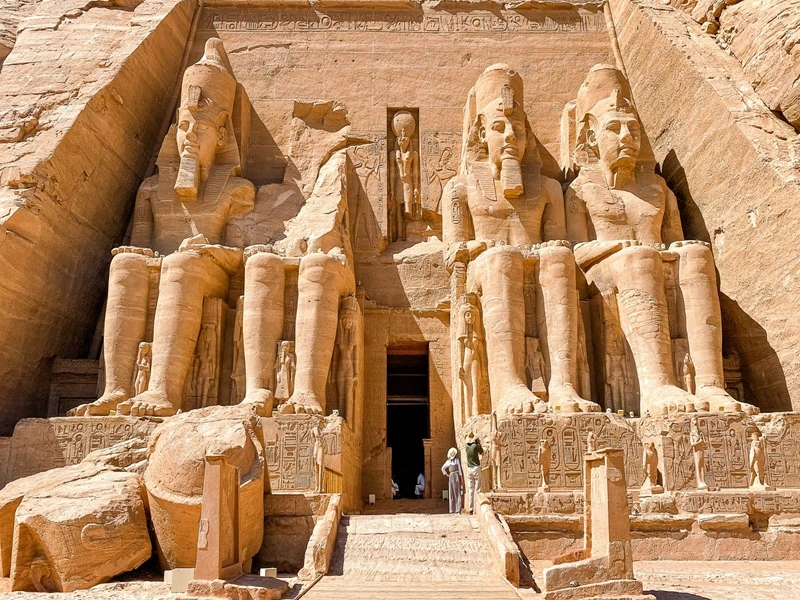
Imagine standing face-to-face with four colossal statues carved more than 3,200 years ago, each towering over 20 meters high and staring across the Nubian Desert as they have for millennia. This is the unforgettable experience awaiting visitors at Abu Simbel tour, one of Egypt’s most extraordinary archaeological treasures.
Located on the western shore of Lake Nasser in southern Egypt, Abu Simbel is far more than just another ancient temple. It is a masterpiece of engineering, a symbol of royal power, and the site of one of the greatest archaeological rescue operations in history. Every year, travelers from around the world make the journey from Aswan to witness this incredible monument built by Pharaoh Ramses II.
At Egypt Trippers, we have helped hundreds of travelers explore Abu Simbel over the years. Many arrive expecting another impressive temple, but leave describing it as the highlight of their entire Egypt trip. The sheer scale of the statues, the fascinating history behind their construction, and the remarkable story of how the temples were saved from disappearing beneath Lake Nasser make Abu Simbel unlike anywhere else in Egypt.
Whether you’re planning an Abu Simbel day trip from Aswan, adding it to your Nile Cruise itinerary, or building a complete Egypt travel itinerary, this guide covers everything you need to know before visiting in 2026.
Why Is Abu Simbel So Famous?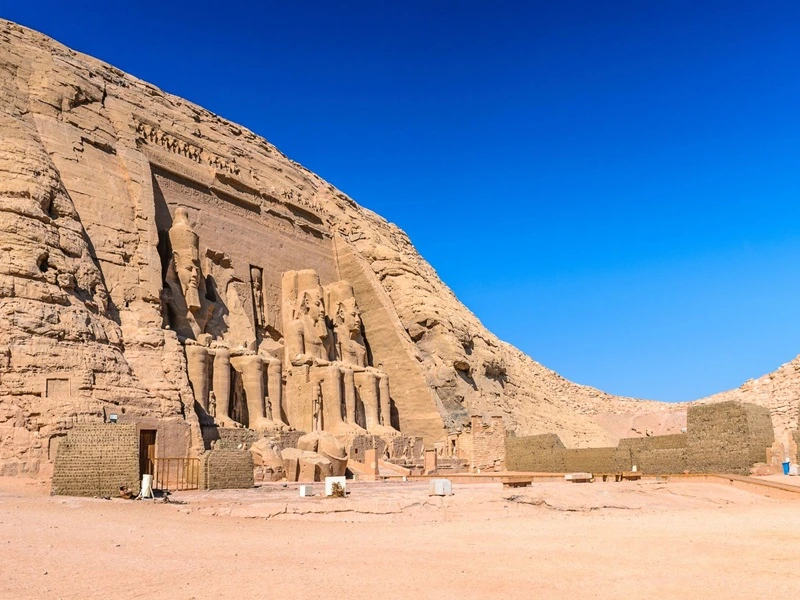
Egypt is home to countless temples, tombs, and monuments, so what makes Abu Simbel stand out?
The answer lies in a combination of history, architecture, engineering, and location.
Unlike many Egyptian temples built from stone blocks, Abu Simbel was carved directly into a mountainside. The entire complex was designed to impress anyone approaching Egypt from the south and to showcase the power of Pharaoh Ramses II.
Several factors contribute to Abu Simbel’s worldwide fame:
The Colossal Statues
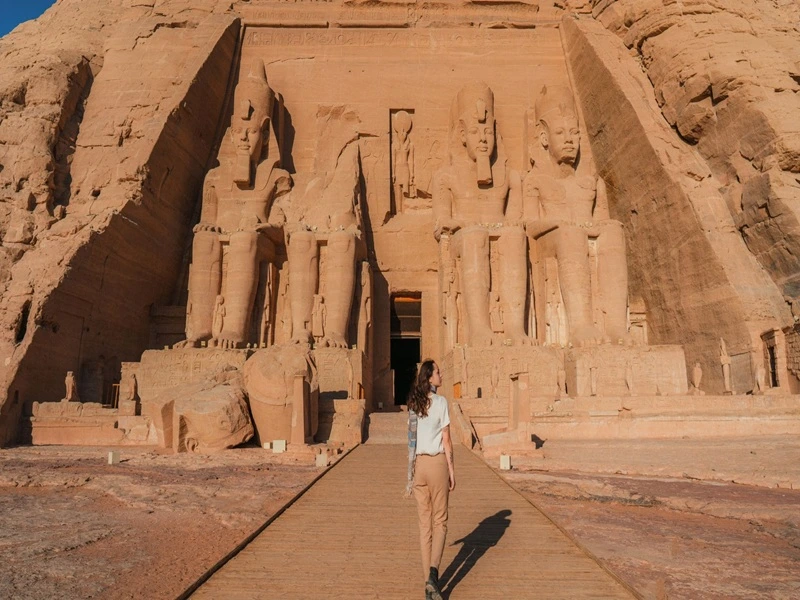
The four giant statues of Ramses II seated on his throne are among the most recognizable images in Egypt. Standing approximately 20 meters (66 feet) high, they dominate the landscape and create one of the most dramatic entrances to any monument in the world.
The Ancient Engineering
Ancient Egyptian architects carefully aligned the Great Temple so that sunlight would penetrate deep into the sanctuary twice every year. This remarkable phenomenon continues to amaze visitors more than three thousand years later.
The UNESCO Rescue Project
Few historical sites have such an extraordinary modern story. When the construction of the Aswan High Dam threatened to flood Abu Simbel, an international team of engineers and archaeologists dismantled and relocated the entire temple complex to higher ground.
The Remote Location
Unlike Cairo, Luxor, or Aswan, Abu Simbel sits deep in southern Egypt near the Sudanese border. Its isolated setting adds to its sense of adventure and grandeur.
The Temple of Queen Nefertari
The smaller temple at Abu Simbel is one of the very few temples in ancient Egypt dedicated to a queen. This alone makes it historically significant.
Today, Abu Simbel is recognized as one of the most important archaeological sites in Egypt and remains a bucket-list destination for travelers interested in ancient history.
Where Is Abu Simbel Located?
Abu Simbel is located in southern Egypt, approximately 280 kilometers (174 miles) south of Aswan and close to the border with Sudan.
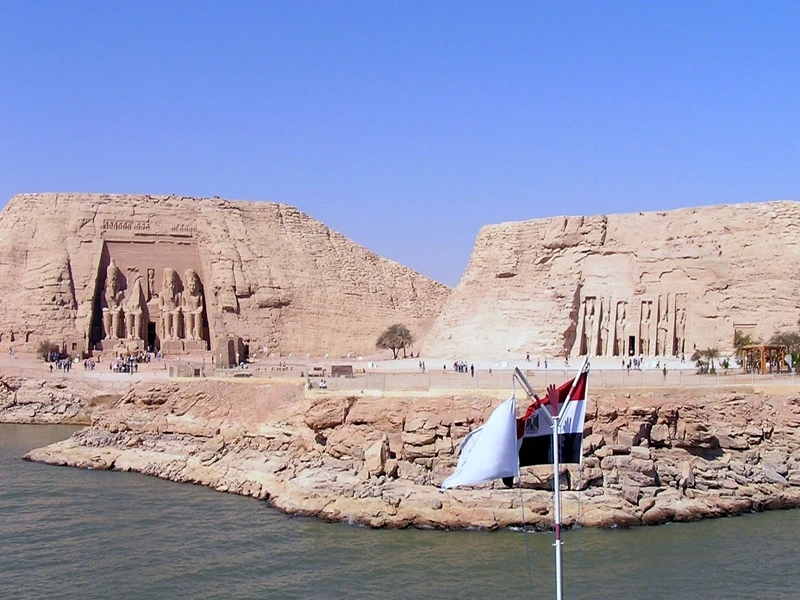
The temples stand on the western shore of Lake Nasser, one of the largest artificial lakes in the world.
Distances to Abu Simbel
| Location | Distance |
| Aswan | 280 km (174 miles) |
| Luxor | 500 km (311 miles) |
| Cairo | 1,150 km (715 miles) |
| Sudan Border | Approximately 40 km |
Most travelers visit Abu Simbel from Aswan because it is the nearest major tourist destination and transportation hub.
The surrounding landscape is characterized by golden desert, dramatic rock formations, and the deep blue waters of Lake Nasser. This setting creates a unique atmosphere that differs significantly from the lush Nile Valley found further north.
The remote location was carefully chosen by Ramses II. It allowed him to project Egyptian power into Nubia while controlling important trade routes between Egypt and Africa.
Is Abu Simbel Worth Visiting?
If you are debating whether to include Abu Simbel in your Egypt itinerary, you’re not alone.
This is one of the most common questions we receive from travelers.
The Short Answer
Yes.
The Honest Answer Based on Experience
After organizing countless Abu Simbel tours, we can confidently say that most visitors leave wishing they had spent more time there, not less.
Many travelers initially hesitate because:
- The journey from Aswan starts early.
- The site is located far from other attractions.
- It requires additional travel time.
However, nearly everyone who visits agrees that the experience is worth the effort.
Why Visitors Love Abu Simbel
The Scale Is Difficult to Understand Until You See It
Photos simply do not capture the size of the temples. Standing beneath the colossal statues of Ramses II is a genuinely humbling experience.
The Setting Is Unique
Unlike temples surrounded by modern cities, Abu Simbel feels isolated and timeless. The desert landscape enhances the feeling that you’ve stepped into another era.
The History Is Fascinating
Visitors are often surprised to learn that the temples were moved piece by piece during one of the greatest engineering projects of the twentieth century.
The Crowds Are Usually Smaller
Although Abu Simbel is popular, it generally feels less crowded than major attractions in Cairo and Luxor.
Who Should Visit Abu Simbel?
Abu Simbel is particularly recommended for:
- First-time visitors to Egypt
- History enthusiasts
- Photographers
- Families
- Couples
- Nile Cruise travelers
- Luxury travelers
If you are already spending time in Aswan, Abu Simbel should be considered essential.
The History of Abu Simbel
The story of Abu Simbel begins during the reign of Ramses II, one of the most powerful rulers in ancient Egyptian history.
Construction started around 1264 BCE and continued for approximately twenty years.
The temples were built during a period when Egypt controlled vast territories extending deep into Nubia. Ramses II wanted a monument that would demonstrate Egyptian strength and authority to anyone approaching from the south.
Abu Simbel served several purposes:
Political Purpose
The temples acted as a symbol of Egyptian power and dominance.
Religious Purpose
The Great Temple was dedicated to important Egyptian gods including:
- Amun-Ra
- Ra-Horakhty
- Ptah
- Ramses II himself
Personal Legacy
Like many great rulers, Ramses II wanted to ensure that future generations remembered his achievements.
More than three thousand years later, his strategy has certainly worked.
Who Was Ramses II?
To fully appreciate Abu Simbel, it’s important to understand the man behind its creation.
Ramses II, often called Ramses the Great, ruled Egypt for approximately 66 years, making him one of the longest-reigning pharaohs in Egyptian history.
His reign lasted from 1279 BCE to 1213 BCE and is often considered the peak of ancient Egypt’s power and prosperity.
Why Was Ramses II So Famous?
Ramses II was known for:
- Major military campaigns
- Extensive building projects
- Diplomatic achievements
- Economic prosperity
Throughout Egypt, visitors encounter monuments associated with Ramses II, including:
- Abu Simbel
- The Ramesseum
- Karnak Temple additions
- Luxor Temple additions
- Numerous statues and monuments
The Battle of Kadesh
One of the defining events of Ramses II’s reign was the Battle of Kadesh against the Hittite Empire.
Although historians debate the true outcome, Ramses portrayed it as a major victory.
The walls of Abu Simbel feature detailed reliefs depicting this battle, allowing visitors to see how ancient rulers used architecture and art as political messaging.
Queen Nefertari
Ramses II had many wives, but Queen Nefertari was clearly his favorite.
The smaller temple at Abu Simbel was dedicated to her and the goddess Hathor.
This was an extraordinary honor in ancient Egypt and demonstrates the importance of Nefertari within the royal family.
How UNESCO Saved Abu Simbel from Disappearing Forever
One of the most remarkable aspects of Abu Simbel is that the temples should not exist where they stand today.
In the 1960s, Egypt began construction of the Aswan High Dam, a massive project designed to control flooding, generate electricity, and improve agriculture.
While the dam brought enormous benefits to Egypt, it also created Lake Nasser.
As the reservoir filled, many ancient monuments in Nubia faced permanent submersion beneath rising waters.
Abu Simbel was among the most threatened sites.
Recognizing the importance of these monuments, UNESCO launched an international campaign to save them.
The challenge was enormous.
How do you move entire temples carved into a mountainside?
The solution was unprecedented.
Between 1964 and 1968:
- Engineers cut the temples into more than 1,000 blocks.
- Some blocks weighed up to 30 tons.
- Each piece was carefully numbered.
- The temples were dismantled section by section.
- The blocks were moved approximately 65 meters higher and 200 meters inland.
- The monuments were reconstructed exactly as before.
The operation involved experts from dozens of countries and cost the equivalent of tens of millions of dollars.
Today, it is considered one of the greatest archaeological rescue projects ever completed.
Most visitors standing before Abu Simbel have no idea they are looking at a monument that was painstakingly moved piece by piece to save it for future generations.
Without this international effort, one of Egypt’s greatest treasures would now lie beneath the waters of Lake Nasser.
What to See at Abu Simbel: A Detailed Walkthrough of the Great Temple
The Great Temple of Ramses II is the centerpiece of Abu Simbel and one of the most impressive monuments ever created in ancient Egypt.
Carved directly into a sandstone cliff, the temple was designed to inspire awe and project the power of Ramses II to anyone approaching Egypt from Nubia.
As you approach the temple, the first thing you’ll notice is its enormous facade. Four colossal statues of Ramses II dominate the entrance, each standing approximately 20 meters (66 feet) high.
Even after seeing countless photos, most visitors are stunned by their actual size.
The Colossal Statues
The four seated statues depict Ramses II wearing the Double Crown of Upper and Lower Egypt, symbolizing his rule over a unified kingdom.
At the feet of the giant statues, smaller figures represent members of the royal family, including:
- Queen Nefertari
- Queen Mother Mut-Tuy
- Several princes and princesses
One statue suffered damage during an ancient earthquake, and its fallen fragments can still be seen today at the base of the temple.
The Entrance
Above the doorway stands a figure of Ra-Horakhty, one of the principal gods honored within the temple.
Ancient Egyptians carefully designed every detail to reinforce the divine authority of Ramses II.
The Great Hypostyle Hall
Upon entering the temple, visitors find themselves in the spectacular Hypostyle Hall.
This chamber contains eight massive pillars carved in the form of Osiris, the god of the afterlife.
Each pillar portrays Ramses II merged with Osiris, symbolizing the pharaoh’s eternal connection with the gods.
The walls are covered with detailed carvings showing:
- Military victories
- Religious ceremonies
- Offerings to the gods
- Battle scenes
The Battle of Kadesh Reliefs
Among the most famous carvings are those depicting the Battle of Kadesh.
These scenes portray Ramses II charging into battle in his chariot while defeating enemy forces.
Although modern historians believe the battle ended more as a stalemate than a decisive victory, Ramses II used these reliefs as powerful royal propaganda.
Today they remain some of the most detailed military records from the ancient world.
The Second Hall
Moving deeper into the temple, visitors enter a smaller hall decorated with scenes of worship and offerings.
The atmosphere becomes increasingly sacred as you approach the temple’s most important chamber.
The Sanctuary
At the far end of the temple lies the sanctuary.
Here sit four statues representing:
- Ptah
- Amun-Ra
- Ramses II
- Ra-Horakhty
This chamber becomes the focal point of the famous Abu Simbel Sun Festival when sunlight reaches the statues twice each year.
Standing in this room allows visitors to appreciate the incredible precision achieved by ancient Egyptian architects more than 3,200 years ago.
The Temple of Queen Nefertari: The Hidden Gem of Abu Simbel
Many travelers arrive at Abu Simbel focused entirely on the Great Temple.
That is understandable.
However, one of the biggest mistakes visitors make is rushing through the Temple of Queen Nefertari.
In reality, it is one of the most beautiful and historically important temples in Egypt.
Why Was This Temple Built?
The Small Temple was dedicated to:
- Queen Nefertari
- Goddess Hathor
Very few queens in ancient Egypt received such an honor.
This demonstrates the extraordinary status Nefertari held during the reign of Ramses II.
The Temple Facade
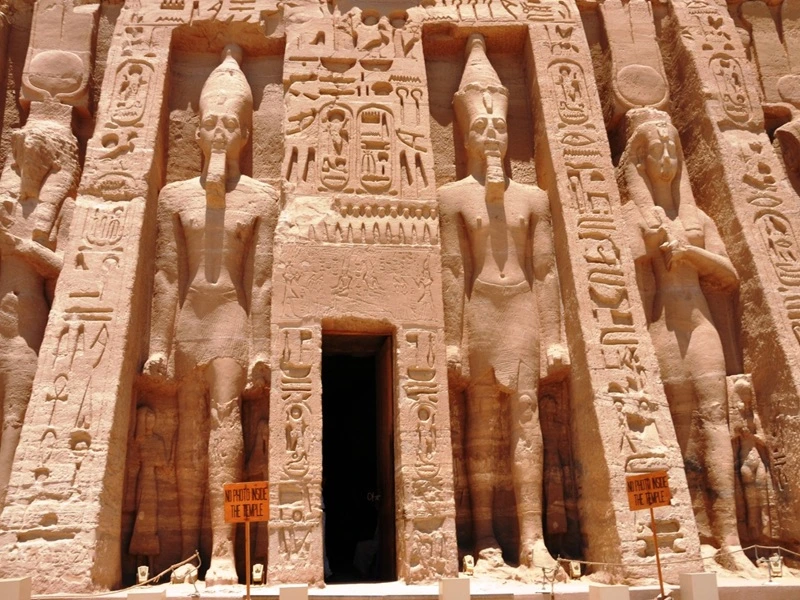
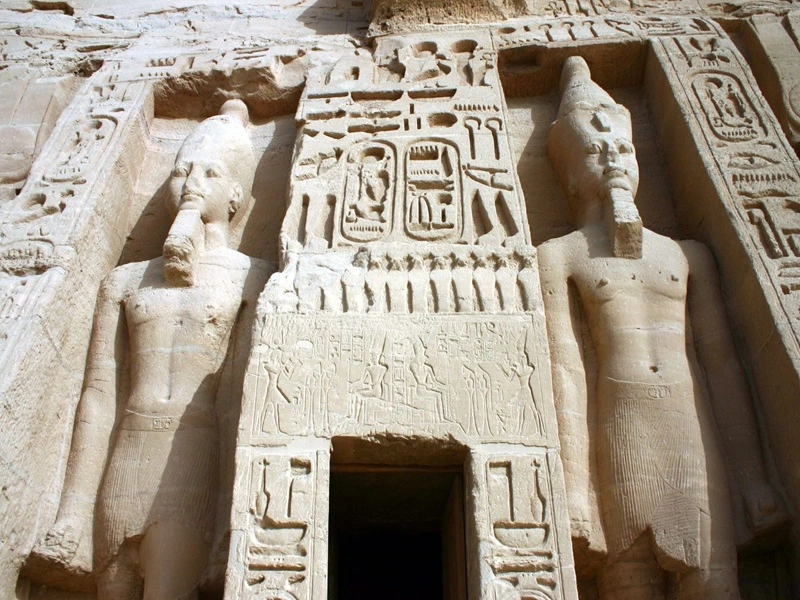
The entrance features six large standing statues.
Three represent Ramses II.
Three represent Queen Nefertari.
This is particularly significant because Nefertari’s statues are nearly equal in height to those of the pharaoh.
Such equality was extremely rare in ancient Egyptian art.
Inside the Temple
The interior contains beautifully preserved carvings depicting:
- Religious ceremonies
- Offerings to the gods
- Scenes involving Hathor
- Images of Nefertari participating in sacred rituals
Unlike the military focus of the Great Temple, this temple feels more elegant, peaceful, and personal.
Many visitors leave feeling surprisingly connected to Nefertari’s story.
Why You Shouldn’t Skip It
While the Great Temple impresses with power and scale, the Temple of Nefertari captivates visitors through beauty and artistic detail.
Together, the two temples create a complete picture of the royal world of Ramses II.
The Abu Simbel Sun Festival: Egypt’s Most Extraordinary Ancient Event
Among all the wonders of Abu Simbel, nothing captures the imagination quite like the Sun Festival.
Twice every year, an extraordinary alignment occurs inside the Great Temple.
As the sun rises, its rays travel through the entrance corridor and reach the sanctuary deep within the temple.
The effect is breathtaking.
When Does the Sun Festival Take Place?
The event occurs approximately on:
- February 22
- October 22
These dates are traditionally associated with important events in the life of Ramses II.
Some historians believe they correspond to:
- His birthday
- His coronation anniversary
Although there is debate regarding the exact historical significance, the phenomenon itself remains remarkable.
What Happens During the Festival?
As dawn breaks, sunlight slowly penetrates the temple.
The beam travels over 60 meters into the mountain until it reaches the sanctuary.
Three statues become illuminated:
- Amun-Ra
- Ramses II
- Ra-Horakhty
The fourth statue, Ptah, remains mostly in darkness because he was associated with the underworld.
This deliberate design demonstrates the astonishing astronomical knowledge possessed by ancient Egyptian architects.
What Is the Festival Experience Like?
Thousands of visitors gather before sunrise.
The atmosphere is unlike any other event in Egypt.
Travelers, photographers, historians, and locals wait together in anticipation.
As the first rays of sunlight reach the sanctuary, the crowd often erupts into applause.
Many visitors describe it as one of the most memorable moments of their entire Egypt trip.
Tips for Attending the Sun Festival
- Book accommodations months in advance.
- Reserve transportation early.
- Arrive before sunrise.
- Expect larger crowds.
- Stay at least one night in Abu Simbel if possible.
The festival is one of Egypt’s most unique cultural experiences.
How to Get to Abu Simbel from Aswan
Most visitors reach Abu Simbel from Aswan.
Fortunately, there are several transportation options available.
By Private Car
This is our most recommended option for many travelers.
Travel time is approximately 3 to 3.5 hours each way.
Advantages include:
- Flexible departure times
- More comfort
- Private stops along the way
- Better photography opportunities
Private tours are especially popular with couples, families, and luxury travelers.
By Guided Tour
Guided tours remain the most common way to visit Abu Simbel.
Most tours include:
- Hotel pickup
- Transportation
- Professional guide
- Return transfer to Aswan
For first-time visitors, guided tours provide excellent value and convenience.
By Domestic Flight
Flights operate between Aswan and Abu Simbel.
Flight time is approximately 45 minutes.
This option is ideal for:
- Short Egypt itineraries
- Luxury travelers
- Visitors coming directly from Cairo
Although more expensive, flying significantly reduces travel time.
Can You Visit Abu Simbel Without a Tour?
Yes.
Independent travel to Abu Simbel is possible.
Options include:
Renting a Car
Suitable for confident drivers familiar with Egypt.
Private Taxi
Many travelers hire a private driver from Aswan.
Public Transportation
Public transportation options exist but are limited and less convenient for most tourists.
Is Independent Travel Worth It?
For experienced travelers, yes.
However, most visitors find that organized tours offer better convenience, comfort, and historical insight.
Abu Simbel from Cairo
Many travelers assume Abu Simbel can only be visited from Aswan.
In reality, visiting from Cairo is entirely possible.
Option 1: Fly from Cairo to Abu Simbel
This is the fastest method.
Travelers typically:
- Fly from Cairo to Aswan or Abu Simbel
- Visit the temples
- Return the same day or stay overnight
Option 2: Cairo and Nile Cruise Combination
Many visitors combine:
- Cairo
- Aswan
- Abu Simbel
- Nile Cruise
- Luxor
This is one of the most popular Egypt itineraries.
Option 3: Multi-Day Egypt Tour
Many Egypt tour packages include Abu Simbel as part of a larger itinerary.
This allows visitors to experience the country’s most important attractions in a single trip.
Private vs Group Abu Simbel Tours
One of the most important decisions travelers face is choosing between a private or group tour.
Private Abu Simbel Tours
Best for:
- Couples
- Families
- Luxury travelers
- Photographers
Advantages:
- Flexible schedule
- Personalized service
- More time at the temples
- Better photography opportunities
- Comfortable transportation
Group Abu Simbel Tours
Best for:
- Budget-conscious travelers
- Solo travelers
- Short stays
Advantages:
- Lower cost
- Easy booking
- Social atmosphere
Which Option Do We Recommend?
For most travelers, especially those visiting Egypt for the first time, private tours provide the best overall experience and value.
How Much Does an Abu Simbel Tour Cost?
Tour prices vary depending on transportation, group size, and level of service.
Typical Abu Simbel Tour Prices
| Tour Type | Average Price |
| Group Tour | $35–$70 |
| Private Tour | $80–$250 |
| Flight Excursion | $180–$350 |
Prices may vary according to season and inclusions.
When comparing tours, always check whether the following are included:
- Transportation
- Guide services
- Entrance tickets
- Hotel pickup and drop-off
- Meals
Sometimes a slightly higher price delivers significantly better value.
Sample Abu Simbel Day Trip Itinerary
Wondering what a typical Abu Simbel excursion looks like?
Here’s a sample itinerary many travelers follow.
4:00 AM
Pickup from your hotel in Aswan.
4:15 AM
Begin the drive through the Nubian Desert.
7:00 AM
Arrival at Abu Simbel.
7:15 AM
Guided visit of the Great Temple.
8:15 AM
Visit the Temple of Queen Nefertari.
9:00 AM
Free time for photography and exploration.
10:00 AM
Departure from Abu Simbel.
1:00 PM
Arrival back in Aswan.
Despite the early departure, most visitors agree the experience is absolutely worth it.
Abu Simbel and Nile Cruises: Should You Combine Them?
One of the most common questions travelers ask is whether Abu Simbel should be visited as part of a Nile Cruise.
The answer is simple: absolutely.
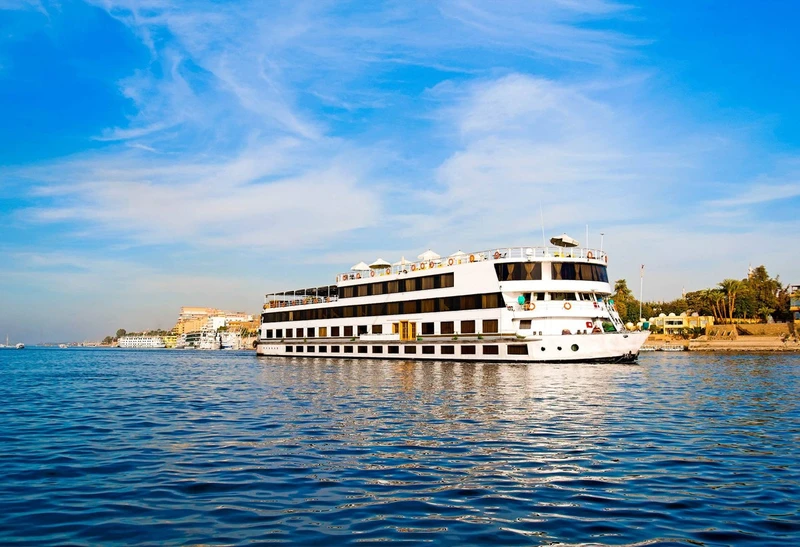
In fact, combining Abu Simbel with a Nile Cruise is one of the best ways to experience Upper Egypt.
Most standard Nile Cruises operate between Aswan and Luxor and include famous attractions such as:
- Philae Temple
- Kom Ombo Temple
- Edfu Temple
- Karnak Temple
- Luxor Temple
- Valley of the Kings
However, Abu Simbel is located much farther south and is usually offered as an optional excursion.
Why Add Abu Simbel to Your Nile Cruise?
It Completes the Ancient Egypt Experience
Without Abu Simbel, many travelers miss one of the most impressive monuments in Egypt.
It Fits Perfectly into Your Schedule
Most visitors take the excursion:
- Before boarding their Nile Cruise in Aswan
- After arriving in Aswan
- Immediately after cruise disembarkation
It Adds a Unique Experience
Unlike the temples found along the Nile River, Abu Simbel sits dramatically beside Lake Nasser, creating a completely different atmosphere.
At Egypt Trippers, many travelers choose a combination of:
- Cairo
- Aswan
- Abu Simbel
- 3 or 4-Night Nile Cruise
- Luxor
This itinerary consistently receives excellent feedback.
What Most Tourists Get Wrong About Abu Simbel
After helping hundreds of travelers visit Abu Simbel, we have noticed several common mistakes.
Avoiding these can dramatically improve your experience.
Mistake #1: Thinking Abu Simbel Is Just Another Temple
Many visitors arrive expecting something similar to Edfu or Kom Ombo.
The reality is very different.
The scale of Abu Simbel is unlike almost anything else in Egypt.
Mistake #2: Skipping the Temple of Nefertari
Some travelers spend all their time in the Great Temple and rush through the smaller temple.
This is a mistake.
The Temple of Nefertari contains some of the most beautiful artwork at the site.
Mistake #3: Arriving Too Late
Morning visits offer:
- Cooler temperatures
- Better photography conditions
- Smaller crowds
Late arrivals often miss the best lighting.
Mistake #4: Not Learning the History First
Visitors who understand the story behind Abu Simbel enjoy the experience far more.
Knowing about:
- Ramses II
- The Battle of Kadesh
- The UNESCO rescue project
- The Sun Festival
makes the visit significantly more meaningful.
Mistake #5: Not Bringing Water
Even during winter, the desert climate can be dry.
Hydration is essential.
Mistake #6: Underestimating the Drive
The road is comfortable, but travelers should prepare for an early departure.
Most tours leave between 4:00 and 5:00 AM.
Mistake #7: Not Booking in Advance During Peak Season
From October through April, demand increases significantly.
Booking early ensures better availability and pricing.
Photography Guide: How to Capture Amazing Abu Simbel Photos
Abu Simbel is one of the most photogenic locations in Egypt.
Whether you’re using a professional camera or a smartphone, a little planning can make a huge difference.
Best Time for Photography
Sunrise
The early morning light creates soft shadows and warm colors.
Many photographers consider sunrise the ideal time.
Late Afternoon
The golden light enhances the sandstone facade beautifully.
Best Photo Locations
Directly in Front of the Great Temple
Perfect for capturing the scale of the statues.
Side Angles
Provide dramatic perspectives and show the temple’s integration into the landscape.
Lake Nasser Background
Creates a unique composition combining architecture and nature.
Temple of Nefertari
Often less crowded and ideal for detailed architectural photography.
Photography Tips
- Use a wide-angle lens when possible.
- Arrive early.
- Include people in some shots to demonstrate scale.
- Capture details of carvings and hieroglyphics.
- Take both landscape and portrait images.
Drone Photography
Drone regulations in Egypt are strict.
Always check current regulations before bringing or operating a drone.
Best Time to Visit Abu Simbel
Abu Simbel can be visited throughout the year, but some seasons are more comfortable than others.
October to April (Recommended)
Advantages:
- Pleasant temperatures
- Comfortable sightseeing
- Better photography conditions
- Peak tourist season
Average daytime temperatures are much more comfortable than summer months.
May to September
Advantages:
- Fewer tourists
- Potentially lower prices
Disadvantages:
- Extremely hot temperatures
- Less comfortable sightseeing
Temperatures can exceed 40°C (104°F).
Best Time of Day
Early morning is generally best because:
- Temperatures are cooler
- Crowds are smaller
- Lighting is better
This is why most Abu Simbel tours depart before sunrise.
Suggested Egypt Itineraries Including Abu Simbel
5-Day Egypt Itinerary
Ideal for short visits.
Day 1
Arrival in Cairo
Day 2
Pyramids and Grand Egyptian Museum
Day 3
Flight to Aswan and Abu Simbel Tour
Day 4
Luxor Highlights
Day 5
Departure
7-Day Egypt Itinerary
Perfect balance of sightseeing and relaxation.
Days 1–2
Cairo
Day 3
Aswan and Philae Temple
Day 4
Abu Simbel
Days 5–6
Nile Cruise
Day 7
Luxor and Departure
10-Day Egypt Itinerary
One of the most popular options.
Includes:
- Cairo
- Alexandria
- Aswan
- Abu Simbel
- Nile Cruise
- Luxor
This itinerary covers Egypt’s most famous attractions.
14-Day Egypt Itinerary
Ideal for travelers wanting a complete experience.
Includes:
- Cairo
- Alexandria
- Aswan
- Abu Simbel
- Nile Cruise
- Luxor
- Hurghada or Sharm El Sheikh
This combines culture, history, and relaxation.
Frequently Asked Questions About Abu Simbel
Final Thoughts: Why Abu Simbel Should Be on Every Egypt Itinerary
There are many incredible places to visit in Egypt, but Abu Simbel occupies a category of its own.
It combines:
- Monumental architecture
- Ancient history
- Engineering brilliance
- Stunning desert scenery
- One of the world’s greatest archaeological rescue stories
Very few sites on Earth offer such a remarkable combination of history, culture, and human achievement.
Whether you’re visiting Egypt for the first time or returning to explore more deeply, Abu Simbel is a destination that consistently exceeds expectations.
The journey from Aswan may start before sunrise, but the reward is one of the most unforgettable experiences in Egypt.
Standing beneath the colossal statues of Ramses II, looking out across Lake Nasser, and walking through halls carved more than three thousand years ago is something that remains with travelers long after they return home.
Plan Your Abu Simbel Tour with Egypt Trippers
If you’re planning a trip to Egypt in 2026, Abu Simbel deserves a place on your itinerary.
At Egypt Trippers, we help travelers experience Abu Simbel through:
✓ Private Abu Simbel Tours
✓ Small Group Excursions
✓ Expert Egyptologist Guides
✓ Comfortable Air-Conditioned Transportation
✓ Abu Simbel and Nile Cruise Packages
✓ Customized Egypt Itineraries
Whether you’re staying in Aswan, joining a Nile Cruise, or planning a complete Egypt adventure, our team can help you create a seamless and memorable Abu Simbel experience.
Related Guides
- Aswan Travel Guide
- Best Nile Cruises in Egypt
- Philae Temple Guide
- Egypt Itinerary 10 Days
- Aswan Day Tours
- Lake Nasser Cruises
Ready to experience one of Egypt’s greatest wonders? Abu Simbel is waiting.
Frequently Asked Questions


Leave a Reply