Best Hidden Gems in Cairo Away from Tourists: The Definitive Local Guide
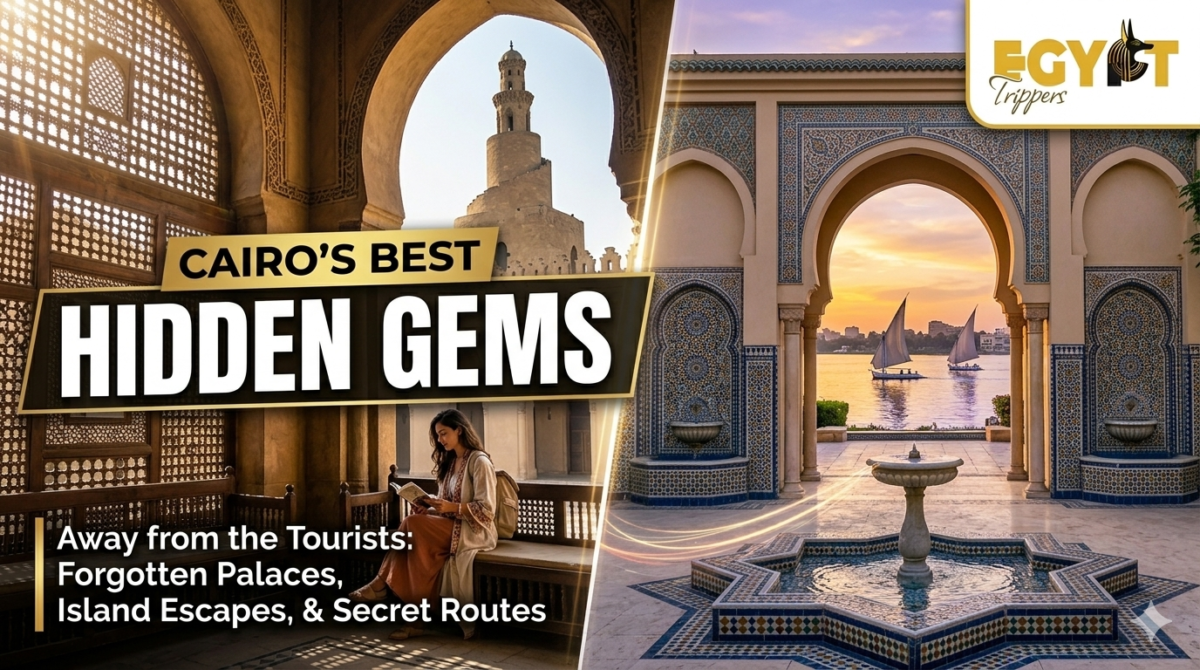
While the monumental Pyramids of Giza, the dazzling galleries of the Grand Egyptian Museum, and the vibrant alleyways of Khan El Khalili rightfully top every traveler’s bucket list, they represent only a tiny fraction of what Egypt’s capital has to offer. For travelers eager to look past the standard tourist brochures, the true magic of Cairo unfolds in its quiet corners.
Finding the best hidden gems in Cairo away from tourists means trading long ticket queues and pushy street vendors for forgotten palaces, serene island escapes, and architectural masterpieces hidden right in plain sight.
This data-backed guide, compiled by on-the-ground local experts, unveils the ultimate non-touristy sites across Cairo, complete with actionable transit matrices and secret neighborhood routes.
The Secret Cairo Location Matrix
To help you seamlessly integrate these off-the-beaten-path sites into your custom vacation schedule, we have mapped them out by their urban geographic zones, average visitor densities, and required exploration windows.
| Hidden Gem Location | Core Cultural Heritage Type | Tourist Density | Recommended Visit Window |
| Gayer-Anderson Museum (Sayida Zeinab) | 17th-Century Domestic Architecture | Very Low | Morning (9:00 AM – 11:30 AM) |
| Prince Mohamed Ali Palace (Al Manial) | Ottoman, Persian & Moorish Fusion | Low | Mid-day (12:00 PM – 2:30 PM) |
| The Nilometer (Rhoda Island) | Ancient Umayyad Hydrological Engineering | Exceptionally Low | Late Afternoon (3:00 PM – 4:30 PM) |
| Al-Andalus Garden (Zamalek Coastline) | Andalusian-Moroccan Royal Landscape | Low to Moderate | Sunset (5:00 PM – 6:30 PM) |
4 Ultimate Hidden Gems in Cairo You Must Visit
1. The Gayer-Anderson Museum (Sayida Zeinab)
Tucked against the outer stone walls of the historic Mosque of Ibn Tulun sits one of the finest preserved examples of 17th-century domestic Islamic architecture in the world: the Gayer-Anderson Museum. Comprising two interconnected medieval residences, this labyrinthine structure was home to Major Robert Gayer-Anderson, an eccentric British military doctor and passionate collector who resided here between 1935 and 1942.
Every room is frozen in time, packed with rare oriental carpets, Persian silks, Ottoman furnishings, and even a secret chamber used to hide valuables or guests from prying eyes.
-
The Hollywood Connection: Film buffs might recognize the mansion’s breezy rooftop terrace, which features elaborate wooden mashrabiya latticework, from its prominent appearance in the classic James Bond film The Spy Who Loved Me.
-
How to Combine It: Because the museum connects directly with the courtyard of the Mosque of Ibn Tulun, you can seamlessly pair these two sights. Climb Ibn Tulun’s iconic spiral minaret for panoramic views of Islamic Cairo completely free from tourist bus crowds. For a deeper look at custom cultural loops through Old Cairo, browse our curated Cultural Tours itineraries.
2. Prince Mohamed Ali Palace (Al Manial)
While international crowds wait in line for hours at downtown museums, the spectacular Manial Palace and Museum remains one of Cairo’s most overlooked royal estates. Built between 1899 and 1929 by Prince Mohamed Ali Tewfik—the uncle of King Farouk—this grand estate is an incredible display of architectural maximalism.
The palace grounds feature a mix of Ottoman, Persian, Moorish, and traditional European Rococo styles. Visitors can walk through a private mosque, a hunting museum packed with rare artifacts, and the jaw-dropping Throne Hall, which is covered in heavy gold leaf and intricate Turkish tilework. The palace is surrounded by an expansive botanical garden filled with rare tropical cacti collected by the prince from across the globe.
3. The Ancient Nilometer (Rhoda Island)
Located at the quiet southern tip of Rhoda Island, the Nilometer stands as one of the oldest surviving structures built after the Arab conquest of Egypt. Completed in 861 AD under the direction of the Abbasid Caliph Al-Mutawakkil, this architectural marvel was designed to measure the annual rise and fall of the Nile River.
American and European tourists rarely make it to this peaceful spot, but the engineering inside is fascinating. Visitors descend a narrow, circular stone staircase deep into a stone-lined well that connects directly to the river. In the center stands a large, graduated marble column that local priests used to forecast either agricultural abundance or famine. The tax rates for the entire country were calculated based on the water levels recorded on this very column. Just overhead, a beautiful, pointed-arch dome features some of the earliest surviving Quranic inscriptions in Egypt.
4. Al-Andalus Garden (Zamalek)
If you need a quiet break from the high-energy streets of downtown Cairo, bypass the busy public squares and look for the unassuming iron gates of Al-Andalus Garden. Built in 1935 by Zulfaqar Basha as part of Khedive Ismail’s royal estates, this beautifully maintained park is hidden away along the waterfront on Gezira Island, right across from Zamalek.
The park is designed in a traditional Andalusian-Moroccan style, featuring tiered mosaic fountains, quiet pathways shaded by vines, and classic brick arches that echo the architecture of Granada. It offers a peaceful atmosphere where you can watch traditional wooden feluccas sail along the river as the sun sets behind the city skyline.
Logistical Strategies for Navigating Alternative Cairo
Exploring off-the-beaten-path areas requires a slightly different approach than visiting standard, group-friendly resorts.
1. Reliable Urban Transport
Because these hidden gems are located deep within traditional residential and historic neighborhoods, large tour buses cannot access them. For independent exploration, rely on ride-hailing apps like Uber to ensure your route is digitally mapped and fares are locked in automatically, eliminating street taxi fare negotiations.
2. Respecting Local Neighborhood Etiquette
Many of these sites are tucked inside conservative, working-class communities like Sayida Zeinab or historic Old Cairo. While tourist hubs like Hurghada follow relaxed coastal styles, exploring alternative Cairo calls for respectful clothing choices. Both men and women should opt for loose garments that cover shoulders and knees to ensure comfortable, hassle-free neighborhood walks. For comprehensive styling advice tailored to different regions, read our practical guide on What to Wear in Egypt.
Linking Hidden Gems with Comprehensive Itineraries
To get the most out of your trip, try balancing these quiet cultural discoveries with classic historic sights. A popular approach involves dedicating your mornings to major monuments like the Giza Plateau or the Citadel, and spending your afternoons exploring hidden island gardens or historic palaces.
To see how to easily weave these hidden spots into a seamless travel plan, explore our specialized Cairo Packages network to coordinate custom routes with private, vetted drivers.
Conclusion: Discover the Hidden Soul of Egypt’s Capital
The real magic of Cairo lies beyond the crowded tourist buses. By stepping off the beaten path to explore these quiet palaces, historic towers, and peaceful gardens, you will experience the authentic rhythm and rich history of the city exactly as locals do.
Ready to secure a private, air-conditioned vehicle, hire an expert local guide, or craft an unforgettable boutique vacation? Check out our tailored itineraries and book your next adventure with the destination specialists at Egypt Trippers today!
Frequently Asked Questions




Leave a Reply