Beyond Tourist Traps: Where to find the best shops in khan el khalili bazaar egypt for genuine silver and handmade jewelry
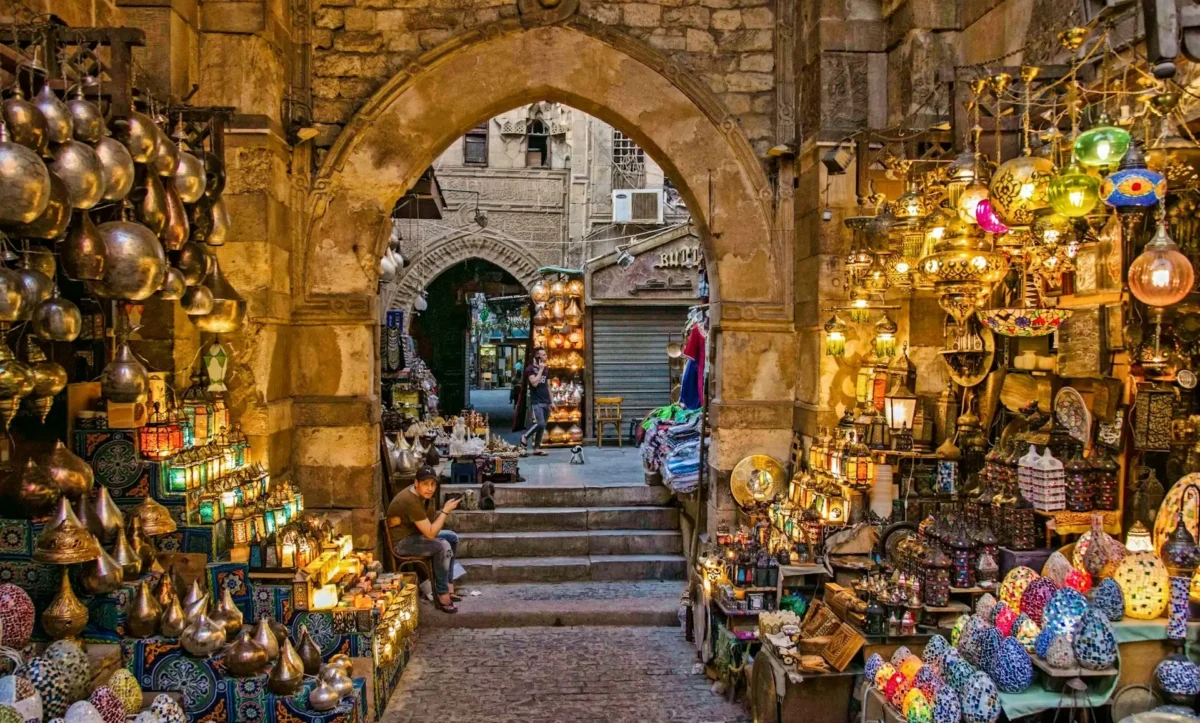
If you’re planning a trip to Cairo, exploring the best shops in Khan El Khalili Bazaar Egypt is an experience you simply can’t miss. This legendary marketplace — one of the oldest and most vibrant in the Middle East — is a colorful maze of alleyways where history, craftsmanship, and culture come alive in every corner.
From glowing lantern shops to gold-filled jewelry boutiques, from handwoven textiles to traditional perfumes, Khan El Khalili is a treasure chest for travelers who love authentic Egyptian artistry.
Walking through the bazaar feels like stepping back in time — bargaining with merchants, sipping mint tea, and discovering hidden gems you won’t find anywhere else in the world.
Before exploring the bazaar, check out our complete Cairo Travel Guide to discover the city’s top attractions and insider tips.
Best shops in khan el khalili bazaar egypt
Khan El-Khalili is filled with hundreds of captivating shops, each offering its own piece of Egyptian culture, craftsmanship, and charm.
Whether you’re searching for handmade souvenirs, precious metals, perfumes, or artwork, the bazaar’s shops offer some of the best traditional goods in all of Cairo. Here are the top types of shops you should explore when visiting the best shops in Khan El Khalili Bazaar Egypt.
1. Traditional Lantern Shops (Fanous Lamps)
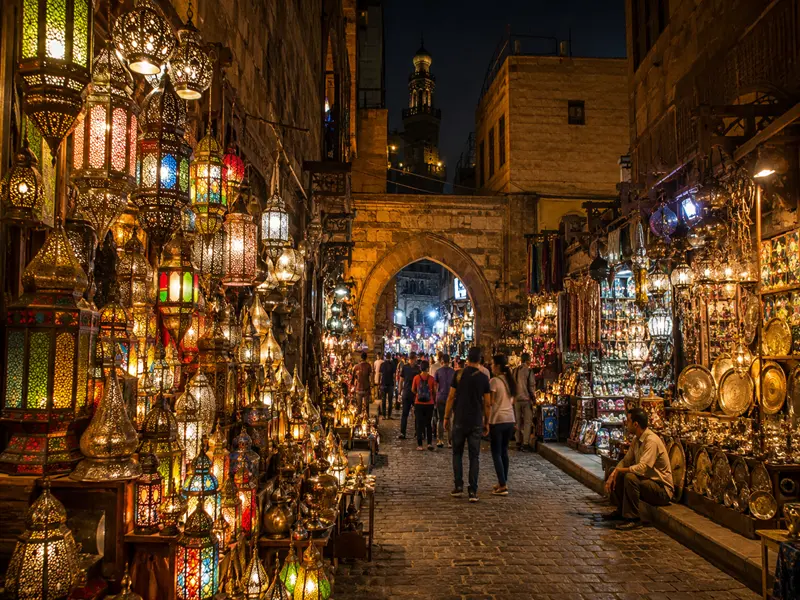
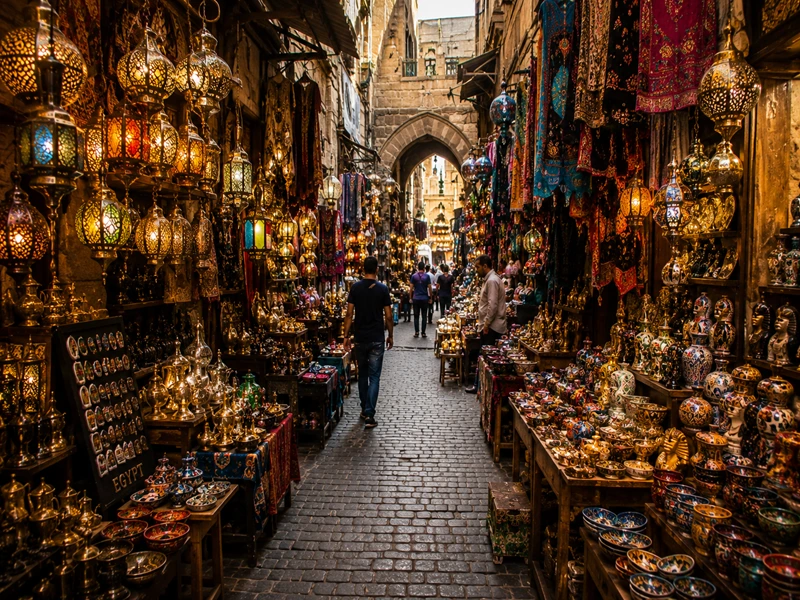
These shops glow with warm, colorful light, showcasing brass and copper lanterns carved by hand. They are perfect for home décor and one of the most iconic treasures of the bazaar. Many lantern shops sit along the central alleys, lighting your way with magical patterns.
2. Gold and Silver Jewelry Shops
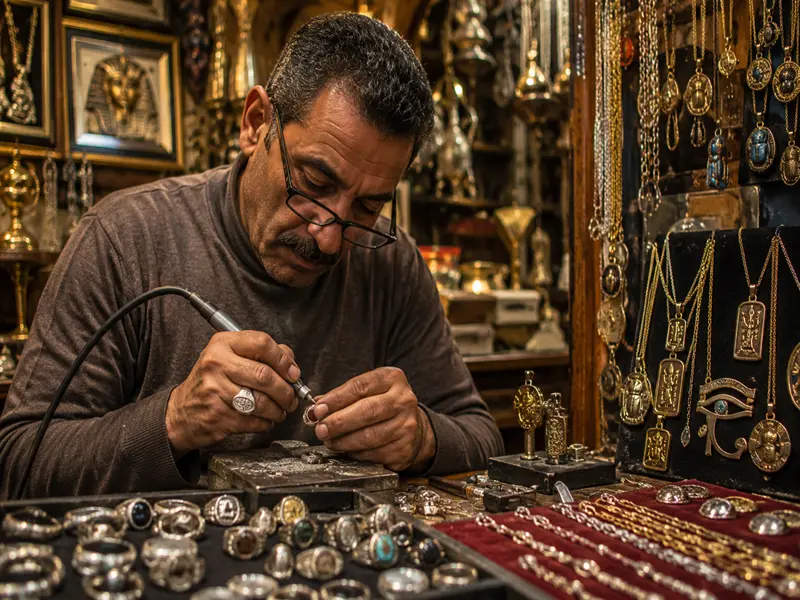
Khan El-Khalili is famous for its skilled metalworkers. Jewelry shops here specialize in:
-
Pure silver pieces
-
Gold cartouche necklaces
-
Ancient Egyptian symbol jewelry
-
Custom name engraving in hieroglyphics
These shops are ideal for meaningful, personalized souvenirs.
3. Perfume and Fragrance Shops
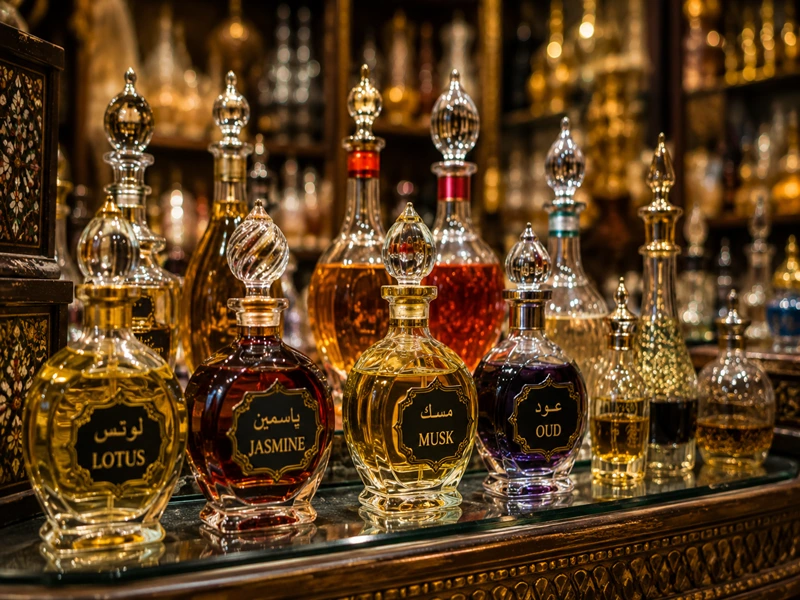
Egyptian perfume houses in the bazaar sell high-quality oils inspired by ancient blends. You’ll find scents like lotus, jasmine, musk, and sandalwood. Many shops offer decorative glass bottles crafted on-site by artisans.
4. Papyrus Art Stores
These shops sell hand-painted papyrus featuring:
-
Pharaoh scenes
-
Hieroglyphics
-
Mythological stories
-
Personalized artwork
They’re excellent for gifts or wall art and often include demonstrations on how authentic papyrus is made.
5. Brass, Copper, and Metalwork Shops
Shops specializing in metalwork feature:
-
Engraved plates
-
Hookahs (shisha pipes)
-
Tea sets
-
Decorative trays
-
Ornamental bowls
The craftsmanship comes from traditions passed down through generations.
6. Spices and Herbal Shops
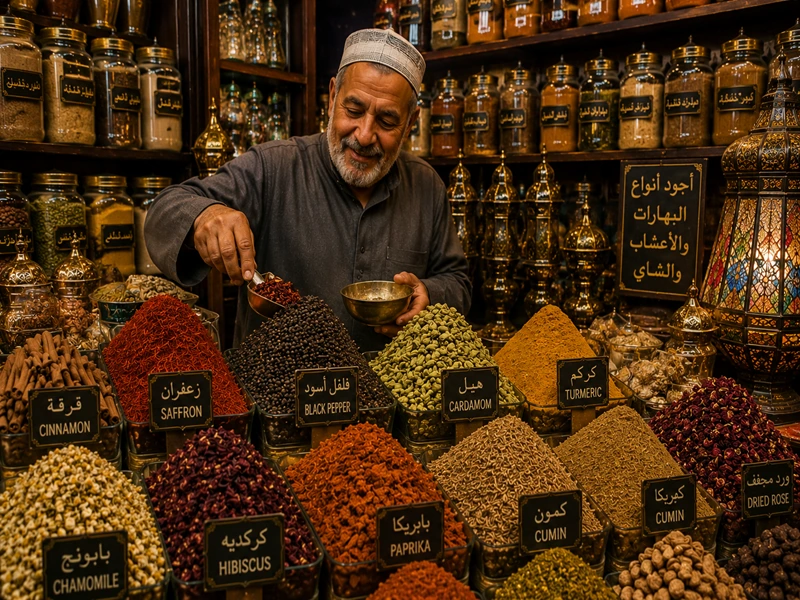
The aroma of the bazaar leads you straight to these colorful stores offering:
-
Hibiscus
-
Saffron
-
Cinnamon
-
Cumin
-
Traditional herbal teas
These shops are perfect for travelers who love culinary souvenirs.
7. Leather Shops
Handmade leather bags, sandals, wallets, belts, and jackets are common in the market. Prices vary, and bargaining is welcomed — making it easy to find great deals on authentic leather goods.
8. Textile and Scarf Shops
These vibrant stores sell:
-
Scarves
-
Shawls
-
Embroidered clothing
-
Traditional galabeyas
Many of the textiles are woven locally and make lovely, lightweight gifts.
9. Antique and Curiosity Shops
Some shops display vintage items, replicas of ancient artifacts, and decorative pieces inspired by ancient Egypt. While not all items are old, they are beautiful keepsakes with historical charm.
10. Coffeehouses with Handicrafts
Shops near traditional cafés like the famous El-Fishawy often sell small handicrafts, jewelry, papyrus, and souvenirs. These hybrid spots offer a relaxing break during your shopping adventure.
How to Spot Authentic Souvenirs in Khan El Khalili
Shopping in Khan El Khalili is one of the highlights of visiting Cairo, but with hundreds of stalls and souvenir shops, it helps to know how to identify authentic Egyptian craftsmanship. Here are some expert tips to help you shop with confidence and avoid low-quality imitations.
1. How to Identify Real Papyrus
Authentic papyrus is made from the papyrus plant using traditional techniques that date back to ancient Egypt.
Signs of genuine papyrus:
- Visible horizontal and vertical fibers woven together.
- Flexible texture that can be rolled without cracking.
- Natural beige color rather than bright white.
- Artwork painted directly onto the papyrus surface.
Avoid:
- Glossy paper printed with Egyptian designs.
- Very cheap “papyrus” sold in bulk souvenir stalls.
Local Tip: Reputable papyrus galleries often demonstrate the papyrus-making process.
2. How to Recognize Genuine Silver Jewelry
Silver jewelry is one of the most popular purchases in Khan El Khalili, especially cartouches and ancient Egyptian designs.
Signs of authentic silver:
- Look for the “925” hallmark stamp.
- Silver should have a solid weight and feel.
- Ask the seller for the silver purity.
- Quality pieces have smooth engraving and clean finishing.
Avoid:
- Extremely lightweight pieces.
- Jewelry that quickly changes color or feels hollow.
3. How to Buy Authentic Perfume Oils
Egypt has been famous for perfume production since the time of the pharaohs.
Signs of quality perfume oils:
- Highly concentrated fragrance.
- No alcohol smell.
- Long-lasting scent on the skin.
- Sold in sealed glass bottles.
Popular Egyptian scents include:
- Lotus
- Jasmine
- Musk
- Sandalwood
- Amber
4. How to Spot Handmade Lanterns
Traditional Egyptian lanterns are among the most photographed items in the bazaar.
Signs of authentic craftsmanship:
- Hand-cut geometric patterns.
- Slight imperfections that show handwork.
- Solid brass or copper construction.
- Soldered joints rather than glued parts.
Avoid:
- Lightweight mass-produced imports.
- Painted metal that scratches easily.
5. How to Tell if Alabaster Is Real
Alabaster is a traditional Egyptian stone used for decorative items and statues.
Simple test:
Hold the item toward a light source.
Real alabaster allows light to pass through and creates a warm glow.
Avoid:
- Heavy stone pieces that block all light.
- Plastic imitations sold as alabaster.
Local Expert Tip
Many of the best purchases in Khan El Khalili come from family-run workshops that have been operating for generations. Take your time, compare products between several shops, and don’t be afraid to ask questions about how an item was made. Genuine artisans are often proud to explain their craft and demonstrate their techniques.
Best Things To Buy In Khan El Khalili
Khan El-Khalili is a treasure hunter’s paradise — a place where every corner reveals something handmade, colorful, and deeply connected to Egyptian culture. Whether you’re shopping for souvenirs, gifts, or personal keepsakes, the bazaar offers a dazzling variety of unique and authentic items. Here are the best things to buy when visiting this famous marketplace:
1. Brass and Copper Lanterns
The glowing metal lanterns of Khan El-Khalili are one of the bazaar’s most iconic crafts. Intricately carved patterns create magical shadows when lit, making them perfect home décor pieces.
2. Handcrafted Jewelry
From silver necklaces to gold bracelets, the bazaar is known for its skilled metalworkers. You’ll find:
-
Traditional Egyptian designs
-
Cartouche name necklaces
-
Ancient-style motifs like the Eye of Horus and Scarab
Many shops can customize pieces on the spot.
3. Perfume Oils
Egypt is famous for its pure essential oils. Shops here offer:
-
Lotus
-
Jasmine
-
Musk
-
Sandalwood
You can also buy beautiful glass perfume bottles crafted by local artisans.
4. Alabaster and Stone Carvings
Miniature pyramids, scarabs, statues of pharaohs, and other symbolic carvings make great souvenirs. Authentic alabaster has a soft, warm glow when held up to the light.
5. Papyrus Artwork
Look for handmade papyrus — not the machine-made imitation. Many shops sell:
-
Pharaoh portraits
-
Hieroglyphic designs
-
Scenes from the Book of the Dead
Some artists will even write your name in hieroglyphics.
6. Spices and Herbal Blends
Aromatic stalls display colorful piles of:
-
Saffron
-
Hibiscus
-
Cumin
-
Cinnamon
-
Traditional Egyptian tea blends
These are lightweight and easy to pack for travelers.
7. Leather Goods
You’ll find beautifully crafted leather bags, wallets, sandals, and belts — often handmade and sold at excellent prices compared to Western markets.
8. Scarves and Textiles
Colorful scarves, shawls, and traditional woven fabrics are everywhere in the bazaar. They make affordable and stylish gifts.
9. Traditional Clothing
Galabeyas (long robes), embroidered tunics, and belly-dance outfits are some of the bazaar’s charming clothing items. Many are handmade with intricate patterns.
10. Hookahs (Shisha Pipes)
If you’re looking for a truly authentic Egyptian keepsake, decorative shisha pipes are popular purchases. They come in various sizes and designs, from simple to ornate.
How Much Should You Budget for Shopping?
Budget Travelers
$20–50
Mid-Range Travelers
$50–150
Collectors
$150–500+
Jewelry Buyers
$500+
What is Khan El-Khalili and Its History?
Khan El-Khalili is Cairo’s most famous historic bazaar and one of the oldest marketplaces in the Middle East. Established in the 14th century during the Mamluk era, the market has served as a center of trade, craftsmanship, and culture for more than 600 years. Today, visitors explore its maze-like alleys to shop for handmade lanterns, jewelry, perfumes, textiles, spices, and authentic Egyptian souvenirs while experiencing the atmosphere of Historic Cairo.
How to get to Khan el Khalili?
Reaching Khan El-Khalili is easy, whether you’re staying in downtown Cairo, Giza, or the surrounding neighborhoods. The bazaar sits in the heart of Islamic Cairo, close to major landmarks, making it accessible by taxi, ride apps, metro, or guided tours.
1. By Taxi
Taxis are one of the simplest ways to reach the bazaar. Just ask the driver to take you to “Khan El-Khalili” or “El-Hussein Square.” Most drivers know it well since it’s one of Cairo’s most famous attractions.
Tip: Agree on the fare before starting the ride or make sure the meter is running.
2. By Ride Apps (Uber, Careem, Indrive)
Ride-hailing apps are the easiest and most comfortable option. They offer:
-
Fixed prices
-
Air-conditioned vehicles
-
Direct drop-off near the bazaar
Simply enter “Khan el Khalili Bazaar” or “Al-Hussein Mosque” into the app.
3. By Metro
Take the Cairo Metro Line 1 and get off at Attaba Station.
From there:
-
It’s about a 15–20 minute walk, OR
-
You can take a short taxi or tuk-tuk ride to the bazaar
Walking lets you explore bustling Islamic Cairo along the way.
4. By Organized Tour or Hotel Transfer
Many hotels and travel agencies offer:
-
Private transfers
-
Guided walking tours
-
Night-time bazaar tours
This option is perfect for first-time visitors who want a stress-free experience.
5. From Popular Areas
-
From Downtown Cairo: 10–15 minutes by taxi
-
From Zamalek: 20–30 minutes depending on traffic
-
From Giza (Pyramids area): 35–50 minutes
-
From Cairo International Airport: 30–45 minutes
Traffic in Cairo can be unpredictable, so plan extra time during evenings and weekends.
Best Drop-off Point
Most visitors arrive through El-Hussein Square, right beside:
-
Al-Hussein Mosque
-
The entrance pathways leading straight into the bazaar
This is the most convenient and scenic point to begin exploring.
Our Islamic Cairo Tours combine Khan El Khalili with Cairo’s most iconic monuments.
When to visit Khan el Khalili?
Khan El-Khalili is lively throughout the year, but choosing the right time to visit can make your experience more enjoyable. The bazaar’s atmosphere changes depending on the season, the day of the week, and even the time of day — so planning ahead can help you explore it comfortably and authentically.
Best Seasons: October to April
The cooler months are the ideal time to visit the bazaar. With temperatures ranging from mild to pleasantly warm, wandering through the narrow streets feels much more comfortable. These months are perfect for:
-
Long shopping walks
-
Enjoying outdoor cafés
-
Exploring Islamic Cairo nearby
Summer Visits: May to September
You can still enjoy Khan El-Khalili in summer, but expect higher temperatures. The bazaar becomes most pleasant:
-
Early in the morning
-
After sunset, when the air cools down
Shops stay open late, making evening visits magical with glowing lanterns and lively alleys.
Best Days to Visit
-
Weekdays (Sunday–Thursday) offer a calmer experience, perfect for browsing and bargaining.
-
Weekends (Friday & Saturday) are livelier and busier, giving you a more energetic local vibe.
Best Time of Day
The bazaar changes character depending on the hour:
-
Morning: Quiet, peaceful, great for photos and relaxed shopping
-
Afternoon: Busier, warmer, full of activity
-
Evening: The most atmospheric time — lanterns light up, cafés come alive, and the bazaar feels magical
During Ramadan
Khan El-Khalili becomes exceptionally festive during Ramadan.
Expect:
-
Beautiful decorations
-
Evening gatherings
-
Longer night hours
Visiting after iftar (sunset meal) offers a truly authentic cultural experience.
Why Is Khan El-Khalili Located in Islamic Cairo?
Khan El-Khalili was built in the heart of Islamic Cairo because the district was the commercial and cultural center of medieval Egypt. Located near Al-Hussein Mosque and Al-Azhar Mosque, the market attracted merchants, scholars, and travelers from across Africa, Asia, and the Middle East. Its location remains one of the reasons why the bazaar is considered one of Cairo’s most authentic cultural experiences.
Local Cafes and Traditional Egyptian Restaurants
A visit to Khan El-Khalili isn’t complete without experiencing its legendary cafés and traditional restaurants. These spots offer more than food — they give you a taste of Egypt’s heart, its hospitality, and the timeless atmosphere that makes the bazaar feel alive. Whether you’re sipping mint tea under glowing lanterns or enjoying a hearty Egyptian meal, the culinary scene here is an essential part of the adventure.
Historic Coffeehouses With Timeless Charm
Khan El-Khalili is famous for its atmospheric cafés, where locals and travelers have gathered for centuries to relax, chat, and people-watch. These places are filled with:
-
Brass lanterns
-
Wooden chairs and marble tables
-
The scent of freshly brewed tea and coffee
-
Traditional Egyptian music drifting in the background
It’s a peaceful stop from the busy bazaar streets.
Traditional Egyptian Dishes to Try
Restaurants around the bazaar serve classic Egyptian meals prepared with home-style warmth. Popular dishes include:
-
Koshari – a comforting mix of pasta, rice, lentils, and crispy onions
-
Fattah – rice and meat layered with tomato sauce and toasted bread
-
Molokhia – a flavorful green soup served with rice or bread
-
Grilled kofta and kebab – juicy, smoky, and freshly prepared
-
Taameya – Egyptian-style falafel made with fava beans
These meals offer a delicious peek into local flavors.
Sweet Treats and Light Snacks
Don’t leave without trying popular Egyptian sweets like:
-
Basbousa — syrup-soaked semolina cake
-
Konafa — crispy, creamy shredded pastry dessert
-
Baklava — flaky layers filled with nuts and honey
Pair them with a cup of sweet mint tea or Turkish-style coffee for the full experience.
Cafés With Character and Stories
Many cafés in Khan El-Khalili have been gathering places for:
-
Poets
-
Artists
-
Traders
-
University students
-
Storytellers
Sitting in one of these cafés feels like stepping into a living piece of Cairo’s cultural heritage.
A Place to Slow Down and Soak In the Atmosphere
After roaming through the market’s busy alleys, these cafés and restaurants give you a moment of calm:
-
Watch lanterns glow over the narrow streets
-
Listen to conversations in Arabic and dozens of other languages
-
Enjoy the rhythm of everyday life unfolding around you
It’s the perfect way to end a shopping trip or take a break before exploring more of the bazaar.
How Safe Is It to Visit the Khan El-Khalili Bazaar?
Khan El-Khalili is generally safe to visit, and it remains one of Cairo’s most popular attractions for both tourists and locals. The bazaar is well-patrolled, lively, and located in a busy area that thrives on tourism. With that said, like any crowded marketplace in a major city, it’s best to stay aware and follow basic travel precautions to ensure a smooth and enjoyable visit.
1. Presence of Security and Police
The area around Khan El-Khalili — especially near Al-Hussein Mosque — is known for having:
-
Visible police presence
-
Tourist police who speak English
-
Security checkpoints in nearby streets
This creates a safe environment for visitors throughout the day and evening.
2. Friendly Local Atmosphere
The bazaar is filled with shopkeepers, families, and travelers from around the world. Most interactions are warm and welcoming, as the bazaar has been a cultural and commercial hub for centuries.
3. Crowd Awareness
The bazaar can get crowded, especially:
-
During weekends
-
In the evening
-
Around holidays and Ramadan nights
To stay comfortable:
-
Keep valuables in a secure bag
-
Avoid carrying unnecessary items
-
Stay mindful of your surroundings
Pickpocketing is uncommon but possible in busy areas, as with any major tourist site.
4. Respectful and Safe Environment
Khan El-Khalili is located in a deeply cultural and historic part of Cairo, and locals take pride in preserving its atmosphere. Visitors who dress modestly and behave respectfully tend to feel even more at ease.
5. Night Visits Are Popular and Safe
Evenings are one of the best times to visit the bazaar. The streets are lively, lanterns glow, cafés fill with people, and the area remains secure thanks to steady foot traffic and visible security.
6. Tips to Enhance Your Safety
For a smooth experience:
-
Use registered taxis or ride apps to arrive and depart
-
Keep small change for purchases and tipping
-
Stay with your group if the bazaar feels crowded
-
Politely decline offers if not interested — merchants are persistent but friendly
Overall Safety Rating
Khan El-Khalili is considered safe, welcoming, and enjoyable for visitors of all ages. With basic awareness and a sense of adventure, your trip will be both memorable and comfortable.
Is Khan El-Khalili Safe at Night?
Yes — Khan El-Khalili is generally safe at night, and many visitors actually prefer exploring the bazaar after sunset. The evening atmosphere is vibrant, colorful, and full of life. Lanterns glow overhead, cafés fill with people, and the entire market comes alive in a way that feels both festive and welcoming.
1. The Bazaar Stays Busy After Dark
Nighttime is one of the most popular times to visit. Locals and tourists stroll through the streets, enjoy traditional cafés, shop for souvenirs, and soak in the ambiance. The steady crowds create a lively and comfortable environment.
2. Strong Security Presence
The area around Khan El-Khalili — especially near Al-Hussein Mosque — is well-monitored with:
-
Tourist police
-
Local security
-
Patrolling officers
These help maintain safety well into the late hours.
3. A Fun and Atmospheric Experience
At night, Khan El-Khalili feels magical:
-
Lanterns illuminate the narrow alleys
-
The sound of oud music floats from cafés
-
Street vendors display colorful goods
-
The temperature becomes pleasantly cool
Many travelers say the nighttime vibe is their favorite way to experience the bazaar.
4. Staying Safe While Enjoying the Night
While the bazaar is safe, it’s wise to follow basic travel tips:
-
Keep personal items secure
-
Stick to main pathways and well-lit streets
-
Use licensed taxis or ride apps for transportation
-
Travel with a friend or group if possible
Most safety concerns at night are simply related to crowds, not crime.
5. Ideal Nighttime Spots
Even after dark, you can enjoy:
-
Traditional cafés like the historic El-Fishawy
-
Spice shops and lantern shops
-
Outdoor seating around Al-Hussein Square
These areas stay lively and welcoming late into the evening.
Bottom Line
Khan El-Khalili is safe, vibrant, and unforgettable at night. With basic awareness and a relaxed mindset, you can fully enjoy the bazaar’s magical evening atmosphere.
What Type of Travelers Will Enjoy Visiting the Khan El-Khalili?
Khan El-Khalili appeals to a wide range of travelers, including culture lovers, photographers, shoppers, food enthusiasts, and families. Whether you’re searching for authentic souvenirs, traditional Egyptian cuisine, or simply want to experience the atmosphere of Historic Cairo, the bazaar offers something for every visitor.
Do You Need a Private Guide to Explore the Khan El-Khalili?
No, Khan El-Khalili is easy to explore independently. However, a private guide can help you discover hidden shops, understand the market’s history, negotiate prices, and combine your visit with nearby attractions such as Al-Hussein Mosque and El-Muizz Street.
Conclusion
You can absolutely explore Khan El-Khalili on your own. But if you’re looking for deeper stories, local expertise, or guidance in navigating the market’s energetic atmosphere, hiring a private guide can elevate your visit from enjoyable to unforgettable.
Tips for Shopping in Cairo’s Famous Market
Shopping in Khan El-Khalili is an adventure filled with color, culture, and endless treasures — but knowing a few insider tips can help you get the best experience (and the best prices!). Here’s how to shop like a pro in Cairo’s most famous market:
1. Embrace Bargaining — It’s Part of the Culture
Prices in the bazaar are rarely fixed. Sellers expect you to negotiate, and it can be fun! Start by:
-
Offering half of the initial price
-
Working your way up gradually
-
Keeping a friendly tone
A smile and polite attitude go a long way.
2. Take Your Time Exploring
The market is a maze of narrow streets, hidden alleys, and tiny specialty shops. Don’t rush. Wander, compare prices, and enjoy the atmosphere before making a purchase.
3. Know the Value of What You’re Buying
If you’re looking for:
-
Silver jewelry
-
Brass lanterns
-
Papyrus artwork
-
Perfume oils
Compare quality and prices in multiple shops. This helps you spot genuine craftsmanship.
4. Bring Small Cash Notes
Many shops prefer cash, and having small bills makes transactions smooth. It also helps when bargaining for better deals.
5. Look for Handcrafted Goods
Some items are imported or mass-produced, but the real treasures are handmade. Look for:
-
Hand-engraved metalwork
-
Genuine papyrus (not glossy copies)
-
Locally made textiles
-
Artisan-crafted jewelry
Artisans are often happy to show you their process.
6. Don’t Be Afraid to Say No
Shopkeepers may invite you into their store or offer tea. You can accept or politely decline. A respectful “No, thank you” is always fine.
7. Visit During the Evening for the Best Atmosphere
Nights at Khan El-Khalili are enchanting. Lanterns glow, cafés fill with music, and the cooler temperatures make shopping more enjoyable.
8. Stay Aware in Crowded Areas
The market is safe, but busy. Keep your phone and wallet secure and avoid displaying valuables.
9. Try Local Snacks and Drinks While You Shop
Enjoy:
-
Mint tea
-
Fresh hibiscus juice
-
Traditional Egyptian sweets
It adds flavor to your shopping experience.
10. Ask for Gift Wrapping
Many shops offer beautiful bags, tissue, or boxes — especially for jewelry, perfumes, and papyrus. It’s perfect for souvenirs.
Conclusion
Visiting Khan El-Khalili is more than a shopping trip — it’s a journey into the heart of Cairo’s living history.
From glittering lantern shops to traditional cafés buzzing with local stories, every corner of the bazaar invites you to slow down, explore, and connect with Egypt’s vibrant culture.
Whether you’re here to bargain for handcrafted treasures, enjoy a cup of mint tea under glowing lights, or simply wander through centuries-old alleyways, the bazaar offers an atmosphere that stays with you long after you’ve left.
Its rich history, warm hospitality, and endless variety make Khan El-Khalili a must-see destination for travelers of every style. Embrace the energy, enjoy the flavors, listen to the music of the market — and let this iconic bazaar show you why it remains one of Egypt’s most unforgettable places.
Planning a few days in Cairo? Explore our recommended Cairo itinerary.
Here’s how to spend 3 days in Cairo including Khan El Khalili.
Frequently Asked Questions




Leave a Reply