Comparing Dahabiya vs Large Nile Cruise Ships: The Ultimate Selection Guide
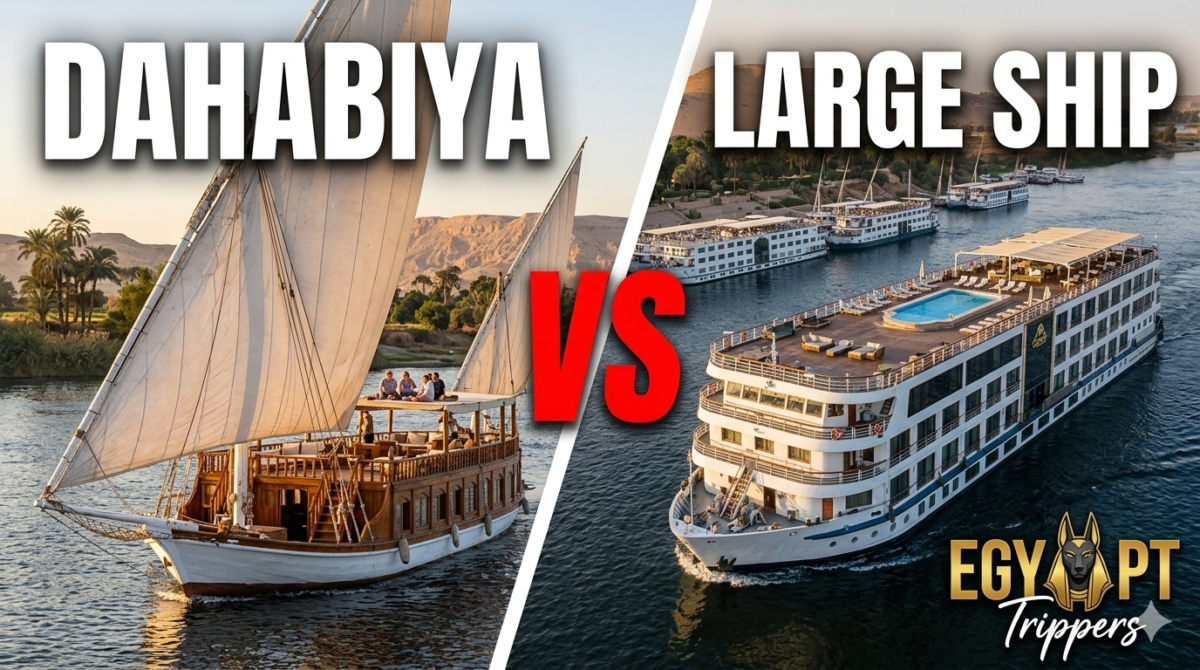
Sailing down the historic waters of the Nile is the definitive highlight of any Egyptian adventure. However, as you begin mapping out your journey between Luxor and Aswan, you face a major logistical crossroads: comparing Dahabiya vs large Nile cruise ships.
While both options navigate the exact same iconic riverway, the structural design, passenger capacity, daily pacing, and overall travel philosophy of these vessels could not be further apart. Selecting the wrong vessel style can fundamentally alter how you experience Egypt’s ancient monuments.
This comprehensive, data-backed comparison breaks down everything from crowd dynamics to exclusive dock access, helping you identify the perfect vessel for your budget and travel style.
The Fundamental Definitions: Floating Hotel vs. Regal Sailboat
Before examining the logistical details, it helps to understand what sets these two vessel classes apart.
What is a Large Nile Cruise Ship?
A large Nile cruise ship is essentially a multi-story floating hotel. Spanning four to six decks, these motorized commercial vessels typically feature anywhere from 50 to 150 guest cabins, accommodating 100 to over 300 passengers simultaneously. They operate on strict, mechanized timetables engineered to move large numbers of travelers efficiently between major heritage sites.
What is a Dahabiya Nile Cruise?
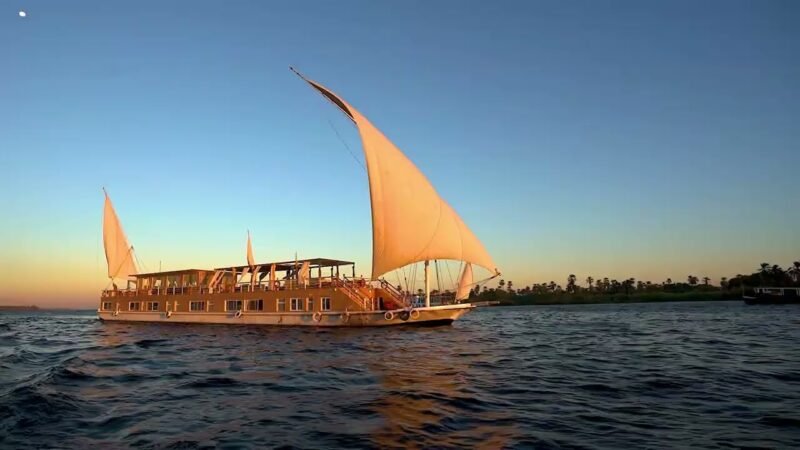
A Dahabiya Nile Cruise is a traditional, twin-masted wooden passenger sailboat. Historically favored by 19th-century royalty, aristocrats, and early archaeologists, modern Dahabiyas blend old-world romanticism with premium luxury. Free from heavy diesel engines, these boutique vessels typically feature only 4 to 12 private cabins, hosting a maximum of 8 to 24 guests per sailing.
📖 New to Nile Cruises? Start with Our Complete Egypt Nile Cruise Guide
Choosing between a Dahabiya and a large Nile cruise ship is only one part of planning the perfect Nile adventure. If you’re still exploring your options, our comprehensive Egypt Nile Cruise Guide will help you understand everything you need to know before booking.
Inside the guide, you’ll discover:
🚢 The different types of Nile cruises, including luxury ships, Dahabiyas, and Lake Nasser cruises.
📅 The best time of year to enjoy a Nile cruise based on weather, prices, and crowd levels.
🗺️ Typical itineraries between Luxor and Aswan, including what to expect each day.
💰 Average Nile cruise prices, what’s usually included, and how to compare offers.
🏛️ The incredible temples and archaeological sites you’ll visit, including Karnak Temple, Valley of the Kings, Edfu Temple, Kom Ombo Temple, Philae Temple, and the magnificent Abu Simbel Temples.
🧳 Expert travel tips covering packing, tipping, dress code, Wi-Fi, onboard facilities, and how to choose the right cruise for your travel style.
Whether you’re planning your first visit to Egypt or searching for the most luxurious way to sail the Nile, our complete guide will help you make an informed decision and avoid common booking mistakes.
👉 Continue Reading: The Ultimate Egypt Nile Cruise Guide
Head-to-Head Comparison Matrix
| Operational Feature | Large Nile Cruise Ships | Dahabiya Sailing Yachts |
| Passenger Capacity | 100 to 300+ guests per vessel | 8 to 24 guests maximum |
| Propulsion Type | Heavy marine diesel engines | Large wind sails (supplemented by far-ahead tugboats) |
| Standard Duration | Quicker 3 to 4 nights | Leisurely 4 to 5 nights |
| Dining Structure | Large-scale international buffet lines | Fresh, farm-to-table plated dining by a private chef |
| Docking Restrictions | Confined to major commercial ports | Shallow hull allows mooring on remote riverbanks |
| Onboard Amenities | Pools, gyms, nightly lounges, souvenir shops | Sun decks, reading lounges, highly personalized service |
| Average Cost per Night | Budget-friendly to moderate ($100 – $400) | Premium luxury investment ($300 – $600+) |
Key Operational Differences Explained
1. Itinerary Flexibility & The Crowd Factor
According to industry operational logs analyzed by travel experts at Egypt Trippers, large cruise ships must follow rigid timetables due to the sheer volume of passengers moving through lock systems like the Esna Lock. Because dozens of large ships move in identical patterns, passengers disembark at monuments like the Temple of Edfu simultaneously, leading to crowded conditions.
Conversely, a Dahabiya boasts unmatched schedule flexibility. Captains adjust sailing patterns to visit high-traffic temples during off-peak morning or late afternoon hours.
Furthermore, because of their shallow draft and flat-bottomed design, Dahabiyas drop anchor at secondary historic gems that large ships cannot physically approach:
-
The Tombs of El Kab: One of the oldest archaeological settlements in Upper Egypt.
-
Gebel el-Silsila: A monumental ancient sandstone quarry right along the water’s edge.
-
Remote Nile Islands: Private evening barbeques on uninhabited islands completely away from standard tourist corridors.
2. Docking Realities and Serenity
A lesser-known reality of large-scale cruising is the docking method at primary hubs like Luxor and Aswan. Due to limited riverbank real estate, large ships frequently raft side-by-side. To step ashore, passengers must walk through the lobbies of several adjacent ships. This can block cabin views and generate noise from nearby idling engines.
Dahabiyas avoid these commercial docks entirely. They tie up along quiet village banks, natural sandbars, or private islands. Your view remains unobstructed, and your nights are defined by the natural stillness of the river.
3. Dining and Onboard Hospitality
On a standard large cruise ship, dining is a high-energy, communal experience centered around industrial buffet arrangements designed to satisfy diverse palates.
On a Dahabiya, your onboard chef sources ingredients daily from local riverside farmers and markets. Meals are freshly prepared, featuring authentic Egyptian delicacies served in an intimate, sit-down format on the open sun deck. Dietary restrictions receive precise, individualized attention due to the low guest count.
Financial Reality: Evaluating the Investment
There is no sugarcoating the financial divergence when comparing Dahabiya vs large Nile cruise ships. Dahabiyas are significantly more expensive, typically costing two to three times more per night than a standard 5-star large cruise vessel.
The premium pricing reflects the luxury of space, the high crew-to-guest ratio (frequently near 1:1), and personalized curation. For travelers seeking budget optimization or a highly social atmosphere, our custom Cultural Tours package network delivers top-tier 5-star large vessel experiences that provide excellent overall value.
Which Vessel Type Suits Your Travel Style?
Choose a Large Nile Cruise Ship if you:
-
Are Traveling on a Defined Budget: You want a cost-effective, all-inclusive package covering meals, accommodation, and guiding.
-
Value Resort-Style Amenities: You want an onboard swimming pool, fully equipped fitness center, massage spa, and evening entertainment like traditional Galabeya parties.
-
Are Tight on Time: You want an efficient route that checks off major landmarks in 3 nights.
-
Have Young Children: Kids appreciate the physical space, multi-deck layouts, and pool facilities found on larger ships.
Choose a Dahabiya Nile Cruise if you:
-
Desire Privacy and Calm: You want a quiet travel environment free from large tour groups.
-
Are Planning a Romantic Escape: It is widely considered the ultimate choice for honeymooners and slow-travel enthusiasts.
-
Seek Deep Cultural Immersion: You want to walk through local villages, explore off-the-beaten-path archaeological sites, and converse directly with your guide.
-
Appreciate Eco-Conscious Travel: The reliance on wind power over constant diesel engine consumption offers a gentler environmental footprint.
Combining River Voyages with Red Sea Extensions
Regardless of which vessel structure wins your vote, many travelers choose to balance their historical river tour with coastal relaxation. A highly popular route involves disembarking your vessel in Upper Egypt and taking private land transit to the pristine beaches of Hurghada. For inspiration on structuring your coastal extension, read our comprehensive guide on the 15 Best Things to do in Hurghada.
To explore how these river journeys integrate with historic urban centers, view our dedicated Cairo destination itineraries to seamlessly connect the Pyramids with your Nile cruise of choice.
Conclusion: Crafting Your Perfect Nile Masterpiece
Neither vessel class is objectively superior to the other; they simply serve entirely different travel goals. Large cruise ships provide excellent value, lively entertainment, and familiar resort comforts. Dahabiyas offer a tranquil, premium escape focused on slow travel, privacy, and rare archaeological access.
Ready to select your ideal vessel, lock in top-tier local pricing, or customize an all-inclusive Egyptian vacation package? Head over to Egypt Trippers and let our local destination specialists build your dream itinerary today!
Frequently Asked Questions



Leave a Reply